How to write a CV that gets you hired: tips, structure, and examples
To stand out and succeed in the job application process, you need a strong CV. The job market is a competitive place, so it's essential to write a CV that's easy to read, engaging and shows your best skills and experience. In this article, you'll learn how to write a CV that impresses recruiters and hiring managers, with tips and examples that break the CV writing process down into simple, easy-to-understand steps. Are you ready to create your winning CV? Let's get started.

5 rules to consider when writing your CV
When you're writing a CV, there are a few key rules to keep in mind. Following these rules will give your CV the best chance of success, making it concise and easy to read, while helping your strengths, qualifications and work experience to stand out. Take a look at these tips, and use them as the foundation for your CV writing process:
- Tailor your CV to the job listing: You don't need to write a CV from scratch every time, but tailoring its content and keywords to match the job listing, company, and industry will make a difference. To make your CV as relevant as possible, decide what to include and exclude.
- Write a strong CV summary: A CV summary provides a short, impactful introduction to your CV. Taking the time to draft, redraft and refine this can help you make a strong impression. Although this goes towards the top of your CV, leave this section to the end of the CV writing process. This allows you to accurately summarise the key content from the rest of the document.
- Use a clear structure, headings, and keywords: Presenting your CV in a well-defined structure with clear headings makes it easier to read. It also makes it more likely that applicant tracking systems (ATS) scan your CV accurately. Using keywords throughout your CV that reflect the job description will also help it pass through the ATS filters.
- Show your value with quantifiable results: Recruiters are interested in seeing the impact you made. This means providing evidence that your skills have contributed to successes in your career so far, with quantifiable results, outcomes and figures.
- Keep it short: A short, concise CV is more likely to make an instant impact than a long, detailed one. Keeping your CV to just one page, or a maximum of two, will make it far easier for recruiters to assess your credentials. If you need to expand on any details, you can always do so in your cover letter.
The main sections of a CV
Most CVs have five main sections that cover all the relevant details employers will be looking for — your work experience, qualifications and skills. The five key sections are:
- CV header with personal details
- CV summary
- Work experience
- Education
- Skills
In addition to these, you can add several optional sections if they help you show you have the skills and experience necessary for the job. These include certifications, volunteering, hobbies and interests, awards, publications and languages. Which of these sections you choose to add to your CV will depend on your career stage, seniority and industry sector. According to 1,013 HR professionals surveyed by Jobseeker, it takes just 30 seconds to decide whether a CV is worth reviewing in more detail. So let's go over what you need to look out for in each section to make sure your CV is as effective as possible:
1. Header with personal details
Your CV header contains all the personal details employers need to identify you and contact you. You can also use this section to introduce basic information about your profession and experience, such as your job title or a brief headline summarising what you offer.
The header sits at the top of your CV, and you'll need to make some decisions about what to include, based on the space it takes up vs. the value of each element. It's best to limit the amount of personal information you include on your CV, to reduce the risk of discrimination. This means avoiding adding your age, gender, nationality, ethnicity, marital status, religion or other personal details.
The key information required for your CV header includes:
- Full name
- CV title or headline (optional)
- Professional email address
- Phone number
- Location (village/town and county, or city)
- LinkedIn or professional profile links
Here's an example of what a complete CV header might look like:
Welwyn Garden City
•
george.harford.sales@example.com
•
07362 674987
•
linkedin.com/in/g–harford–sales
2. CV summary or objective
A CV summary or objective is the first section of your CV below the header, and acts as a brief introduction to you and your credentials. A snappy, impactful CV summary (sometimes called a professional profile), will confirm you're a viable candidate and encourage the reader to review your CV in more detail.
Aim for a length of two to three sentences for your professional summary. Every word counts, so be sure to draft and redraft, and tailor it for each application. You can choose between a CV summary or a CV objective, for this section of your CV. Here's a quick guide to help you choose which one to write for your CV:
CV Summary |
|
|---|---|
CV Objective |
|
Have a look at this example of a professional summary for pointers on what to include in yours:
Professional Summary
An energetic and motivated marketing executive with two years' experience of content creation and project management at a large digital agency. Contributed towards national campaigns to the value of £4.5 million, managing social media accounts, reporting KPIs and presenting to clients, including collaborating on a Marketing Week award-winning project.
And for a professional objective:
Professional Objective
An enthusiastic and driven marketing graduate/early-career professional seeking an entry-level marketing role to develop skills in content creation, campaign delivery and digital marketing. Keen to learn from experienced teams while contributing strong organisation, creativity and a proactive attitude, with hands-on exposure to agency environments, social media management and client-facing work.
3. Work experience
This is the section of your CV that recruiters and hiring managers tend to be most interested in. It contains details of your previous roles, with a brief explanation of your achievements in each job, and the skills you developed and used. It's important to only include relevant previous roles in this section, that can help you show you have the necessary skills and experience for the job.
For each entry in your work experience section, add the following:
- Your job title
- Company/organisation name
- Location of the job
- Dates you worked there
- Bullet points showcasing your skills and achievements in the role
List your previous jobs in reverse-chronological order, starting with your most recent and working back from there. This should mean your most relevant roles are at the top of the section. Exclude any roles that don't have relevance to the job you're applying for, or anything more than 10 or 15 years ago, as previous roles will likely reduce in relevance the further back you go.
Key tip
In your work experience bullet points, use the STAR method to evidence the impact you made in each role. 'STAR' stands for Situation, Task, Action and Result. This helps you give context to the situation, describe the challenge you faced, outline the actions you took and highlight the impact your actions made with clear evidence.
Tips for an entry-level CV work experience section
If you're just starting out in your career, these CV writing tips can help you write an impactful work experience section that still impresses hiring managers:
- Add internships, work placements or volunteer work in place of paid work experience.
- Avoid dwelling on your responsibilities, and focus instead on your skills and achievements.
- List any previous work (even if you don't think it's relevant), and show how it helped you develop transferable skills.
- Consider using a functional, or skills-based, CV structure that emphasises skills and qualifications above work experience.
Take a look at this work experience section CV example to see how it looks when you put all the principles above into action:
History Teacher
2018
-2026
Greenfields Academy, Barnsley
- Designed and delivered engaging Key Stage 3–4 history lessons, improving average student assessment scores by 18% over two academic years.
- Implemented a project-based learning approach that increased student participation in class discussions by 30%, as measured through departmental observations.
- Led the GCSE history revision programme, resulting in 82% of students achieving grades 7–9, exceeding the school’s target by 12%.
4. Education
Your education section is the place to list any formal qualifications that are required for the job. You'll want to focus on the most relevant qualifications, and list the highest levels you've achieved.
For each entry in your education section, include the following:
- Qualification name and level
- Institution name
- Location (if this isn't clear from the institution name)
- Dates of study
- Grades/achievements
Education sections for different experience levels
Your education CV section can look quite different depending on your qualifications, your career stage and the role you're applying for. If you're applying for an entry-level or graduate role, you might add bullet points listing basic qualifications or even courses you haven't completed yet. You may also wish to include coursework, modules or awards you've won, if they directly relate to the job. All these can help you show relevant skills and experience that you might not have gained through work.
However, for more advanced, senior or technical positions you'll need to provide a comprehensive list of qualifications and licences to prove your eligibility. For these types of jobs, write a clear list of the key qualifications required for the role. This can include your degree(s), but also any necessary certifications, licences or professional memberships.
BA (Hons) Sociology (2:1)
2012
-2015
University of Leeds
- Awarded Jill Hobbs Prize for Best Dissertation, for study into the impact of social media on youth radicalisation.
- Secretary of fundraising society, coordinating fundraising activities for various local and international causes.
5. Skills
You should mention your skills throughout your CV, but it's still a good idea to have a separate skills section. This gives you the chance to reference a few key skills that the reader can see at a glance, helping them form a positive first impression. You'll want to focus on skills relevant to the role, and include a combination of hard, soft skills and transferable skills.
Hard skills | Soft skills | Transferable skills |
|---|---|---|
Specific, measurable technical skills. Your hard skills show the recruiter whether you've got the basic industry knowledge and experience to do the job. You can develop your hard skills through education, training and work experience. | Personal traits and qualities that define your working style. They give employers an idea of how well you'll fit the team and the organisation. Soft skills tend to be inherent to your nature, though you can work to develop and improve them. | Similar to soft skills, but they relate more to actual application in the workplace. You can apply transferable skills to various different roles, industries and work environments, making them particularly valuable in your job search. |
|
|
|
When you're thinking about which skills to add to this section, consider the following:
- Industry sector: If the sector you're applying to requires any specialist skills or technical knowledge, you'll want to mention these in your skills section.
- Your seniority: For junior roles you might want to feature specific technical skills and soft skills, while for senior positions, transferable skills and skills related to strategic decision-making and leadership are more suitable.
- The job description: Always check the job description and make sure the skills you feature in this section reflect the key requirements for the role.
If you're struggling to think of the types of skills to include in your CV's skills section, Jobseeker's CV builder can lend a hand. Jobseeker can provide AI suggestions for skills and other essential CV content, based on your target job title. All you need to do is input the job title of the role you're applying for and hit the 'AI suggestions' button to see a list of potential skills you could add to your CV for maximum impact.
Optional CV sections
In addition to the five standard CV sections there are several optional sections that can add extra weight and credibility to your CV. These sections can make up for a lack of relevant work experience at the start of your career by showcasing situations where you've developed or used skills required for the job. They can also be valuable for senior or academic roles, to show credentials and expertise above and beyond what's expected.
Some of the optional sections you might consider adding towards the end of your CV include:
Certifications and training
You can include any essential certifications and licences in your education section but for other qualifications or training you've undertaken, a separate certifications and training section is valuable. This section could include any formal certifications and licences, as well as training courses and self-guided learning you've completed. For example:
Certifications & training
- CIM Level 6 Diploma in Professional Marketing, Chartered Institute of Marketing, 2024
- Google Analytics 4 (GA4) Certification, 2023
- SEMrush SEO Toolkit training, 2021
Projects and portfolios
A 'key projects' section is a good way to showcase any major projects, campaigns or activities you've been involved in during your career. This section can be especially useful if you've collaborated on, or led, any major projects within your sector that have gained recognition.
Portfolios are another way to highlight your best and most significant work, but they're usually best for creative roles. If you work in a visual medium or your work is published online, a portfolio is a great way to showcase these. You might simply add a link to a separate portfolio website, or list works published online in bullet point format.
Here's an example of a CV 'key projects' section:
Key projects
- Financial Reporting Process Automation (2024) – Led the implementation of automated reporting, cutting reporting time by 35% and increasing data accuracy.
- Budgeting & Forecasting Overhaul (2023) – Redesigned budgeting model, improving forecasting accuracy by 20% and enhancing senior leadership decision-making.
- Cost Reduction & Efficiency Programme (2022) – Conducted a full cost-base review, identifying £450k savings through improved procurement controls and streamlined cost-tracking processes.
Languages
Foreign language skills can be valuable for various types of jobs and industry sectors. If foreign languages are an essential part of the role, you might want to mention them in other key sections of your CV. However, whether they're essential or just desirable, a separate foreign languages section gives you the chance to clearly state your proficiency levels.
You can confirm your proficiency levels either using an informal descriptive word, such as 'basic', 'conversational' or 'fluent', applying a star rating, or citing an officially recognised standard, such as the Common European Framework of Reference for Languages (CEFR). This framework breaks your language skills down into six categories, from A1 (beginner) to C2 (mastery). Listing languages using the CEFR looks like this:
Languages
- English: Native
- French: A2
- Spanish B2
Awards and achievements
This section is particularly useful for senior job applications, where you're up against a pool of experienced candidates. Listing awards and significant career achievements can help you show your expertise and standing in your industry beyond your work experience.
If you choose to add a section for awards and achievements, select only the most relevant and impactful examples, and list them in bullet point format:
Awards & achievements
- RAEng Young Engineer of the Year, 2014
- IET Fellowship recipient, 2023
Volunteer work
Listing voluntary roles is an ideal way to show valuable experience and skills in action, especially if you're lacking relevant work experience. Jobseeker's research indicates that 57.5% of HR professionals view volunteer work as relevant professional experience, making no distinction between paid and unpaid positions.
When adding a volunteering section to your CV, use the same format as your work experience section, as follows:
Volunteer Supervisor
2020
-Present
Nourish Food Bank, Leeds
- Coordinated daily operations and volunteer teams, ensuring efficient distribution of food to 300+ households weekly while maintaining high safety and hygiene standards.
- Implemented inventory and logistics improvements that reduced food waste by 20% and optimised stock rotation.
- Built partnerships with local businesses and community organisations, increasing monthly donations by 30% and expanding outreach programmes.
Publications and conferences
This section is another that can help differentiate you from an experienced, highly qualified field of candidates for senior applications. It's also often essential for academic CVs, showing the reader the contribution you've made to the discourse or knowledge base of your discipline.
List entries to this section in bullet points. When you're adding publications, use an established citation format, such as the APA or MLA styles. See below for an example entry to a publications CV section:
Publications
- Smith, L. M., & Phillipson, J. R. (2023). Social-emotional development in early childhood: The role of parent–child interaction quality. Journal of Child Psychology and Development, 58(4), 512–528.
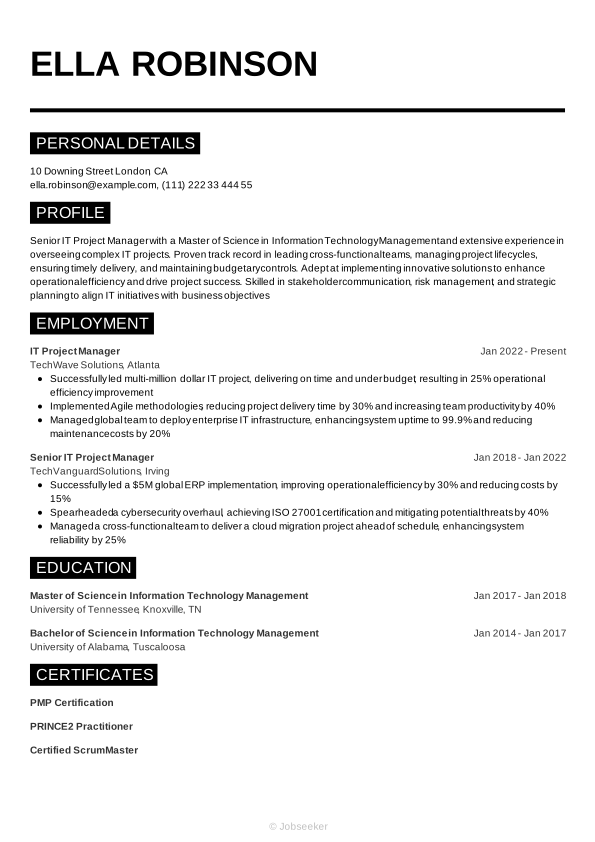
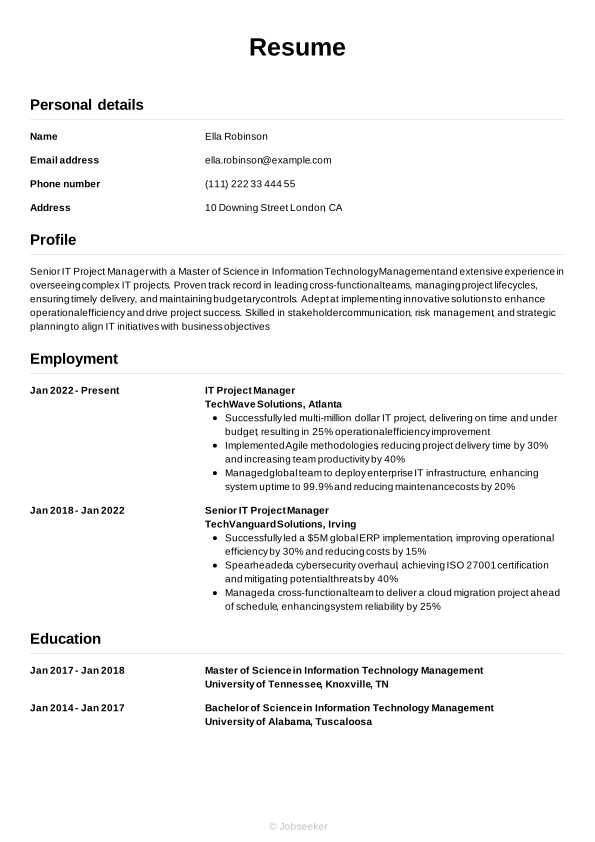
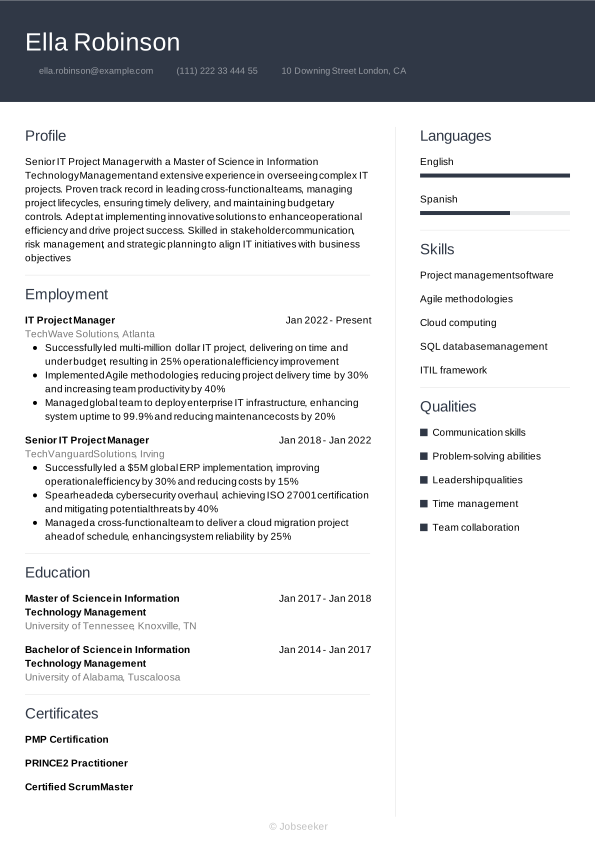
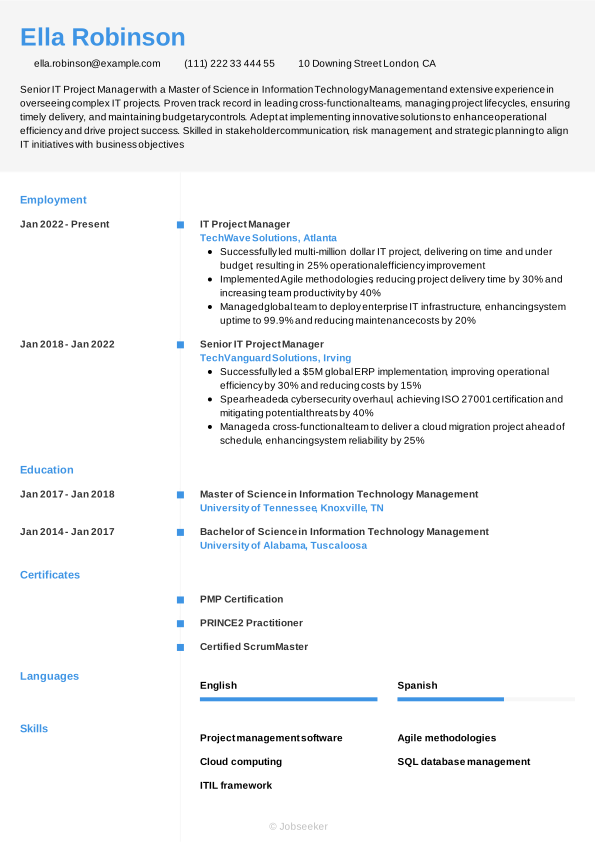
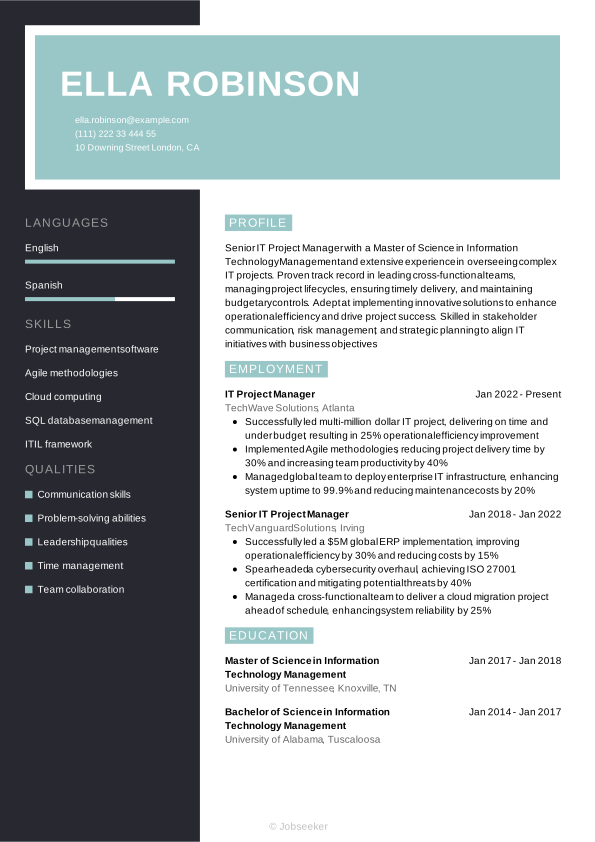
Not sure how it will all come together? Jobseeker's CV templates provide all the necessary CV sections, layouts and customisation options to create a CV that makes a strong impact with recruiters, while maximising compatibility with Applicant Tracking Systems (ATS). You can see how the same content on a CV looks different in various styles and layouts below:
Common mistakes when writing a CV
There's a lot to remember when you're crafting a perfect CV, and it can be easy to let mistakes creep in. Keep these common CV errors in mind when putting your application together, so you can avoid them in your CV:
Not tailoring your CV: A generic, catch-all CV might seem more convenient, but it's never going to have the impact of a carefully tailored and personalised CV. |
Spelling and grammar errors: There's no excuse for submitting a CV containing spelling and grammar errors. Use a spellchecker and proofread your CV carefully before sending it. |
Irrelevant or outdated information: Including irrelevant information in your CV will take up valuable space and do nothing to convince the reader of your suitability for the role. Equally, outdated information such as expired licences, or experience using obsolete equipment or software, is unlikely to help your chances. |
Using long paragraphs: CVs need to be easy to read and digest at a glance, and long paragraphs work against this. Use bullet points to make your CV concise and scannable. |
Adding sensitive personal details: Including sensitive personal information can create a dilemma for the employer surrounding anti-discrimination legislation, and can even discount your application from the running. Add as little personal information to your CV as possible. |
What to leave out of your CV
When considering what to write in a CV, you'll want to include enough detail and relevant skills and experience to show the reader you're a good fit for the role. However, there are several things that are better to leave out altogether. These include:
- Sensitive personal details: In the UK, the Equality Act 2010 makes it illegal to discriminate against anyone based on nine protected characteristics. These are age, sex, disability, belief/religion, race, marital status, pregnancy, gender reassignment and sexual orientation. As such, it's better to leave any of these details off your CV. It's also best to limit other personal information on your CV, such as your full address or a personal photo.
- Irrelevant information: The basic rule for any CV is to only include information that's relevant to the role. This means leaving out details such as car ownership or driving licences (unless they're required for the role), details of children, personal interests or political views, irrelevant previous jobs or qualifications, salary history or any negative comments.
- References: It's not necessary to include references in your CV. Employers would ask for these later in the recruitment process, and it can make your application look outdated. However, check the job listing to see if the employer asks for references up front. Should it be necessary, approach your referees before you add them to your CV. Should they accept, include their name, job title, organisation and contact details (phone number and email address).
Key takeaways for writing a successful CV
Writing a successful CV that gets you job interviews is a matter of carefully tailoring your document so it reflects the job description, while still portraying your unique skills, qualities and credentials. You'll want to select the CV sections and layout that best reflects your experience, qualifications and skills, and write using concise, impactful bullet points that include keywords for impact and ATS compatibility.
Final CV writing checklist
When writing your CV, follow this mini checklist so it includes all the necessary information, makes a strong impact and avoids the most common CV mistakes:
All relevant sections are included |
Contact details are up-to-date |
CV is tailored to the job description |
Skills are based on the position's requirements |
The CV is proofread and grammar checked |
You've saved/exported the CV as a PDF |
You've written an accompanying cover letter using cover letter templates that match your CV design. |
And if you want to take your CV writing to the next level, you can dive into the full version of our CV checklist!
Using professional CV maker tools and following the career resources offered by Jobseeker is a great way to ensure your application stands out from the crowd. Each CV template has an eye-catching design and an HR-approved structure that will help you communicate your credentials clearly and professionally. You can also find cover letter examples to use for inspiration with your application, and even upload an existing CV or your LinkedIn profile to get suggestions for how to improve it. Sign up today and start creating a winning job application in minutes.
CV writing FAQs
What is the difference between a CV and a resume?
In the UK, a CV and a resume are the same thing. Employers in the UK tend to use the word 'CV', but in the USA and Canada, 'resume' is the preferred word. In North America, a CV tends to be a longer document, usually reserved for academic or senior applications.
How far back should a CV go?
How far back your CV should go depends on your experience level, and the seniority of the role you're applying for. As a general rule, 10 to 15 years of career history is ample for a CV. If you have less experience than that, just include all your relevant experience from your career to date. For more senior roles, you may wish to list a longer career history as a way of proving your credentials as an expert in your field.
What do recruiters look for in a CV?
In simple terms, recruiters are looking at your CV for proof that you have the experience, skills and qualifications to do the job. Your work experience section tends to be the most important section of your CV, so focus on how you've used relevant skills to reach career milestones and achievements. Add a skills section that matches the skills listed in the job description, and show in your education section that you have all the essential qualifications, certifications and licences for the role.
How should I send my CV?
Unless the job you're applying for has its own dedicated application portal, it's usually best to send your CV via email. Save your CV as a PDF file with a suitably professional filename, and attach it to a CV along with your cover letter. Write a short cover note in the email, introducing yourself, confirming the role you're applying for and directing the reader to the attached documents.
Send your email from a professional-looking email address. Avoid using old email addresses you set up when you were younger, that might now appear immature or unprofessional. If necessary, set up a new email address based on your name, initials, date of birth or profession (for example, 'Sarah.Venables.Accountant@example.com').
How to make a CV for a first job / with no experience?
When you're writing a CV with no experience, you might wish to use a functional format (also called a skills-based format), which emphasises your skills and qualifications over your work experience. You can also use sections like volunteering, internships and hobbies and interests to show you have the skills necessary for the job.
If you're writing a CV for a first job, don't worry that you don't have much relevant work experience. Employers will more likely be looking to see if you have the skills necessary to learn and develop in the role, so add plenty of soft and transferable skills to your CV that show you're a proactive, enthusiastic learner.
How long should a CV be?
The best CV length to aim for is one side of A4 paper. This ensures a concise, easily scannable CV that employers can read and digest quickly. However, don't crowd the page with too much information. If you need to add a second page, this is better than submitting a CV with a fussy, confused layout. For senior, executive and academic positions, you may even wish to write a CV longer than two pages.

Impress employers with your CV
Step-by-step guidance to create a professional CV in minutes.