How to Write a CV Title (with Examples)
A powerful CV title helps you grab the recruiter’s attention. If you’re up against a crowd of applicants, it could give you a better shot at landing an interview.

You have 30 seconds to successfully hook a recruiter with your CV. Writing a short, value-led CV title could be the answer. But what does that actually look like?
In this article, you’ll learn:
- What a CV title is and what the benefits of one are
- How to write a strong CV title, and what to avoid
- Examples of a good CV title based on your career
Now let's start by defining what a CV title is and how it contributes to your CV.
What is a CV title?
The CV title — or “headline” if you will — is a short, snappy, one-line sentence that sums up your experience and skills. It’s located at the top of your CV under your name and your contact details (or directly under your name if you’re using a CV template).
The title quickly allows recruiters to evaluate whether you’re the right person for the job. It’s an excellent way to briefly and concisely describe your professional identity, highlight your strengths, and showcase your value as a candidate.
Data Insight
32.5% of recruiters explicitly want to see quantifiable achievements on a resume. When writing your CV title, consider including feats you can back up with numbers and stats.
What are the benefits of a title on your CV?
The main purpose of a title is to make a great first impression with recruiters and employers so that they want to keep reading the rest of your CV. A strong title can save your CV disappearing down a black hole in many ways:
- Grab the recruiter’s attention: Many candidates point out the obvious and write the words ‘CV’ or ‘Curriculum Vitae’. However, unless your CV is in a completely unrecognisable format, this is a waste of valuable space. Make the title relevant to the job you’re applying for.
- Get your CV past the ATS: One of the first things an ATS (Applicant Tracking System) will do is to scan the title of your CV to find out whether you’re a match for the job or not. Including the relevant keywords and information ensures that your CV will get past the ATS and into the hands of a recruiter.
- Give your CV focus: If you have a lot of experience, a CV title allows you to narrow down your work history and focus on the skills and experience relevant to the job application. It’s an efficient way to let recruiters and employers know what you do without them having to connect the dots between your different jobs.
- Highlight your skills and experience: A CV title lets recruiters know that you’ve got the right skills and why you’re a suitable candidate. You could highlight certifications or achievements to boost your value.
For example, you could write ‘Detail-Oriented Administration Assistant with Advanced Level Excel Skills‘ instead of 'Administration Assistant' if the role requires high attention to detail and a lot of Excel work.
Below, you can find a few CV examples with CV titles for different industries and see where to place your CV title in a professional way and to adapt your own based on your industry and experience.
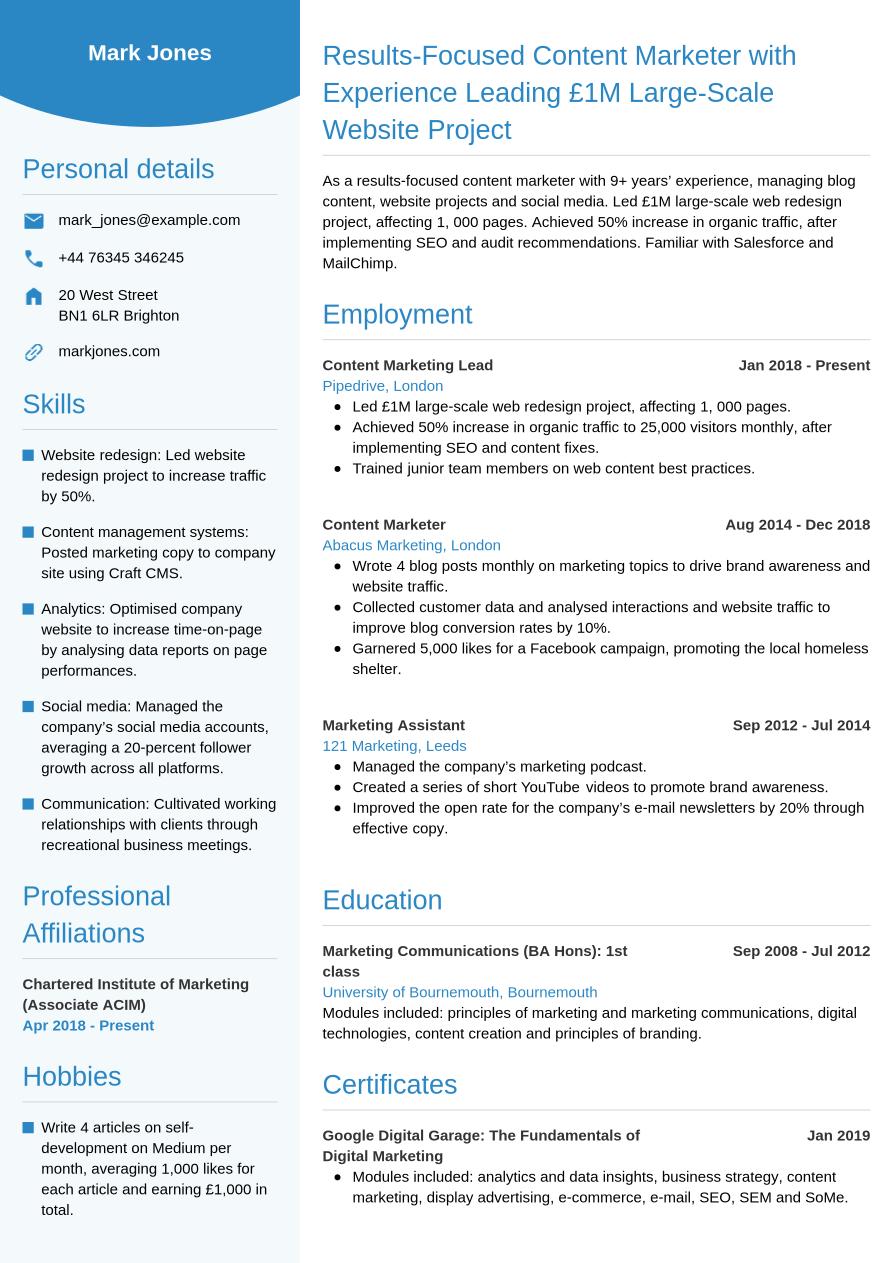
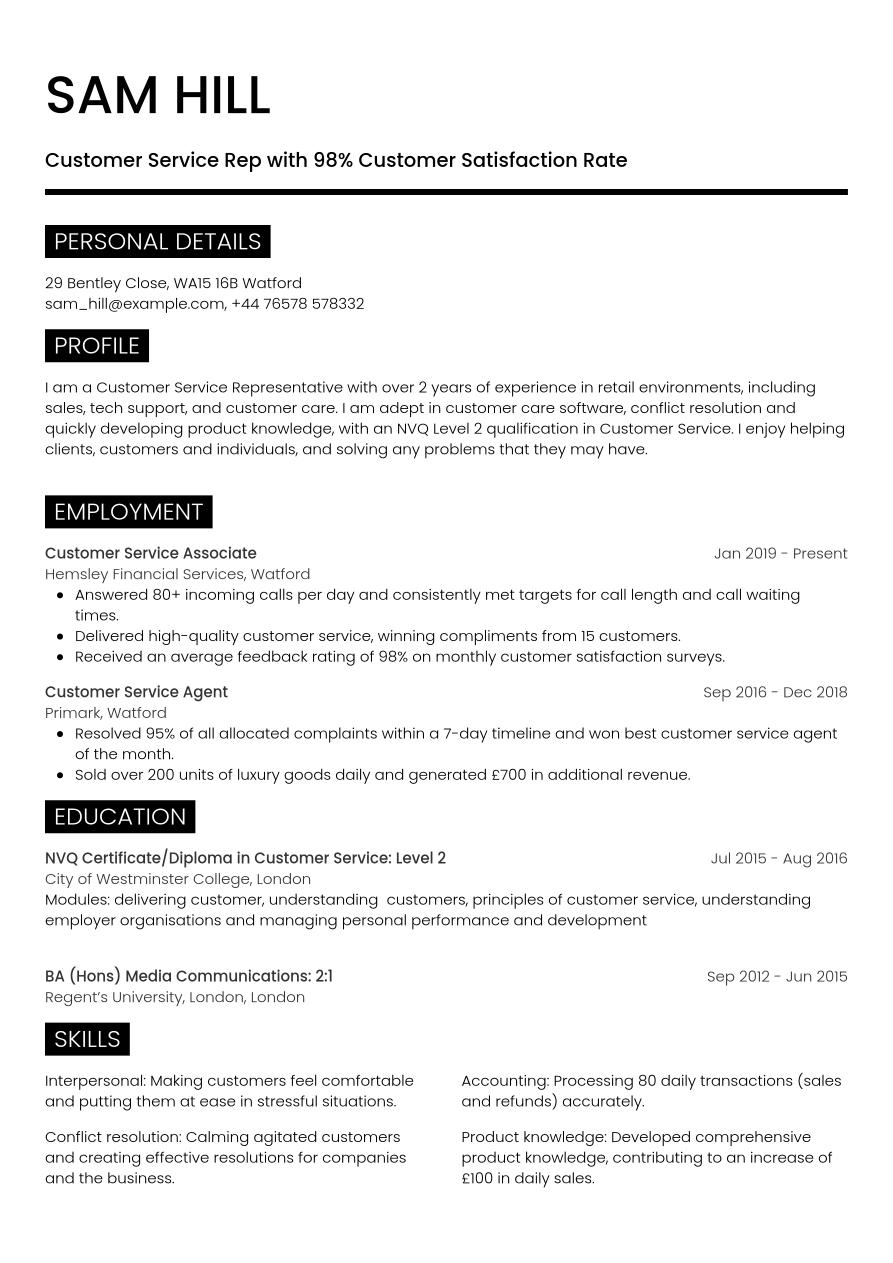
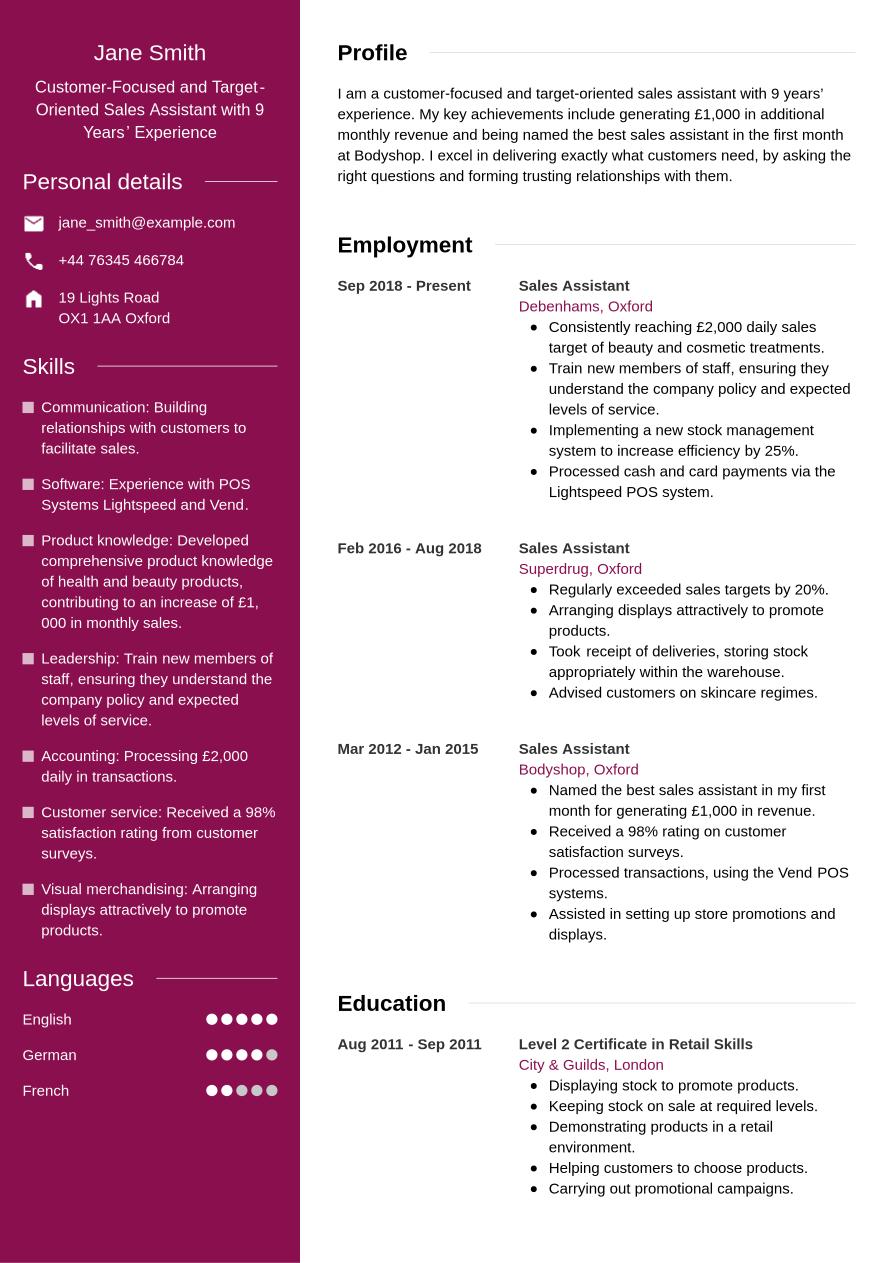
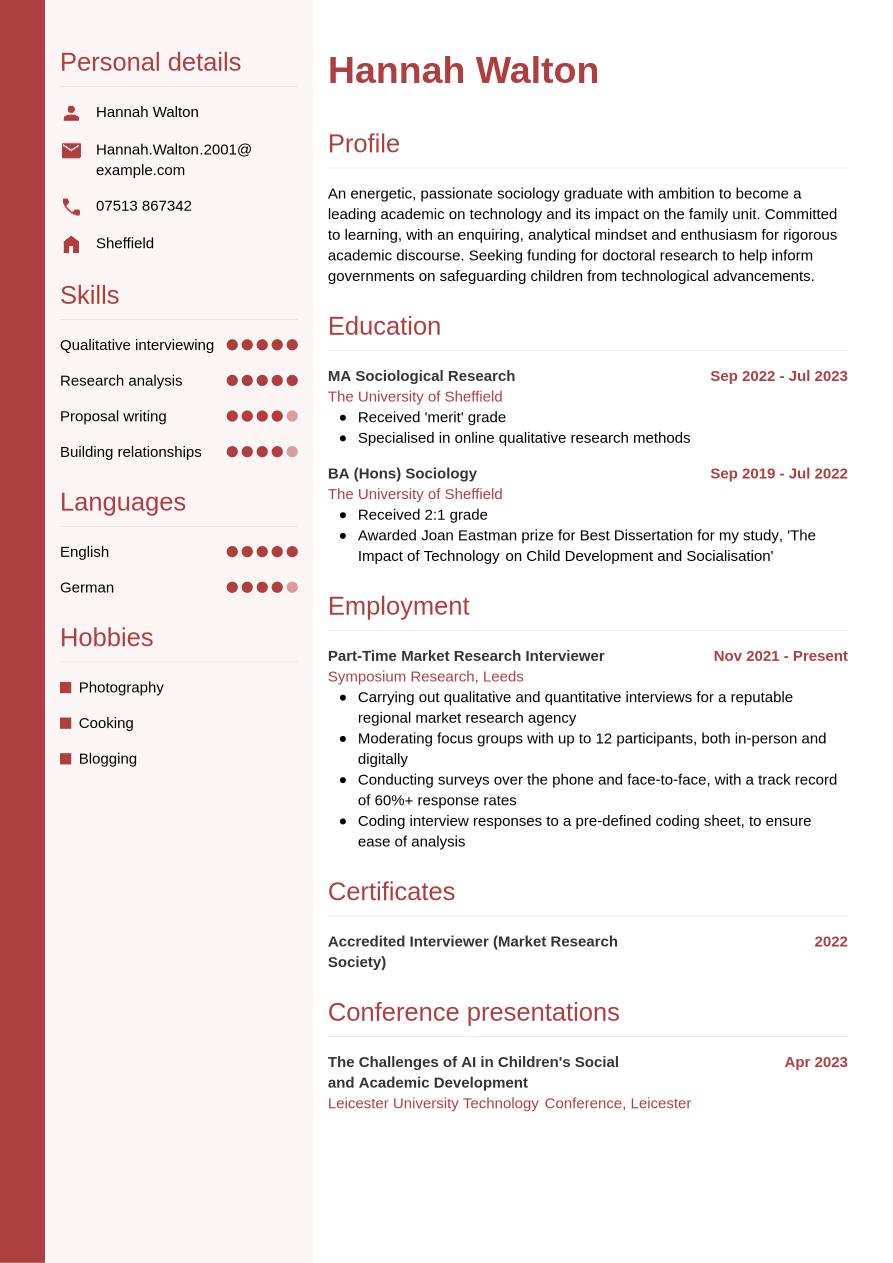
5 Tips for writing a strong CV title
That one little line at the top of your CV can make all the difference. In the same way as the headline of a newspaper article, your CV title should create enough intrigue for recruiters so that they want to read the rest of your CV. But what makes a good title?
1. Keep it short and sweet
Recruiters don’t have a lot of time to spend on your CV. Limit your title to a brief phrase that encapsulates your value; anything longer and it defeats the point of a title. You’ll have plenty of opportunity to provide further details in the rest of your CV or in your cover letter.
2. Include keywords in the title
The more relevant the title, the more it will stand out from the crowd. One way to get your CV noticed is to use keywords from the job description in your CV title. These will usually show up in the ‘Qualifications’ and ‘Responsibilities’ sections.
Editing your title to align with the job criteria is a smart move. The more specific and focused your title is, the better the chance you’ll have at getting past the ATS filter.
3. Write a new title for each job
In the same way, you'll need to tailor your CV to each job application, you’ll also need to write a new title. This shows recruiters and employers that you’ve taken the time and care to help them understand your suitability for the role.
Read the job description carefully to identify the skills, experience and qualities required, and try to incorporate these into your title. If possible, include the job title as well.
4. Be specific and add metrics
Avoid words such as ‘hard-working’ and ‘responsible’. These are common attributes that can be applied to anyone and say nothing about your abilities or experience.
- You might want to refer to professional qualifications or certifications, for example: PMP-Certified Project Manager
- Be specific about your skills and quantify your skills or achievements, for example: Sales Associate Who Surpassed Targets by 40%
Think about what it is that makes you unique, and lead with that. That way, the first thing a recruiter will see when they glance at your CV is your USP.
Expert Tip
Use metrics to strengthen your CV title.
These can include:
- The number of years of experience
- The amount of sales made in monetary terms
- The amount of products sold or number of people managed
5. Make it stand out
A catchy title only works if you place it strategically on your CV. The ideal position on your document for this is at the top of the first page.
You don’t want it to blend in with the rest of your CV. Consider using bold and a bigger font to make your CV title stand out. However, be sure to choose a font that is legible on different devices. While decorative fonts look nice on a desktop, they can be illegible on a mobile device.
If you’re applying for a creative position, you may want to include an eye-catching image or have a banner in the background to highlight your creativity.
Best CV title examples depending on your employment
Ready to get started? The title you use should depend on your experience and the industry you’re in. Use the following formula to help you nail it every time:
CV Title Formula: [Target Job Title] + [Specialty] + [Experience or Value]
As you can see in our example, you can use a line symbol to break up the different aspects of your CV title. This helps the line to look neat and makes it easier for the recruiter to read.
Here are a few titles that are attention-grabbing and highlight the suitability of the candidate:
Examples for students |
|
Examples for graduates |
|
Examples for experienced professionals |
|
Examples for career changers |
|
Examples for senior workers |
|
Things to avoid when writing a CV title
Now that you’re clear on how to write a compelling CV title, let’s talk about some of the major mistakes you want to avoid:
Avoid | Why? |
|---|---|
Using vague or generic titles | Things like 'Professional' or 'Experienced Worker' tell recruiters nothing about your specific skills. Cut this filler and add something with real value. |
Making it too long or wordy | Keep it to one concise line. Anything longer than that can start to look like a professional statement, which you’ll tackle below this. |
Using jargon or acronyms | If the terms aren't universally understood outside of your industry, leave them out. You don’t want to alienate the reader. |
Being dishonest or exaggerating your experience | Lying on your CV is a bad move and this will be caught when the recruiter tries to verify things. |
Using all caps or excessive punctuation | This may feel enthusiastic but it looks unprofessional and desperate. Avoid it. |
Packing it full of clichés | Saying you’re ‘driven’ or that you’re ready to ‘hit the ground running’ doesn’t mean much to a recruiter. Don’t waste words on clichés. |
Using the same one for every CV | Your CV title needs to change with every job application. Tailoring it to the role you’re applying for gives you a better chance of impressing the recruiter. |
Using a casual tone | While your CV title needs to be attention-grabbing, it shouldn’t be overly casual. Adding something like ‘The #1 Writer in the World’ fails to hit the mark. |
Create your CV title with our tool
Crafting a well-written CV title is a smart way to get the recruiter’s attention. Make sure it’s short and snappy, while including your top achievements. Tailor each CV title to the role for which you’re applying. You should also include metrics to underpin any statements you make.
Use Jobseeker’s CV builder tool to create your title in seconds. The app features AI-driven suggestions to help you stand out from the crowd. Get started by choosing from our beautifully designed CV templates now.
Frequently asked questions about CV titles
How long should a CV title be?
A CV title should be short and to the point. Aim for between five and 10 words. That should be long enough to convey your role, specialism, and any standout credentials.
Should I include a CV title?
In the UK, CV titles are optional. You don’t have to include one. However, adding one is a snappy way to show the recruiter what makes you a great fit for the job.
Can I use the same CV title for every application?
No, you should tailor your CV title to the job application. Take a look at the job criteria, and make sure you align the statement with the demands of the job for the best results.
How do I write a CV title with no experience?
Focus on any notable achievements or feats instead. For example, you might want to note your stellar exam results, a project you worked on, or a specific field of interest.
How do I write a CV title if I'm changing careers?
Be upfront about the career change you’re making. Reference your previous career and the pivot. For example ‘Doctor Transitioning to Consultancy’. This tells the recruiter what they need to know at a single glance.
Can I use my CV title in my cover letter?
Yes! It's a good idea to follow the same logic in your application documents. When your cover letter mirrors your USPs and advocate for them, your application becomes stronger.
You can use our cover letter templates to mirror the design and title of your CV and write a tailored application letter based on your CV with our AI-assisted cover letter maker.

Impress employers with your CV
Step-by-step guidance to create a professional CV in minutes.
![How to Upload Your CV Online [Also from Your Phone]](/api/media/images/ecd59bfe-56eb-4e05-9b9a-57ef206d03a0/380-190-18.49%2C0.00%2C68.35%2C100.00/how-to-upload-your-cv-online-also-from-your-phone.jpg)