Writers CV Example
Successfully pursuing a career as a writer requires a CV that gives you the edge over other candidates and shows your skills and achievements in context. Mentioning responsibilities from your previous experience, such as writing engaging content and optimizing for SEO will indicate to the employer that you're a good fit for the role. In this guide, you'll find comprehensive tips and advice on creating a writers CV that makes a strong impression and puts you in the top bracket of applicants.
A writers CV that includes all the necessary details and is tailored carefully to the job description puts you in a great position. It can help you pass the ATS screening stage, make a strong impression with the employer and reach the latter stages of the recruitment process. Let’s take a closer look at the key parts of a CV and how to shape them so they communicate your creative vision as clearly as your experience.
Standard writers CV sections
Your writers CV writing strategy may vary significantly according to numerous factors, such as your previous experience, your seniority and the requirements in the job description.
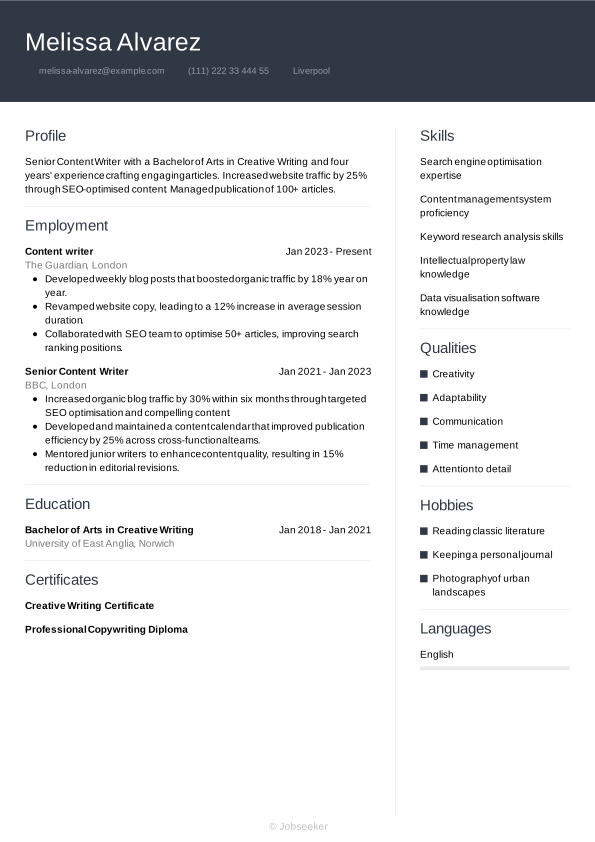
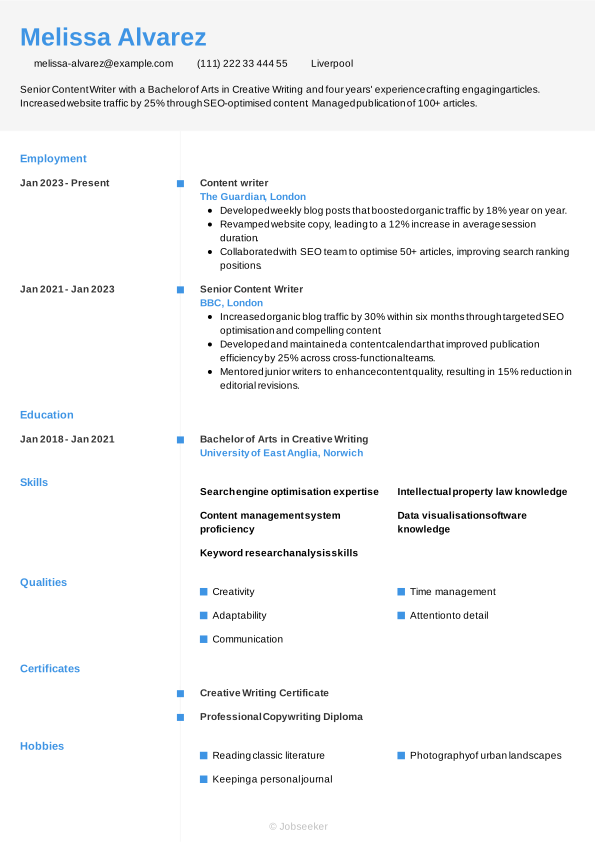
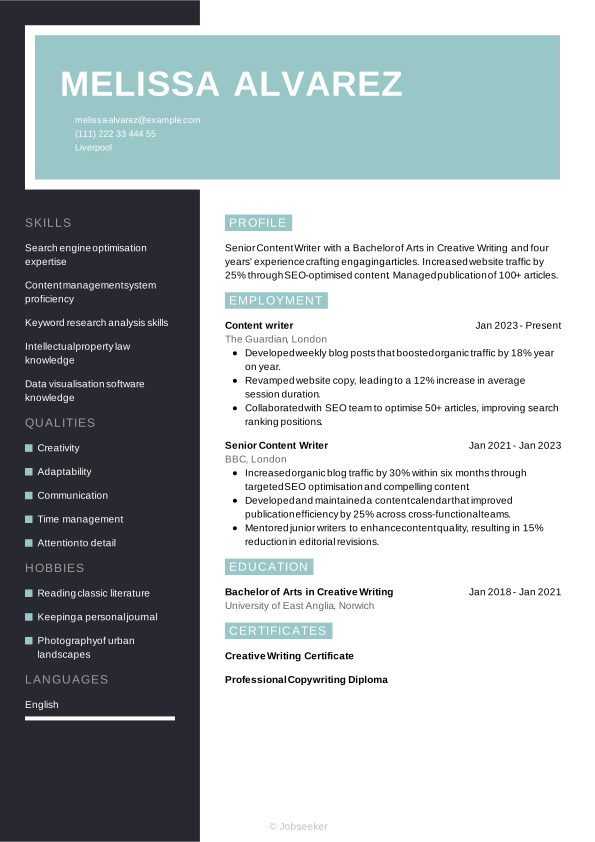
However, at any stage of your career, a writers CV serves as a professional biography that must clearly illustrate your career trajectory. To help you tell that story effectively, we will now break down the document piece-by-piece, starting with your contact header and moving through the key pieces of your professional path.
CV Header
Kick off your writers CV with a header listing the essential contact information such as your name, email address, phone number and location. You don't typically need to include your full address. Incorporate design elements that set the tone and design language of your document. Additionally, including your LinkedIn profile as a URL can be useful, as it will help the reader to quickly and easily access further information about your career and credentials.
When you're applying for jobs in the UK, it's generally not advisable to include a photo or more personal details than are strictly necessary, such as your age, gender, ethnicity or nationality. Including these can jeopardise the recruitment process by introducing bias, and can fall foul of the Equality Act 2010.
Melissa Alvarez
melissa-alvarez@example.com
(111) 222 33 444 55
Liverpool
linkedin․com/in/melissa–alvarez–123
CV Summary
Below your CV header, the next section tends to be a CV summary or CV objective. This paragraph briefly explains a few of your key skills and qualities, so employers can easily understand whether you're likely to be a suitable candidate for the writer job. As an alternative to the CV summary, you might wish to write a CV objective. This serves a similar purpose, but instead of focusing on your experience, it highlights you career ambitions and objectives.
In your summary or objective, write two or three sentences introducing your key skills, unique qualities and career achievements, making sure they match the key requirements listed in the job description.
An effective summary will include brief reference to one or two of your strongest skills, ensuring they reflect the skills listed in the job description. It's important to make your skills and qualities feel unique to you, and show how you've used them to positive effect in your career to date. Here's an example of an effective writers CV summary, with evidence of your impact and neat, well-structured sentences:
Best example:
Senior Content Writer with five years’ experience and a BA in English Literature. Produced SEO-optimised articles that boosted organic traffic by 30%. Led campaigns improving user engagement by 20%.
Worst practice example:
Experienced content writer with a solid background in crafting diverse written materials, demonstrating adaptability, effective collaboration and dedication to quality, while striving to deliver impactful writing and support overall marketing objectives.
The CV summary above contains various red flags and things to avoid. While the differences are subtle, they can make all the difference. An ineffective summary might be vague or generic, failing to highlight specific personal qualities that help you stand out and failing to address the requirements specified in the job description. They might also lack firm evidence of your skills, and be structured with long, hard-to-read sentences.
Work Experience
A CV's work experience section is usually its most important element. Employers will want to see how you've developed relevant skills in previous roles, and how you've put them to good use in successful projects and career achievements. Ensure you tailor your work experience section to reflect the job description and show you meet all the essential requirements. This means picking out skills and qualities as keywords and reflecting them back in your work experience bullet points, so employers can assess your likely fit for the role.
List only relevant previous jobs, and add your job title, the name of the employer, its location and your dates of employment. Under this, write several bullet points showing employers how your skills and key qualities contributed to positive outcomes.
Standing out with your CV work experience section means using action verbs and measurable outcomes to show the impact you made. You'll want to outline a progression in your skills development, and list evidence of the value you added. Take a look at this writers CV example work experience section for inspiration:
Best example:
Senior Content Writer, January 2023 - Present
Starlight Publishing Ltd, Cambridge
- Achieved a 30% increase in website organic traffic by optimising blog posts with SEO best practices.
- Developed a series of white papers that generated 200 qualified leads and boosted brand credibility among B2B clients.
- Increased average email open rates by 15% through targeted subject line A/B testing across subscriber segments.
Worst practice example:
Senior Content Writer, January 2023 - Present
Starlight Publishing Ltd, Cambridge
- Optimised web content for improved online presence and user engagement across multiple digital channels through strategic SEO practices.
- Produced a series of industry focused white papers to enhance brand credibility and support lead generation efforts among B2B clients.
- Tested varied email subject lines and segment targeting to boost open rates and refine campaign performance over time.
Take a look at a less strong writers CV work experience section above. The work experience section could fail to make an impression if it's too generic, focuses on older or irrelevant roles or lacks tailoring to the job description. It's also important to avoid focusing too much on responsibilities that don't tell the reader anything of the value you added to the role.
Professional Portfolio
In some cases, it can be beneficial to include a link to a portfolio, or to examples of your work.
Portfolios are typically favoured by creatives or candidates who produce work of a visual nature. However, there's no reason you can't showcase any type of work sample in your CV, assuming you can upload it or find it online. If you choose to add work samples to your CV, you could either add a link to a portfolio, or separate links to examples of completed projects. If adding a portfolio link, you could do so either in its own section, or in your CV header. If adding separate examples, you could include these are links to a company website, your LinkedIn profile or any other place where your work is hosted.
Education and Qualifications
Your education section should showcase your most recent and highest qualifications, paying particular attention to anything that's specifically required for the role.
A degree is typically a strict requirement for writer jobs, and as such, you'll want to showcase yours in your CV. If you have a Bachelor of Arts in Creative Writing or another similar, relevant degree that confirms your eligibility for the position, include it in your CV. You might also wish to add other degrees or qualifications that highlight your strongest skills, such as intellectual property law knowledge or keyword research analysis skills.
Creating the education section of your CV means selecting the most relevant and highest qualifications, and listing them in reverse-chronological order, starting with your most recent achievements and working back from there. When adding each qualification, include the name and level of the award, the institution, its location (if necessary), and the dates you attended or graduated. It can also be valuable to add bullet points outlining your key achievements and activities, such as projects you worked on, modules you completed, awards you won or societies you participated in while studying.
You might also wish to add specialist qualifications, certifications or licences that are required for the role. If you add any of these, include the expiry date, if the qualification requires renewal in the future.
Bachelor of Arts in English Literature, 2018 - 2021
University of Westminster, London
Skills
Your CV's skills section CV's skills section is a great place to showcase some of the key skills necessary for the role. Check the job description to understand which skills are most essential, and provide a combination of hard and soft skills, reserving space to include some unique qualities that can help you to stand out from the competition. In a writers CV, only list the most relevant and essential skills you possess, such as adaptability and intellectual property law knowledge, to make a positive first impression and show you're qualified for the writer position.
Hard Skills
Hard skills are the specialist technical skills that are essential for carrying out the duties of the role. They might be developed through study, on-the-job training or experience in the industry, and some hard skills may require a licence or certification. For writer jobs, critical hard skills you've gained in your career can include intellectual property law knowledge, and content management system proficiency. After reviewing the job description, compile a list of four or five key hard skills for your writers CV to show you're capable of carrying out the duties required for the role.
The best hard skills to include are typically listed as 'essential' or 'required' in the job description. Aim for a mix of the most desirable skills, together with those you have the highest proficiency in. For the best chance of success, you'll want your strongest skills to match closely with those most desired by the employer.
Take a look below to see the type of skills that are commonly listed in a writers CV hard skills section:
- Search engine optimisation expertise
- Content management system proficiency
- Keyword research analysis skills
Soft Skills
Soft skills are distinct from hard skills and tend to reflect your inherent personal qualities and strengths. These are often more transferable to different roles, and help the reader understand your working style, and your likely fit to the team and the organisational culture. Owing to the rapidly evolving nature of the work landscape, soft skills are growing in importance for a number of roles and industry sectors where technology is replacing hard skills. Additionally, soft skills are particularly valuable for junior and entry-level candidates, who might not have much work experience but have the right building blocks for a successful career.
As with your writers CV hard skills list, review the job description to learn the key soft skills for the role. Include the best soft skills that you can provide evidence for throughout your CV. Craft a list of up to five key soft and transferable skills that reflect the job description, while also including some of your strongest, most unique skills to stand out from the crowd.
The section below provides an overview of soft skills often highlighted in a writers CV.
- Creativity
- Adaptability
- Communication
Expert Tip:
According to the National Careers Service, a professional CV should use simple fonts, structured sections, and consistent formatting to ensure readability. (1)
Certifications and Training
To showcase additional qualifications and training beyond the basic requirements for the role, consider adding a certifications section to your CV. If you've been proactive in pursuing professional development opportunities throughout your career, it's worth showcasing them. Not only do they make you more qualified, they also show a proactive and motivated mindset. Furthermore, if there are any necessary certifications or licences for the job, this CV section takes on even more importance. If you're applying for a technical role or a position that involves the use of specialist software or equipment, these might make it more necessary to include a section showcasing your training.
These example certifications and licences are ideal for candidates applying for writer roles:
- Creative Writing Certificate, 2023
- Professional Copywriting Diploma, 2023
- Digital Content Marketing Certification, 2023
Languages
If you speak any additional languages, you might want to consider adding a languages section to your CV. Even if languages aren't a requirement of the job description, speaking a foreign language can reflect well on you as a candidate, and correlate with other soft skills that can increase your employability. In this section, include any foreign languages you speak to a standard that could be useful in the world of work, with an indication of your proficiency level.
The methods for indicating your foreign language skills on your CV include assigning a basic descriptive word, such as:
- English: Fluent
- Spanish: Intermediate
You might choose to adopt an international standard framework for languages, such as the Common European Framework of Reference (CEFR). This assigns a standardised level to your language skills, for example:
- A1: Beginner
- A2: Elementary
- B1: Intermediate
- B2: Upper intermediate
- C1: Advanced
- C2: Proficiency
Optional Sections
Adding optional sections to the end of your writers CV is a good way of showing you have the necessary skills for the job. If you're struggling to show all the necessary skills for the job through your work experience or other core sections, optional sections can give your CV the boost it needs to progress you to the interview stage. This could be particularly helpful for entry-level candidates or career changers.
You’ll find more in-depth guidance on structuring your CV in our career resources, designed to help you present your skills as effectively as possible.
Hobbies and Interests
Your hobbies and interests can be a useful way of showcasing additional skills that are relevant to the job description, but that you haven't been able to prove via your work experience. Additionally, this section gives you the chance to show employers different facets of your personality and interests beyond work, which can help them to differentiate you from other applicants. However, only mention hobbies and interests that are relevant to the role, and that help you prove skills that you haven't been able to show in your work experience or other CV sections.
Key Achievements
Compiling your key career achievements into a single list is an effective way of making your CV more readable at a glance. If you've been awarded any prizes or accolades, or reached any key career milestones, these can all help to show you have the required status and experience for the role.
Volunteer Roles
Another valuable optional section for your CV is volunteering. This section can offer a great alternative showcase for your skills and experience, if you don't have much relevant work experience. Consider adding this section if you have any relevant unpaid experience, either as a junior candidate or a career changer. For this section, use a similar structure to your work experience section.
List your job title or a description of the role, the organisation name, its location and the dates you occupied the role. Use bullet points to show employers how you put your skills to use, and any positive achievements from your time in the role.
References
For UK job applications, it's rare to include references on a CV and employers don't tend to request them until later in the recruitment process. However, it's worth checking the job advert just in case. If you need to include references in your CV, aim for two or three and list their name, their contact details, their job title and the organisation they work for.
Always seek permission before you add them to your CV. Alternatively, it can be neater to simply add a line to your CV confirming you can provide references at the appropriate juncture, such as 'references are available upon request'.
Analytical Insight:
More than 80% of HR executives say the design of a CV has an impact on the way they assess an application. (2)
Best action words for a writers CV
Starting each of your work experience bullet points with strong action verbs is a great way to showcase your key skills and qualities, and demonstrate the impact they've had in your career to date. Start each bullet point with a verb linked to the skills required in the job description, to add focus to your work experience section and make it easy for the reader to identify your strengths. When adding action verbs to your work experience bullet points, just remember to always provide quantifiable evidence that shows the value you added for each employer. Use past tense for any action verbs that describe previous roles (for example, 'developed') and present tense for current roles (for example 'collaborating').
- Write
- Edit
- Proofread
- Research
- Publish
- Conceptualise
- Craft
- Revise
- Draft
- Collaborate
Writers CV example
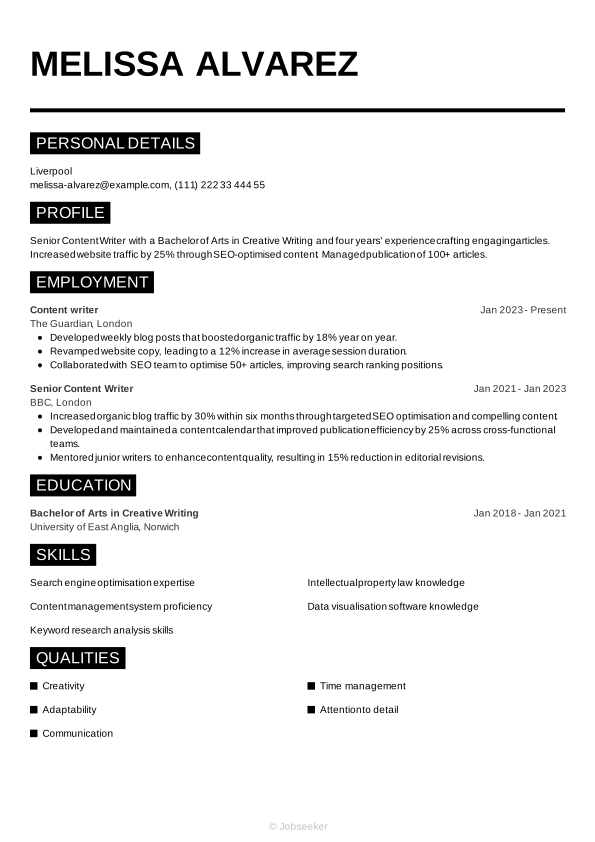
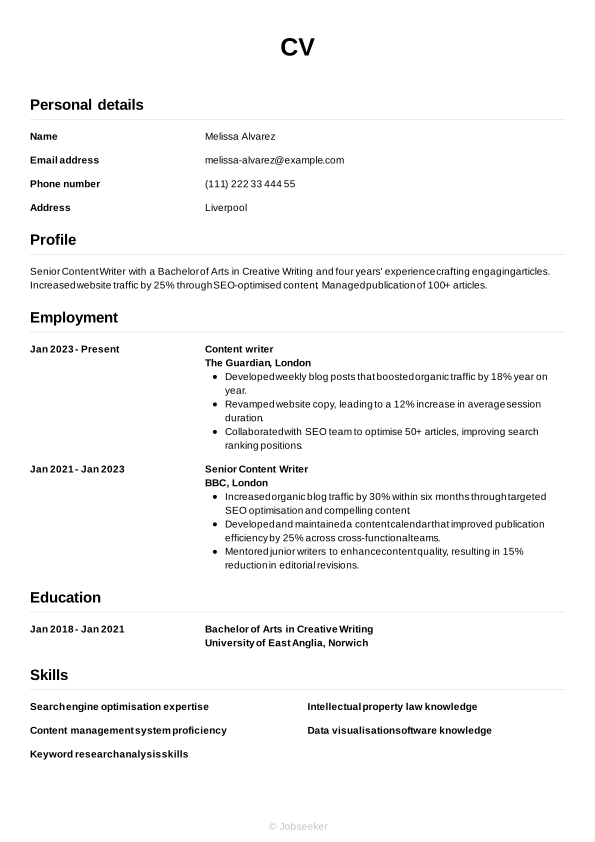
Now that you know exactly what to include in your writers CV, we can take a look at a final, finished example below:
Liverpool
•
melissa-alvarez@example.com
•
(111) 222 33 444 55
•
linkedin․com/in/melissa–alvarez–123
Senior Content Writer with a Bachelor of Arts in Creative Writing and four years' experience crafting engaging articles. Increased website traffic by 25% through SEO-optimised content. Managed publication of 100+ articles.
Content writer
2023
-2026
The Guardian (London)
- Developed weekly blog posts that boosted organic traffic by 18% year on year.
- Revamped website copy, leading to a 12% increase in average session duration.
- Collaborated with SEO team to optimise 50+ articles, improving search ranking positions.
Bachelor of Arts in Creative Writing
2018
-2021
University of East Anglia (Norwich)
Search engine optimisation expertise
Content management system proficiency
Keyword research analysis skills
Creativity
Adaptability
Communication
Creative Writing Certificate
Professional Copywriting Diploma
English - Native
French - Advanced
If you want to get a feel for how your CV will look once you finalise its design and layout, check out our CV examples for inspiration.
The dos and don'ts of a successful writers CV
Tips to follow
- Add a dedicated skills section, including a summary of your key hard and soft skills that also reflect the job description.
- Use action verbs to showcase how you put your strongest skills to good use in previous roles, and demonstrate the impact they had.
- List your qualifications in a dedicated education section, with any outstanding grades or awards, if applicable, to help your application stand out.
- Use reverse-chronological order to list your work experience, starting with your current or most recent position and working back through relevant roles.
- Proofread your CV in detail before sending it, to avoid unnecessary errors in spelling and grammar that could undermine your chances.
Common mistakes to avoid
- Don't add any unnecessary personal information, such as your age, gender, marital status, or a personal photo, unless it's required for the role.
- Don't lie or exaggerate about events in your career, such as previous jobs, qualification or key achievements – it can backfire and disqualify you from the running.
- Don't design your CV with overly complex or elaborate formatting that can make it difficult to read or less likely to pass the ATS stage.
- Don't add unrelated information about previous work experience, as this takes up valuable space on your CV and ultimately won't increase your chances of success.
- Don't forget to check your contact details to make sure they're current, and update your LinkedIn profile to ensure it doesn't contradict your CV.
How to make your CV ATS compatible
Many employers now use applicant tracking systems (ATS) to assist with managing the recruitment process. One of the key elements of most ATS apps is the ability to scan CVs and rank them according to their likely match to the job description. By assuming this role in the recruitment process, ATS apps can reduce the amount of time employers need to spend reviewing CVs. With hundreds of applications for a single vacancy becoming increasingly commonplace, this increased efficiency is extremely valuable for employers.
The increasing usage of ATS apps by recruiters and employers means it's critical to adapt and prepare your applications to successfully navigate this stage of the selection process. Following the tips below will give you everything you need for an ATS-compatible CV:
- Include keywords and phrases that mirror the job description to maximise your chances of ranking highly in the ATS screening stage.
- Use clear, conventional CV headings to make your CV easier to navigate, including 'work experience', 'education' and 'skills'.
- Choose a simple, standard CV structure and omit any design elements that might make your CV less easy to read by automated systems, such as text boxes and columns.
- Select a font that increases the readability of your CV, such as popular serif and sans serif fonts, between the sizes of 10 and 12 for main text and 14 and 16 for headings.
- Use bullet points instead of writing full sentences, to reduce the overall length of your CV, make it more keyword-dense and help ATS apps to scan it more easily.
You might feel there are a lot of steps to creating an ATS-compatible writers CV, but with just a few small changes, you can ensure your CV passes this stage. Use one of our ATS-compatible CV templates, which are designed by experts to give you the best chances of success.
Jobseeker's CV templates can help your CV to make a strong first impression with recruiters. Each template is expertly designed and approved by HR specialists to help you craft a winning application.
Writers CV FAQs
Should I include a personal photo on my CV?
Adding a personal photo to your CV might seem like a useful way of adding some colour to the design to help it stand out from the crowd.
However, in the UK, it's best to avoid adding a photo to your CV. It can risk creating bias (whether conscious or unconscious) that threatens the integrity of the recruitment process.
Sometimes you may find employers request a personal photo on your CV in the job advert. This tends to be for roles where your appearance plays an important role, such as for acting or modelling jobs. If you're not sure, always check the job advert and unless mentioned, avoid adding a photo.
How do I create a writer cover letter to go with my CV?
A well-written cover letter can be just as important as a CV for your chances of job application success. When writing your cover letter, choose a formal professional letter format and use a cover letter template that matches the design of your CV.
Most cover letters include three standard paragraphs of information. The letter opens with a brief personal introduction and confirmation of the role you're applying for, and your motivations for applying. In the next paragraph, list some key skills and career achievements related to the role, taking care not to repeat your CV. Finally, end your cover letter with an expression of gratitude for considering your application, and a call to action that puts the ball in the court of the employer to arrange an interview or establish dialogue with you.
As an alternative to the traditional cover letter, you may wish to send your application via email with a simple cover note. This includes a short introduction to yourself, confirms the role you're applying for and directs the reader towards the attached CV. With email cover notes, you don't need to follow full letter-writing conventions and can be less formal in your tone. Always include your contact details in your sign-off or email footer.
Jobseeker's cover letter examples for publishing industry job titles can help you gain valuable insights from HR specialists on how to craft the most engaging, professional cover letter.
How do I write a compelling writers CV without experience?
Even if you're lacking relevant work experience, you can still write a writers CV that impresses employers.
Choose a functional CV format, that gives greater emphasis to your skills than to your work experience. In this layout, the skills section comes immediately below your CV summary, followed by education, with work experience taking less priority.
For junior or entry-level roles, employers may be more keen to know whether you have the right soft and transferable skills to adapt to the requirements of the role. In this case, place greater emphasis on soft skills for a junior writers CV.
How do I write a writers CV headline?
A CV headline can help you add relevant keywords into your CV, aiding ATS compatibility while catching the attention of the reader from the outset.
Aim to write a short, engaging sentence that includes the job title and shows you to be a good match for the job description.
To give your CV the best shot at success, write a CV headline that focuses on the most essential keywords and phrases from the job description. This will strike a chord with the hiring manager and help your CV to pass the ATS screening stage.
See below for some examples that you can use as inspiration for writing a CV headline for different experience levels:
- Junior Content Writer and Editor
- Creative Freelance Writer and Editor
- Senior Strategic Content Development Editor
A professional cover letter is a key element of any successful job application. Match your cover letter to your CV's style with our professionally-designed cover letter templates.
Key takeaways for a winning writers CV
To stand out from the crowd with your CV, tailor your approach to each individual application, incorporating keywords and phrases that match the job description. Use a CV format that reflects your experience levels, and emphasise your skills and achievements throughout your CV, to show employers you've got the required skills and experience for the job.
Finally, enhancing the look and feel of your CV using one of Jobseeker's HR-approved CV templates can help leave a lasting impression on the reader, and boost your chances of success with your job applications.
Sources:
- National Careers Service, How to write a CV
- Jobseeker, HR Insights

Impress employers with your CV
Step-by-step guidance to create a professional CV in minutes.