Music Industry CV Example
If you're hoping to launch a career in the entertainment industry, including music industry professional roles, it's essential to write a CV that shows your skills and achievements in the best light. Mentioning responsibilities from your previous experience, such as negotiating licensing deals and managing artist portfolios will indicate to the employer that you're a good fit for the role. In this comprehensive guide, you'll learn the steps to producing a music industry CV that puts you in pole position to progress to the interview stage.
A music industry CV that's well-written, engaging and showcases the most relevant skills and experience gives you the best chance of progressing to the next stage of the recruitment process. Now let’s explore the main sections of a CV and see how to structure each one to showcase both your skills and your creative voice.
Standard music industry CV sections
Your approach to creating your winning music industry CV will differ depending on your experience, your seniority and the details listed in the job description.
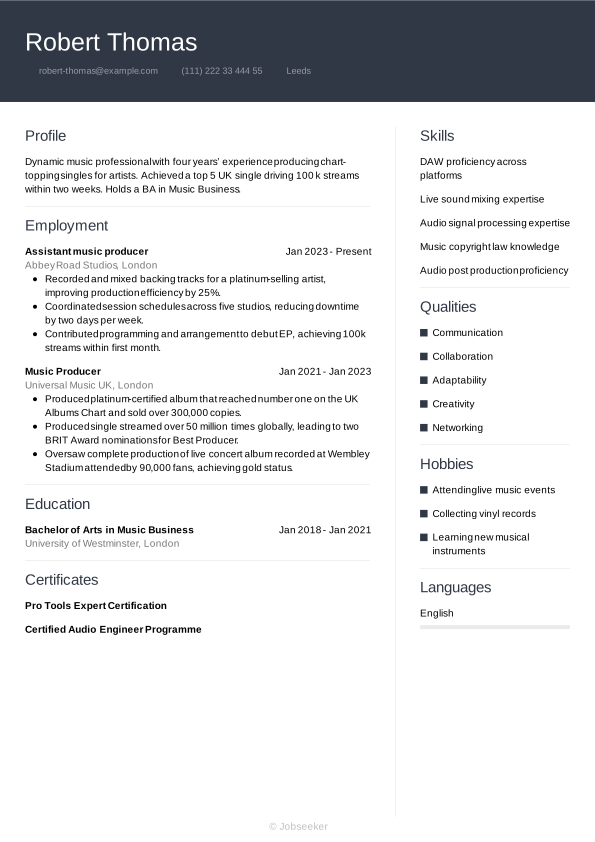
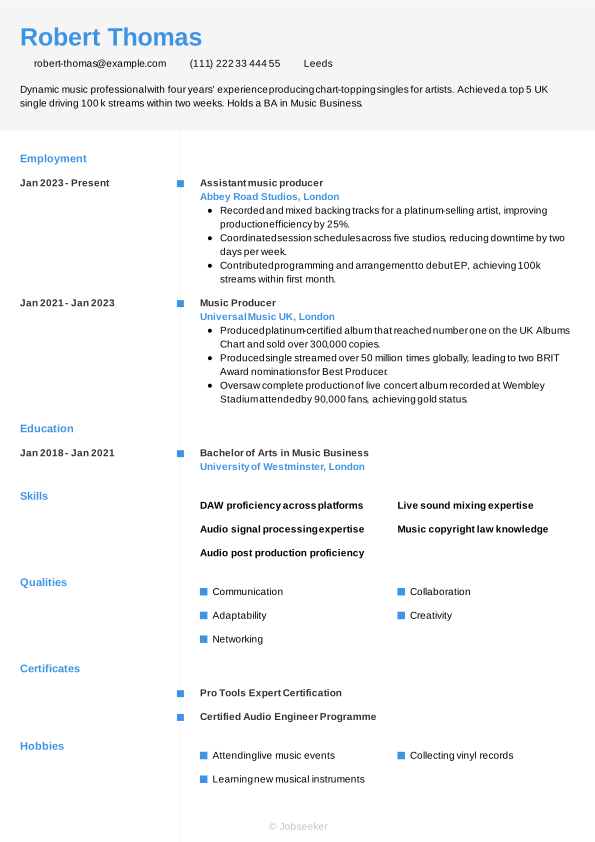
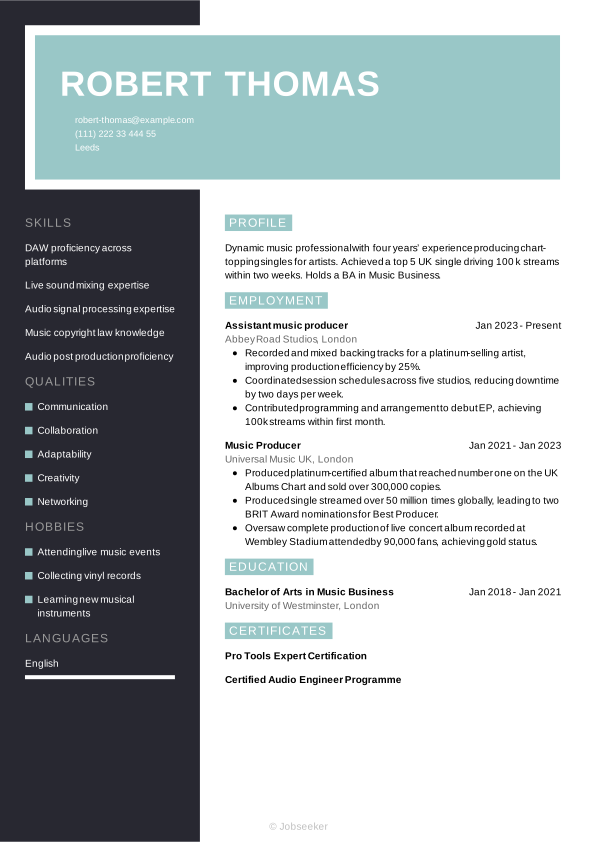
However, regardless of your years of experience, a music industry CV needs to connect the dots of your career into a cohesive story. In the following sections, we’ll dive into the specific chapters of your CV step-by-step, showing you how to refine everything from your initial introduction to your long-term achievements.
CV Header
Start your music industry CV by adding a professional-looking header that contains all your relevant contact information. Include your name, email address, phone number and location (your full address isn't typically necessary for UK job applications). Additionally, listing your LinkedIn profile in your CV header can be valuable. It serves to provide more detailed information about your career journey, your qualifications and your industry standing, in an easily accessible way.
For UK applications, it's not usually advisable to include a personal photo or any other personal details, such as your age, gender, nationality or ethnicity. These can risk introducing bias to the decision-making process and are discouraged under the terms of the Equality Act 2010.
Robert Thomas
robert-thomas@example.com
(111) 222 33 444 55
Leeds
linkedin․com/in/robert–thomas–123
CV Summary
Below your contact information, a short, concise CV summary or CV objective can set the tone for your application and provide brief, basic information on your key skills and qualities that gives a strong indication to the reader about your suitability for the music industry professional role. While a CV summary showcases your key skills and achievements in the context of your career to date, a CV objective provides an alternative approach. It focuses instead on your ambitions for the future, making it ideal for junior candidates without much work experience.
Whether you choose to write a summary or an objective, aim for a length of two or three sentences, introducing your key skills, unique qualities and key achievements or ambitions, making sure they reflect what's included in the job description.
A good CV summary would typically focus on a couple of key skills that match the job description, demonstrating how you've used them to good effect in previous roles. It's important to focus on your unique qualities and provide a preview of how they've made an impact in your career to date, which you'll unpack later in the document. See below for an example of a strong music industry CV summary, featuring quantifiable evidence of your impact and concise, easy-to-read sentences.
Engaging example:
Music industry professional with five years’ experience as Artist and Repertoire Manager. Signed and consistently developed 10 emerging artists, boosting revenue by 35%. Skilled in talent scouting and contract negotiation.
Unengaging example:
Experienced music industry professional with a passion for artist development and industry collaborations, seeking to bring creative expertise and strategic insight to a forward-thinking organisation that values innovation and teamwork.
Above is an example of CV summary that doesn't follow best practice, with some subtle shortcomings and failings. There are several factors that could make your summary less engaging. These include using long, poorly-structured sentences, failing to add evidence of your impact, being too generic with the skills you mention and not adapting your CV summary to specifically respond to the job description.
Professional Experience
A CV's work experience section is usually its most important element. Employers will want to see how you've developed relevant skills in previous roles, and how you've put them to good use in successful projects and career achievements. Remember, it's essential to tailor this section to match the job description, including keywords and phrases to help employers see how you'll fit the role, and how you might put the required skills to good use in the future.
List only relevant previous jobs, and add your job title, the name of the employer, its location and your dates of employment. Under this, write several bullet points showing employers how your skills and key qualities contributed to positive outcomes.
What differentiates an excellent work experience section from an average one is the use of action verbs and quantifiable evidence, showing how your actions led directly to positive results in previous roles. You'll also want to show how you've added relevant skills and increased your impact throughout your career progression. Take a look at this music industry CV example work experience section for inspiration:
Engaging example:
Artist and Repertoire Manager, January 2023 - Present
Harmonic Wave Studios, Bristol
- Secured five platinum-selling albums for emerging artists through bespoke talent development strategies.
- Negotiated and finalised record deals valued at over £10 million, expanding label’s roster and revenue streams.
- Discovered and nurtured breakthrough artists resulting in three consecutive top ten UK chart debuts.
Unengaging example:
Artist and Repertoire Manager, January 2023 - Present
Harmonic Wave Studios, Bristol
- Coordinated music release schedules with internal teams to maintain consistent delivery.
- Developed marketing strategies for new artists to enhance brand visibility.
- Facilitated studio sessions and production meetings to support ongoing projects.
Above is an example of what not to do with your music industry CV. A less-effective work experience section could focus too much on irrelevant or out-of-date roles, or include generic information about your responsibilities that fails to show the impact you made. It might lack tailoring to the job description or fail to provide evidence to support the claims made in the bullet points.
Career Portfolio
For some applications, a link to a portfolio or some examples of your previous work can be a valuable addition to your CV.
While this is most common for creative roles or positions where the appearance and presentation is particularly important, you could include any type of work in a portfolio, as long as it can be showcased online. There are several approaches to adding your work samples to your CV. You could add a link to an externally hosted portfolio, either in its own section or in your CV header. Alternatively, you could add links to separate work examples hosted either on a company website (such as case studies), or on your LinkedIn profile.
Education and Qualifications
Your education section should showcase your most recent and highest qualifications, paying particular attention to anything that's specifically required for the role.
To embark on a career as a music industry professional, you don't tend to need a specific degree. However, you should still add your highest and most relevant certifications, training and formal qualifications to your CV's education section, even if not specified in the job description. These might include Pro Tools Expert Certification, or any training that shows your skills in music copyright law knowledge or live sound mixing expertise.
When adding your qualifications to your education section, choose the highest relevant qualifications, and list them in reverse-chronological order, starting with your most recent. For each entry into your education section, add the qualification name and level, the institution or awarding body, its location and your dates of study or graduation. For extra emphasis on your education section, include bullet points showcasing projects you worked on, modules you studied, awards you won or societies you participated in, if they help you to prove you're a suitable candidate.
You might also wish to add specialist qualifications, certifications or licences that are required for the role. If you add any of these, include the expiry date, if the qualification requires renewal in the future.
Bachelor of Arts in Music Business, 2018 - 2021
University of Westminster, London
Key Skills
In your CV skills section, include a combination of the key hard and soft skills you possess, that make you a suitable candidate for the position. Make sure your skills list reflects the requirements specified in the job description, and include a few skills that are unique to you, and help set you apart from the pack. For a music industry CV, it's essential to include relevant skills for the role that match your skill set, such as creativity and live sound mixing expertise, to impress the reader and show you're qualified for the music industry professional position.
Hard Skills
Hard skills are the specialist technical skills that are essential for carrying out the duties of the role. They might be developed through study, on-the-job training or experience in the industry, and some hard skills may require a licence or certification. For music industry professional jobs, essential hard skills from your career-to-date might include audio post production proficiency, and DAW proficiency across platforms. After reviewing the job description, compile a list of four or five key hard skills for your music industry CV to show you're capable of carrying out the duties required for the role.
The best hard skills section would be based around skills listed as 'essential' or 'required' in the job description. To give yourself the best chance of success, you'll want your strongest skills to match closely with those most desired by the employer, and your hard skills list should reflect this.
Take a look below to see the type of skills that are commonly listed in a music industry CV hard skills section:
- DAW proficiency across platforms
- Live sound mixing expertise
- Audio signal processing expertise
Soft Skills
Soft skills differ from hard skills because they tend to be more transferable and applicable to different roles. Soft skills are the personal strengths and qualities that define your style of working and determine how well you're likely to fit in with the team and wider organisation. As a result of rapid technological changes to modern ways of working, soft skills are becoming more and more valuable to employers. Soft skills can also be particularly useful for junior or entry-level roles where candidates haven't had the time or career experience to develop hard skills and notable achievements.
Just like the hard skills section, begin by reviewing the job description to learn the most desirable soft skills to include in your music industry CV. Only add soft skills that you can provide evidence for throughout your CV. Draft a list of up to five key soft and transferable skills, combining the most essential skills from the job description with your strongest personal qualities.
Consider the following soft skills that frequently appear in a music industry CV.
- Communication
- Collaboration
- Adaptability
Expert Tip:
The UK’s National Careers Service advises keeping a CV easy to read with clear fonts such as Arial or Calibri, supported by headings and bullet points. (1)
Certifications and Licences
Depending on the role and your qualifications, it might be necessary to include a certifications section. It's often beneficial to include it as it can illustrate a positive attitude towards self-improvement and professional development, as well as a proactive mindset. All these qualities will appeal to most employers and decision-makers. Furthermore, the CV certifications and training section is a great showcase for official licences and certifications when applying for roles where these are a key requirement listed in the job description. These could include positions where the use of specialist software and equipment is a routine part of your everyday responsibilities.
See below for a list of example certifications and licences you might add to your CV for music industry professional roles:
- Pro Tools Expert Certification, 2023
- Certified Audio Engineer Programme, 2023
- Diploma in Sound Engineering, 2023
Foreign Languages
If you speak any additional languages, you might want to consider adding a languages section to your CV. Even if languages aren't a requirement of the job description, speaking a foreign language can reflect well on you as a candidate, and correlate with other soft skills that can increase your employability. List any foreign languages you speak, together with an indication of your proficiency level.
The ways to indicate your foreign language skills depend on the level of detail you want to provide. They include assigning a basic descriptive word, such as:
- English: Fluent
- Spanish: Intermediate
Alternatively, use an internationally recognised framework for languages, such as the Common European Framework of Reference (CEFR). This gives your language skills a standardised competence indicator, as follows:
- A1: Beginner
- A2: Elementary
- B1: Intermediate
- B2: Upper intermediate
- C1: Advanced
- C2: Proficiency
Additional Information
Adding optional sections to the end of your music industry CV is a good way of showing you have the necessary skills for the job. Consider optional sections for your CV if you're looking for ways to show you're right for the job, beyond your work experience. Optional sections are particularly valuable if you haven't had the chance to build up relevant work experience, for example, if you're applying for entry-level roles or you're changing careers to a new industry or role.
You can find more detailed advice on tailoring your CV in our career resources, where we cover proven ways to highlight your skills effectively.
Hobbies and Interests
Your hobbies and interests can be a useful way of showcasing additional skills that are relevant to the job description, but that you haven't been able to prove via your work experience. In addition, hobbies and interests can showcase your personality, helping to differentiate you from other candidates. However, a hobbies and interests section is only valuable if it helps you to show relevant skills you've been unable to evidence in other parts of your CV. If your hobbies and interests are unrelated to the job, it's best to leave them off your CV.
Career Achievements
Creating a section for your achievements and awards can help you draw attention to the things you're most proud of in your career to date. In your list, add any awards you've won, industry recognition or key career milestones that tell a story about your suitability for the role and place you ahead of other candidates.
Voluntary Roles
Another alternative to showcasing your skills and experience through work experience is by adding a volunteering section. This can give you a valuable showcase of your skills, particularly if you're a junior candidate or career changer without much relevant work experience. In your volunteering section, use a similar structure to your work experience section.
Add your job title or a description of the volunteer role, the organisation name, its location and the dates you volunteered (start and end date). Under this, add bullet points to show the skills you used, and evidence of how they contributed to positive achievements for the organisation.
References
When applying for roles in the UK, it's not standard to include references on your CV, and employers only tend to require them later in the process. Nevertheless, it's worth checking the job advert and being ready just in case. If you need to include references in your CV, aim for two or three and list their name, their contact details, their job title and the organisation they work for.
Always seek permission before you add them to your CV. Alternatively, it can be neater to simply add a line to your CV confirming you can provide references at the appropriate juncture, such as 'references are available upon request'.
Evidence-Based Insight:
A colourful CV can help you show recruiters your personality, with over 70% of them feeling positive or neutral about the use of colour in a CV. (2)
Best action words for a music industry CV
Using strong action verbs in your work experience bullet points is a great way to focus this section and show the impact you've made in your career to date. Starting each bullet point with an action verb that reflects the skills required for the role will help the reader to easily cross-reference your skills to the job description. Remember to always back up the action verbs you use with quantifiable evidence that shows the impact you made. You can use past tense for any action verbs describing previous jobs, with present tense for action verbs to describe your current role and responsibilities.
- Compose
- Perform
- Arrange
- Produce
- Orchestrate
- Conduct
- Record
- Mix
- Master
- Collaborate
Music industry CV example
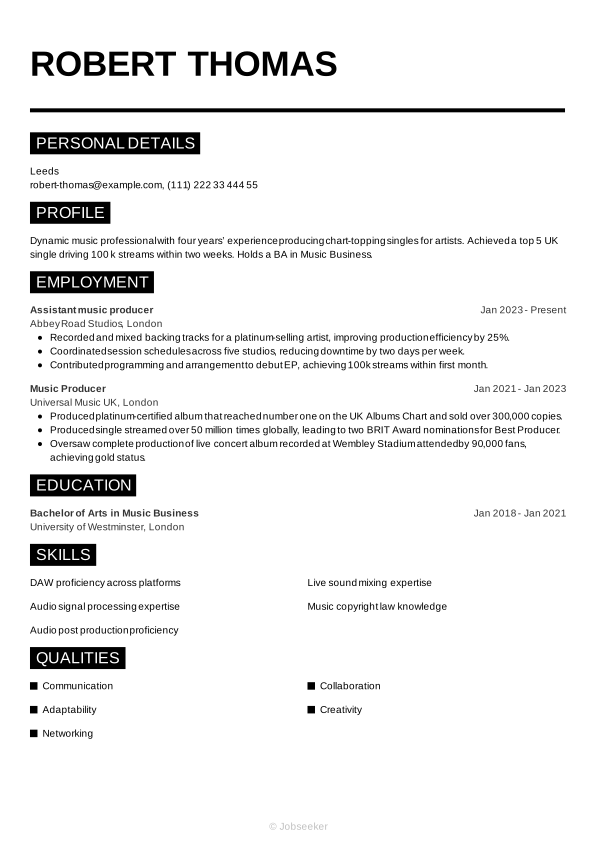
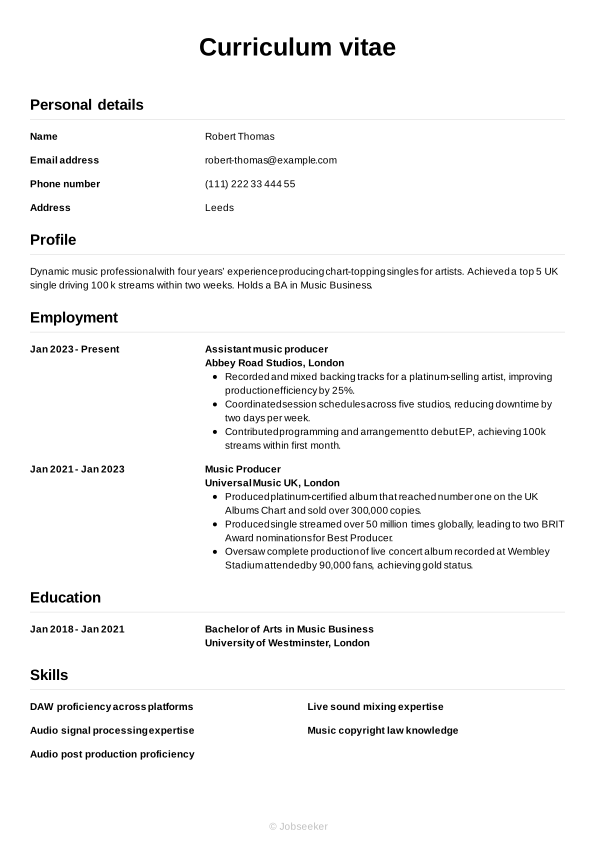
Now that we've covered the main sections to include in your music industry CV, we can see how it would all come together in its final form in the example below:
Leeds
•
robert-thomas@example.com
•
(111) 222 33 444 55
•
linkedin․com/in/robert–thomas–123
Dynamic music professional with four years’ experience producing chart-topping singles for artists. Achieved a top 5 UK single driving 100 k streams within two weeks. Holds a BA in Music Business.
Assistant music producer
2023
-2026
Abbey Road Studios (London)
- Recorded and mixed backing tracks for a platinum-selling artist, improving production efficiency by 25%.
- Coordinated session schedules across five studios, reducing downtime by two days per week.
- Contributed programming and arrangement to debut EP, achieving 100k streams within first month.
Bachelor of Arts in Music Business
2018
-2021
University of Westminster (London)
DAW proficiency across platforms
Live sound mixing expertise
Audio signal processing expertise
Communication
Collaboration
Adaptability
Pro Tools Expert Certification
Certified Audio Engineer Programme
English - Native
French - Advanced
If you want to get a feel for how your CV will look once you finalise its design and layout, check out our CV examples for inspiration.
Dos and don'ts for a winning music industry CV
Tips to follow
- Use action verbs to highlight how you've put your skills to good use, and the achievements you delivered for previous employers.
- List your qualifications in a dedicated education section, including grades and awards if these can help set you apart from other candidates (particularly for junior candidates).
- Proofread your CV forensically before sending, so you can correct any errors of spelling or grammar that could dent your chances of success.
- Keep your CV concise, aiming to limit it to one side of A4 for junior applications, two for more senior roles or more than two for any high-level, executive or academic applications.
- Tailor your CV to match the job description of the role you're applying for, highlighting your strongest skills and career achievements.
Common mistakes to avoid
- Don't use passive voice, such as 'financial statements were prepared', but opt instead for powerful action verbs that showcase the impact you made.
- Don't crowd your CV with too much information, but keep it as focused, concise and relevant as possible.
- Don't add unrelated information about previous work experience, as this takes up valuable space on your CV and ultimately won't increase your chances of success.
- Don't use an unsuitable email address with informal language or nicknames, but instead opt for a professional email address combining elements of your name, initials or profession.
- Don't use overly complex or fussy formatting that can make your CV harder to read, or confuse ATS scanning tools.
Guide to making your CV ATS compatible
Many employers now use applicant tracking systems (ATS) to assist with managing the recruitment process. One of the key elements of most ATS apps is the ability to scan CVs and rank them according to their likely match to the job description. By assuming this role in the recruitment process, ATS apps can reduce the amount of time employers need to spend reviewing CVs. With hundreds of applications for a single vacancy becoming increasingly commonplace, this increased efficiency is extremely valuable for employers.
The increasing usage of ATS apps by recruiters and employers means it's critical to adapt and prepare your applications to successfully navigate this stage of the selection process. Following the tips below will give you everything you need for an ATS-compatible CV:
- Include keywords and phrases that match the job description, making it easy for ATS apps to identify a strong fit for the role.
- Use clear, conventional CV headings to make your CV easier to navigate, including 'work experience', 'education' and 'skills'.
- Choose a simple, standard CV structure and omit any design elements that might make your CV less easy to read by automated systems, such as text boxes and columns.
- Select a widely-used font in either serif or sans serif style, with a font size between 10 and 12 for body text and 14 and 16 for heading text.
- Use bullet points instead of writing full sentences, to reduce the overall length of your CV, make it more keyword-dense and help ATS apps to scan it more easily.
You might feel there are a lot of things to remember when writing an ATS-compatible CV, but with just a few small tweaks, you can ensure yours passes this stage. Use one of our expert-designed, ATS-compatible CV templates to avoid the stress of adapting your CV for ATS screening.
Jobseeker's CV templates can help your CV to make a strong first impression with recruiters. Each template is expertly designed and approved by HR specialists to help you craft a winning application.
Music industry CV FAQs
Should I add a headshot photo to my CV?
Adding a personal photo to your CV might seem like a useful way of adding some colour to the design to help it stand out from the crowd.
However, in the UK, it's best to avoid adding a photo to your CV. It can risk creating bias (whether conscious or unconscious) that threatens the integrity of the recruitment process.
Sometimes you may find employers request a personal photo on your CV in the job advert. This tends to be for roles where your appearance plays an important role, such as for acting or modelling jobs. If you're not sure, always check the job advert and unless mentioned, avoid adding a photo.
How do I write a music industry professional cover letter for my job application?
An engaging and gently persuasive cover letter can enhance your chances of success with your job applications. Opt for a formal, professional letter format and choose a cover letter template with a design consistent with your CV.
The standard cover letter format includes three main paragraphs of content. The first paragraph includes a brief introduction to yourself and the role you're applying for, and references your motivation for applying for the job. In the second paragraph, list some key skills and achievements, taking care to differentiate from the content in your CV. The closing paragraph typically contains a recap of your enthusiasm for the role, and adds a call to action that establishes dialogue with the employer.
As an alternative to the traditional cover letter, you may wish to send your application via email with a simple cover note. This includes a short introduction to yourself, confirms the role you're applying for and directs the reader towards the attached CV. With email cover notes, you don't need to follow full letter-writing conventions and can be less formal in your tone. Always include your contact details in your sign-off or email footer.
Jobseeker's cover letter examples for music industry professional roles and other entertainment industry positions can provide valuable insights from HR specialists on how to craft the most persuasive cover letter.
How do I write a music industry CV to impress without experience?
Even if you don't have much work experience, you can still write a music industry CV that impresses employers.
Opt for a CV structure that focuses more on your relevant skills than your work experience, such as a functional CV format. The order of this CV layout places the skills section first after your CV summary, before education, with work experience taking less priority.
For junior positions, it's important to emphasise your soft and transferable skills. Employers will be looking less for music industry professional candidates with a depth of experience, and more for candidates who can show they have the soft skills, such as ability to adapt and learn, to thrive in a new role and environment.
How do you write an attention-grabbing music industry CV headline?
A CV headline can be a way to grab the attention of the reader early in your CV, indicating that you're a good fit for the role and you offer something different to other candidates.
Look to craft a short. eye-catching sentence that demonstrates your greatest skills and natural strengths, and includes the job title.
The most impactful CV headlines focus on the most critical keywords and phrases from the job description, helping the reader to make a snap judgement on whether to read your CV in more depth, while increasing the likelihood of passing the ATS stage.
Below you'll find some examples of CV headlines for different experience levels:
- Enthusiastic Junior Music Industry Professional
- Experienced Music Industry A&R Specialist
- Senior Music Industry Strategy Executive
A courteous, professional cover letter can make all the difference to your job applications. Our cover letter templates have been designed by experts to help you make the best impression with hiring managers.
Key takeaways for success with your music industry CV
To grab the attention of the reader with your CV, tailor it to the exact specifications of the job description, incorporating keywords and phrases that match the employer's requirements. Select a suitable CV format for your experience level, and show the reader how you've used skills relevant to the role, to create a positive impact in your career to date.
Finally, using a clean, professional CV template like those offered by Jobseeker, can help your CV stand out among its competitors and give you the best chance of success with your applications.
Sources:
- National Careers Service, How to write a CV
- Jobseeker, Recruitment Statistics

Impress employers with your CV
Step-by-step guidance to create a professional CV in minutes.