Levels of language proficiency on resumes
Do you speak multiple languages? If so, then listing your resume language skills can differentiate you from other applicants and show that you will be a great addition to the team. However, it’s important to accurately list levels of language proficiency resume skills so that prospective employers understand your fluency and ability. Here’s everything you need to know about language levels for resumes.

Employers value bilingual candidates not just for their ability to communicate with a broader range of customers and colleagues, but also for the qualities that language learning often reflects, such as determination, curiosity, open-mindedness, and cultural awareness.
More than half of employers say their need for bilingual employees will increase significantly over the next five years. If you speak more than one language, you already have a strong advantage over other candidates — but only if your language skills are clearly and accurately presented on your resume. Let's first look at how to rate your proficiency, and then we'll discuss the correct way to highlight your language skills on job applications.
Understanding language proficiency levels
When listing language proficiency levels, resumes should use a standardized framework. Here are some common resume language frameworks you can use to demonstrate your proficiency to employers.
Common European Framework of Reference for Languages (CEFR)
The Common European Framework of Reference for Languages (CEFR) is used in many European nations. The CEFR includes six proficiency levels:
- A1: Beginner
- A2: Elementary
- B1: Intermediate
- B2: Upper-Intermediate
- C1: Advanced
- C2: Proficient/Native-Like
If you are applying for a job in the EU or if your employer recognizes the CEFR as its preferred framework, you should use these levels of language proficiency on your resume.
Interagency Language Roundtable (ILR)
U.S. government entities often use the Interagency Language Roundtable (ILR) to evaluate candidates’ language proficiency. The framework includes six levels, which range from Level 0 (no proficiency) to Level 5 (Functionally Native Proficiency).
Suppose that you are creating a Spanish resume for a federal position. In this case, you should use the Interagency Language Roundtable proficiency system to convey your level of fluency.
American Council on the Teaching of Foreign Languages (ACTFL)
The American Council on the Teaching of Foreign Languages (ACTFL) is another common framework in the United States. This system uses categories such as Novice, Intermediate, Advanced, Superior, and Distinguished. Using these proficiency descriptors on your resume clearly conveys your language skills to employers.
Expert Tip:
If possible, identify the prospective employer’s preferred language proficiency level framework and use that system to convey your level of language expertise.
How to list language proficiency on a resume
Once you’ve chosen the right framework, it’s time to highlight your language skills on your resume. Let's take a closer look at how to do that correctly.
Where to include language proficiency
You have several options when listing your language proficiency on resumes. Here are a few different places to consider:
- Skills section: Best way to include one or two languages without making a separate section
- Summary section: Best way to call attention to a foreign language that's explicitly required in the job description
- Employment history section: Best way to add more details about how you use your language skills in various professional settings
- Education section: Best way to include language courses or certifications
Depending on how important the foreign language is to the job, you may even want to showcase it in more than one place. For example, for a job requiring French, you can include your DELF certification in your education section, add your proficiency level to your skills section, and mention your previous collaboration with French-speaking teams in your work experience section.
Best formatting options
When listing language levels, resumes must be structured in a concise and easy-to-read format. Here are a few things to consider:
- Bullet points vs. tables: Use bullets to make your resume skimmable, or create a table to organize your languages and proficiency levels
- Using proficiency labels: Avoid generic phrases and provide your specific proficiency level
- ATS-friendly formatting tips: Your resume will probably be scanned by an ATS software for keywords, so make sure it is formatted optimally
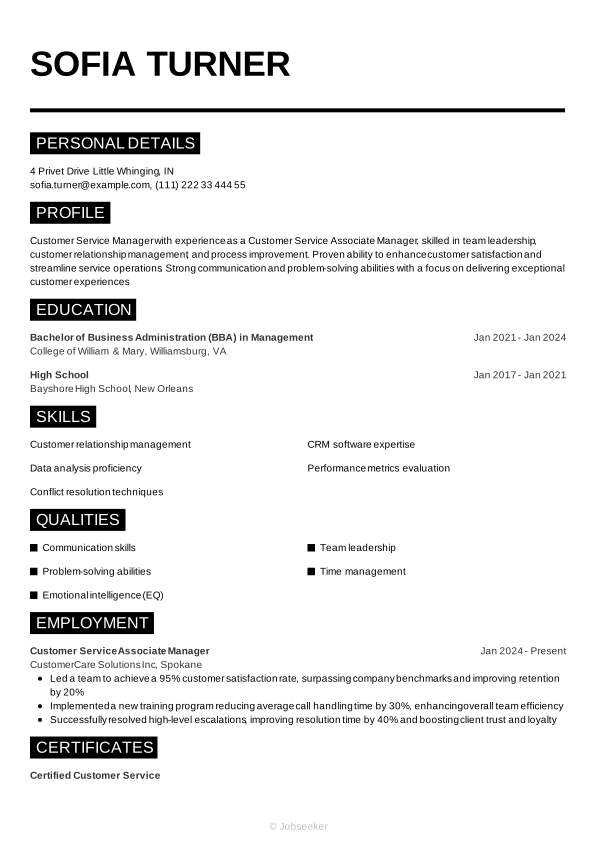
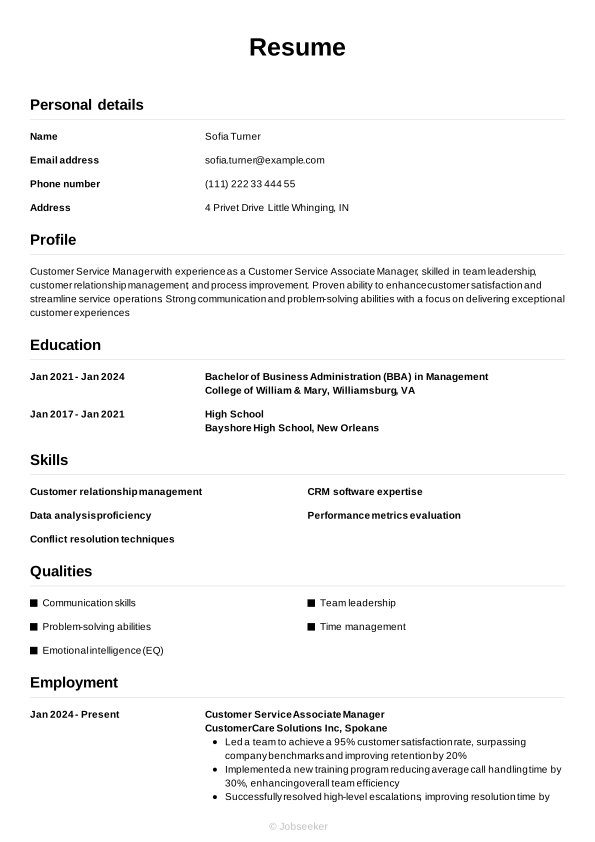
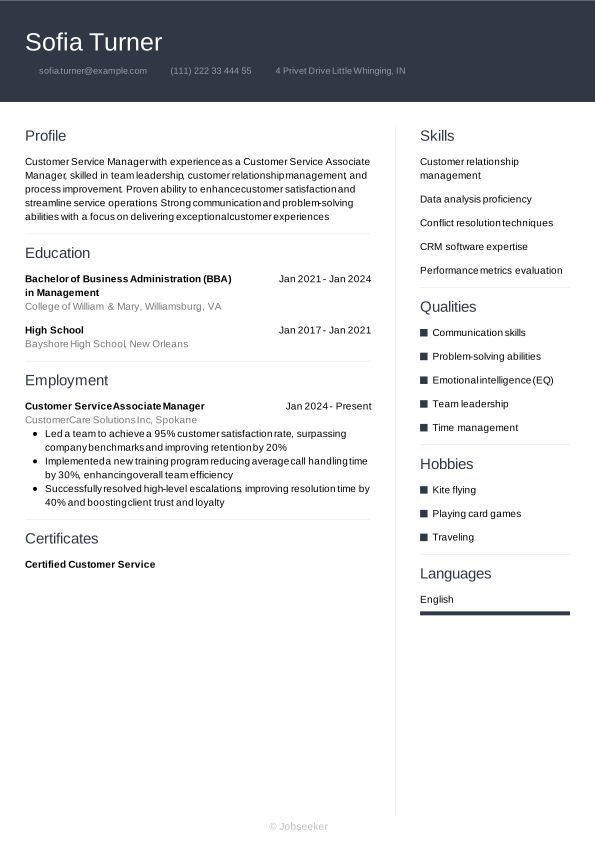
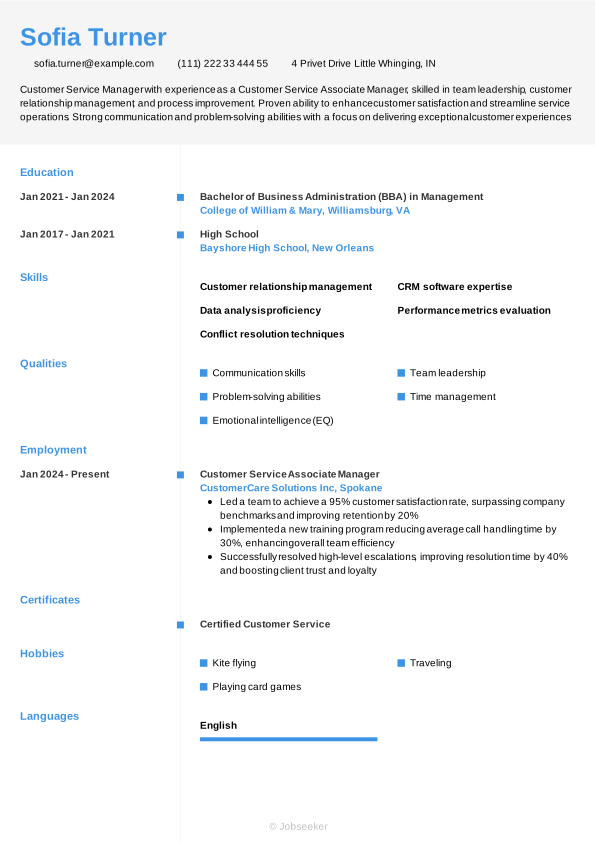
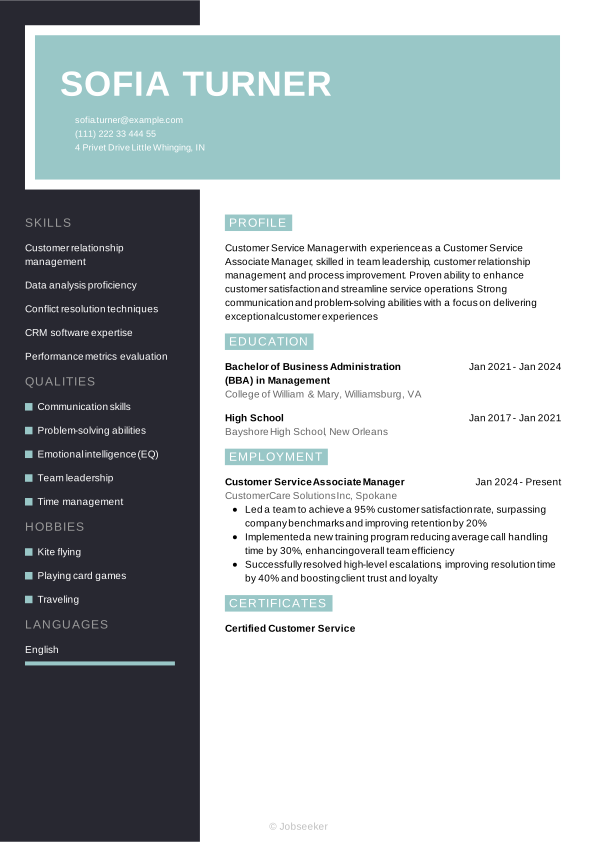
Consider using a pre-formatted resume template. These templates are more likely to make it past ATS platforms, and that means you’ll have a better chance of having your application reviewed by the hiring team. Here are a few professional options from Jobseeker that you can easily modify to fit your own experience.
Examples of resume language proficiency listings
Here are some examples of how to put language on resumes:
Customer service role (conversational Spanish)
- Assisted Spanish-speaking customers by providing support
- Communicated effectively at a conversational level (B1- CEFR)
Marketing manager at an international firm (business-level German)
- Developed German-language marketing campaigns and worked closely with international clients
- Business level proficiency (B2- CEFR)
Translation specialist (native bilingual, English and Mandarin)
- Provided professional translation services between Mandarin and English
- Native bilingual proficiency
Entry-level applicant with language learning in progress
- Currently studying Japanese (JLPT N3 level)
- Completed a semester abroad in Tokyo, improving conversational skills
Explore additional resume examples to see how and where to list your language skills. There are no one-size-fits-all solutions. Remember, you should highlight your skills in the areas that are most appropriate for the role you are applying for.
Self-assessment vs. certifications
There are two ways to evaluate your language skills: self-assessments and certifications. You can self-assess your skills if you regularly use the language in your personal or professional life. If you can confidently have a conversation in a language, you can gauge your proficiency level without taking a formal test.
If you are a non-native speaker or have limited work experience in your second language, you may need to obtain a certification. Some options include:
- English: Test of English as a Foreign Language (TOEFL), International English Language Testing System (IELTS)
- Spanish: Diplomas de Español como Lengua Extranjera (DELE)
- Japanese: Japanese Language Proficiency Test (JLPT)
- French: Diplôme d'Etudes en Langue Française (DELF)/Diplôme Approfondi de Langue Française (DALF)
If you have a language certification, list it and your score or grade on your resume. Here's an example of what that looks like in practice:
French — DELF B2 (Score: 78/100)
Japanese — JLPT N2 (Score: 132/180)
How employers evaluate language skills
If you list language skills on your resume, hiring teams will verify that you are being honest about your proficiency level. Here are a few ways that businesses may evaluate your language skills:
Common Interview Questions
Sometimes, the hiring panel will ask about your language skills during the interview. If one of the panel members is fluent in the language you list on your resume, they may even ask you questions in that language. Here are some questions to be prepared for:
- Can you describe your previous job experience in [language]?
- How comfortable are you communicating in a professional setting using [language]?
Practice responding to these questions during your interview prep. That way, you can answer with confidence.
Written Assessments
Some companies may require you to complete a written assessment. For example, you may be asked to translate a document or write an email in your second language. Make sure you are ready and don’t overstate your proficiency.
Red Flags
Hiring teams will look for indicators that you overstated your skills on your resume and cover letter. Here are some red flags:
- Failing a language proficiency test
- Being unable to answer basic questions in the second language
- Not providing examples of how you used the language in past roles
If you are going to list a language on your resume, make sure you are ready to demonstrate your proficiency. Remember, lying on your resume will almost certainly prevent you from landing the job and lead to a lot of embarrassment along the way.
Final tips for showcasing language skills effectively
When highlighting your language skills, make sure that you:
Tailor your language proficiency to the job description: Your resume should be tailored to the job description. If the role requires you to be bilingual, highlight your language skills at the top of your resume. Need some help tailoring your resume and cover letter to fit the job description? Check out some resume and cover letter examples for inspiration.
Describe your level accurately: Be honest about your language abilities. Most employers will test your skills during the interview process. It’s better to demonstrate that you are learning and improving your language skills rather than exaggerating them and failing a skills assessment.
Highlight practical use: Provide examples of how you use your language skills in your current role. You should list some brief examples in both your resume and cover letter to show the depth of your experience.
When highlighting levels of language proficiency, resumes need to follow a standardized format. They should also match the format and style of your cover letter for consistency. Using complementary resume and cover letter templates can speed up the document creation process and give you an opportunity to show off your language skills to prospective employers. You can also check out Jobseeker's library of tips and best practices published on our resources page.
FAQs for language proficiency on resumes
How do you describe your language skills on a resume?
How you describe your language skills on your resume largely depends on where you place them. For example, languages within a larger skills section should always include a proficiency level. Check out some of the common frameworks like CEFR or ILR to decide how to rate your skills. If you are adding languages to your employment history bullet points, be sure to explain how they increase your value as an employee.
What level of language skills should be on a resume?
When adding languages to your resume, make sure to consider how useful your level will be in performing the tasks associated with the job. For example, if you're able to read in Spanish but struggle to speak fluently, it's unwise to suggest you have strong Spanish skills for a customer service role where you'll be asked to speak the language on the phone. Conversely, if the job requires light reading of documentation, your Spanish skills could come in quite handy.
What counts as language skills when applying to a job?
A language skill is generally considered to be any language other than the one assumed for the role. For example, if you’re a native English speaker working in the U.S. with only American clients, you don’t need to list English on your resume, as it’s already implied.
You can include other languages as long as you have enough proficiency to use them in a work setting, even at a basic level. If you’re a complete beginner, it’s usually best to leave the language off your resume and instead mention it as a personal interest or learning goal during the interview.
What are the four skills you need to be proficient at a language?
The four core skills involved in language proficiency are speaking, listening, reading, and writing. You generally don’t need to list a separate proficiency level for each of these skills on your resume. Instead, consider your overall ability across all four areas and select the level that best represents your language skills as a whole.

Impress potential employers with your resume
Follow step-by-step professional guidance to create a polished resume in minutes.