The Complete Guide to Writing a Resume Summary with Examples
Looking to hook a recruiter’s attention? A short and impactful resume summary gives them a taste of what you have to offer, and will have them wanting to read more.

A great resume summary is the opening act that catches a recruiter's attention and entices them to learn more about your skills and qualifications. Getting it right can make the difference between landing an interview and never hearing back.
In this article, you will discover:
- What a resume summary is, and why it matters.
- How to write a resume summary with easy steps.
- Examples of resume summaries for over 15 different industries.
What is a resume summary?
A resume summary is a short paragraph that sits at the top of your resume. It gives hiring managers a quick view of your professional profile. It usually covers your job title, years of experience, and one or two standout skills or achievements. Recruiters read it first, so it needs to grab attention fast.
Here's an example of a resume summary for an elementary school teacher:
Boston
•
annie.greenwell@example.com
•
212-000-0000
•
linkedin.com/in/annie–greenwell
Dedicated elementary school teacher with 3 years of experience creating engaging, inclusive learning environments for young students. Skilled in lesson planning, classroom management, differentiated instruction, and tracking student progress. Committed to supporting academic growth while building students’ confidence, curiosity, and social-emotional skills.
Resume summaries go by several names: personal profile, professional summary, career profile, and more. Whatever the label, they all serve the same purpose. That is, to highlight your strengths and talents.
Where to place a summary on your resume
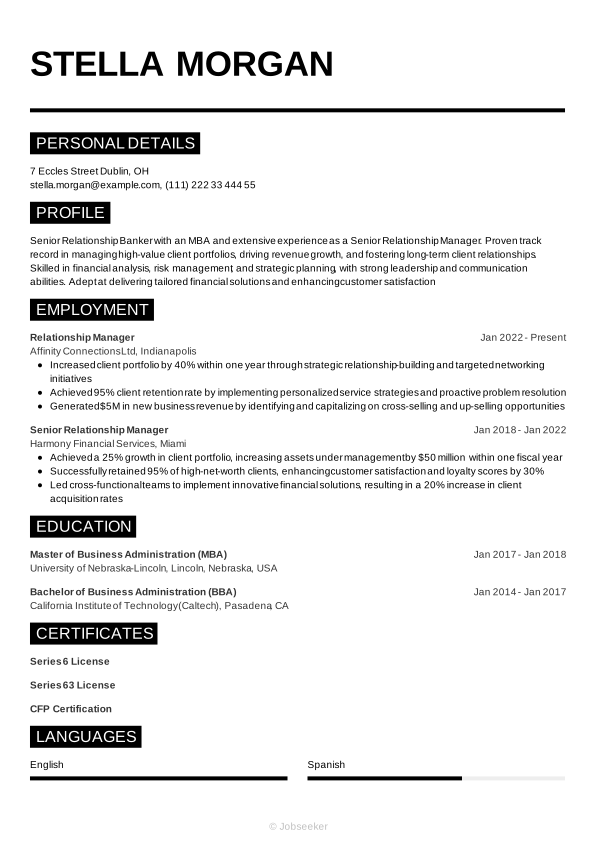
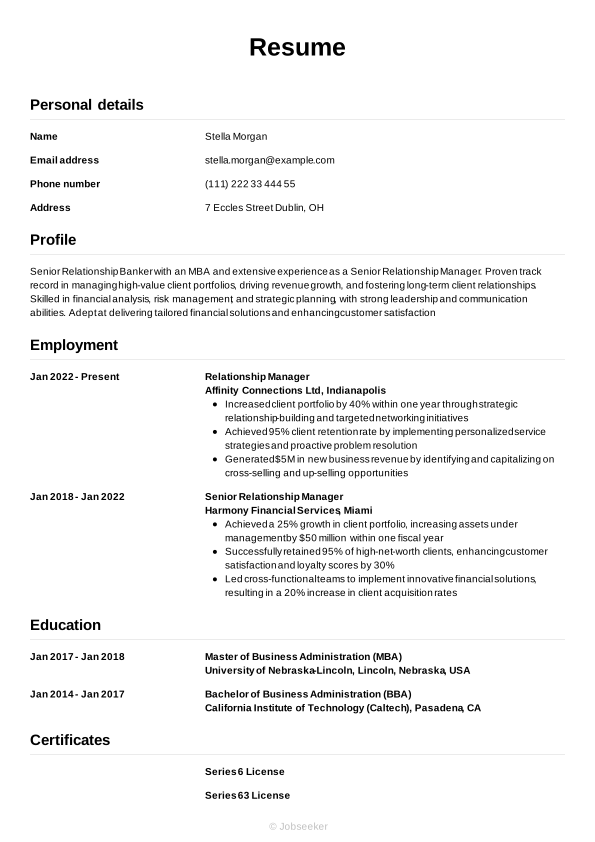
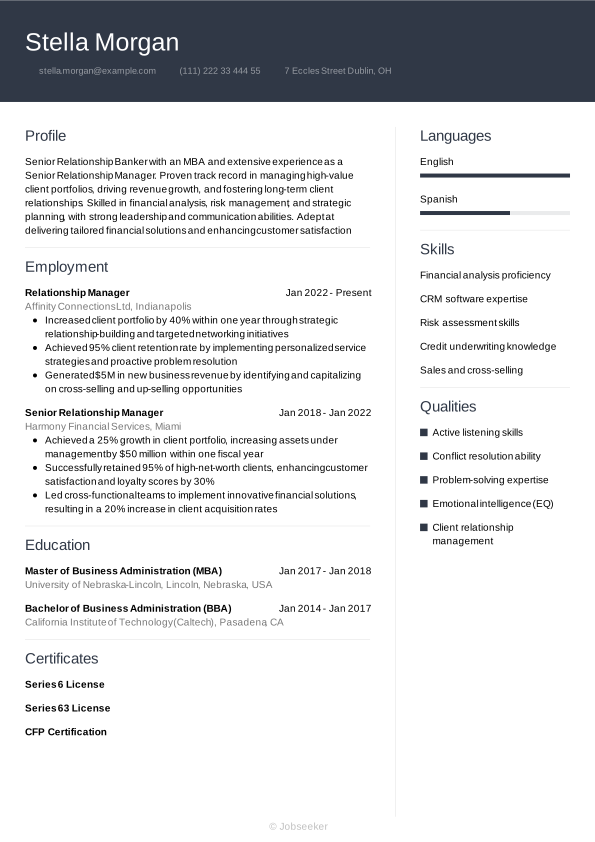
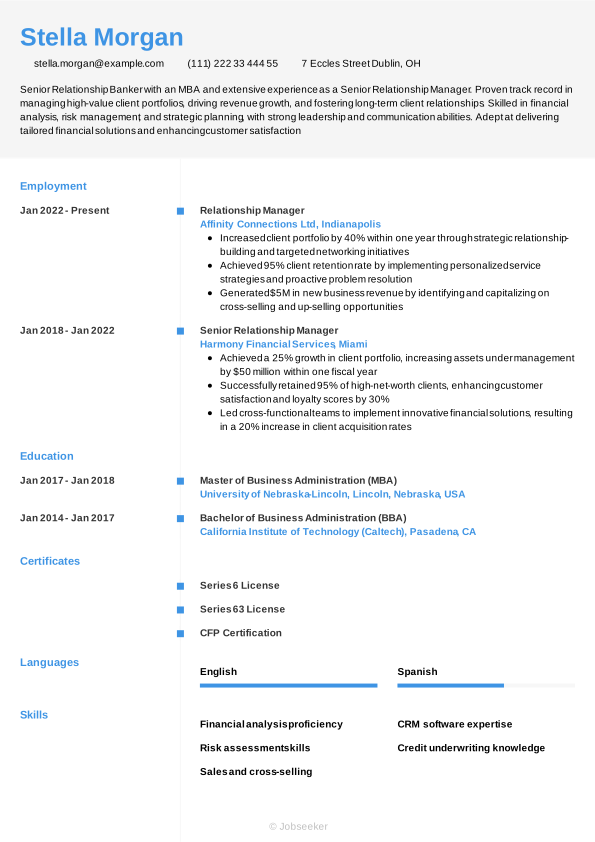
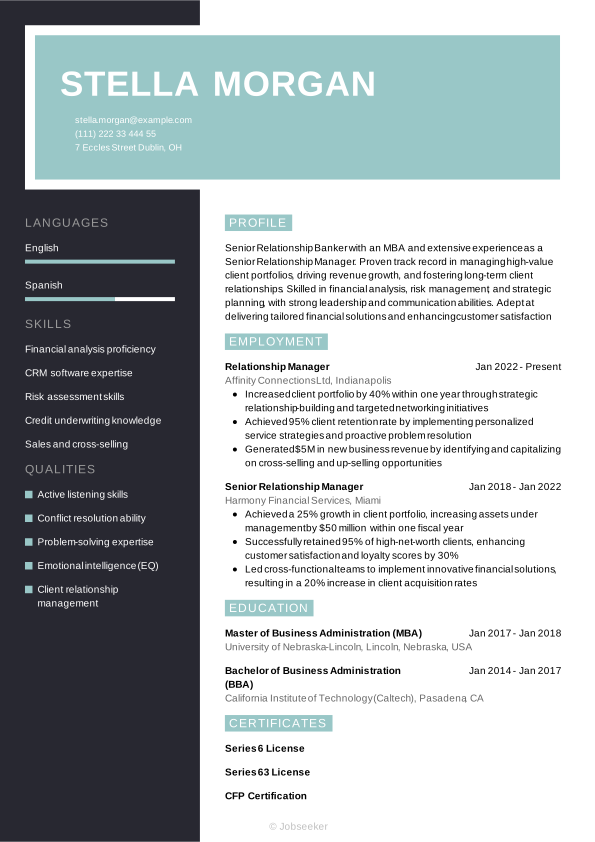
Since the goal of the summary is to attract the recruiter's attention, it must be situated at the top of the document. It is most often placed below the candidate's name and contact information but before longer sections like education or work experience. A professional resume template makes it easy to add a profile to the right section of your resume without needing to reformat the entire document.
Should you include a resume summary?
The short answer is yes. When you’re looking to stand out from the crowd, a resume summary can help you do the job. It gives the recruiter a quick preview of what you have to offer.
It also works for a variety of situations. For instance, if you have multiple years of experience in your industry and you’ll be continuing in the same field, your resume summary can succinctly sum up and organize your years of expertise.
If you are a student, recent graduate, or otherwise new to the professional world, your resume summary statement is an excellent place to highlight your personal characteristics that make you a great fit for the position.
When not to include a resume summary
The main time you shouldn’t include a resume summary is when you’re struggling for space. If your document is already very full — with relevant information — the summary could push the content onto extra pages. For the sake of keeping things short and sweet, you can skip it.
Step-by-step guide for writing a resume summary
Here are a few simple steps to help you create an impactful resume summary statement:
Step 1: Identify your key skills
Start by making a list of what you bring to the table. Focus on skills that are relevant to the position you’re applying for. These should be talents that align with the job description. For example, if the role requires leadership and project management, emphasize those skills at the beginning of your summary, like this:
“Experienced project manager with 5+ years in leading cross-functional teams and overseeing end-to-end project delivery.”
Step 2: Highlight your achievements
Don’t rely on bland, generic language. Use quantifiable achievements that show how you can add value to the company. Think about the impact you’ve made in previous roles. Did you increase sales? Improve efficiency? Reduce costs? Numbers help recruiters visualize your success. Here's an example:
“Increased sales by 25% in Q1 by implementing a new digital marketing strategy.”
Step 3: Tailor your summary for the job
One of the most important steps involves customizing your resume summary for each job. Look at the posting to identify specific keywords or skills that the employer is looking for. Incorporate a few of those terms into your summary, like this:
"Detail-oriented data analyst with 4+ years of experience in improving data accuracy by 15%.”
What to include in your resume summary
Now that you know how to successfully write a resume summary, let’s talk about what you should include in it. To catch the reader’s attention, you need three ingredients.
1. Certifications, experience, and education
Show employers that you would be an excellent fit for the job by listing your credentials, whether that means mentioning a relevant college degree, outlining your experience working in the industry, or sharing that you hold certifications that are necessary or helpful for the position.
2. Skills and abilities
In addition to your more concrete skills and qualifications from the last section, your summary is a good place to mention your soft skills, or those that are more difficult to measure, define, or quantify.
Your soft skills might include qualities like creativity, communication abilities, flexibility, cultural awareness, and so forth. These are also great attributes to discuss in your cover letter.
3. Metrics and achievements
Impress potential employers by providing quantified details of your professional performance. Possible details to mention include:
- How much money you brought in for the company
- The size of the budgets you’ve handled
- How many people you have trained and/or managed
- How much work you accomplished within a certain time period
- How frequently you performed various tasks
Not sure where to start? Check out our resume summarizer tool below:
Examples of resume summary statements
Looking for some inspiration? Let’s look at some examples of compelling resume summaries for a few different roles:
Recent graduate resume summary | Motivated and passionate recent graduate of UCLA with a BA in Marketing (3.9 GPA), excited to begin my professional career with Example Media as an SEO Analyst to produce data-driven marketing campaigns that boost sales through a strategic online presence. Previous experience includes a 6-month internship at XYZ Marketing where I analyzed over 5,000 URLs to select the top 50 backlink prospects. |
Office manager resume summary | Energetic office manager with over 8 years of experience, seeking a managerial position with XYZ Inc. Managed a team of 6 in a fast-paced, high-volume environment. Reduced lead times by 40% and optimized office supply process to save the company over $40,000 each year. |
Nurse resume summary | Pediatric Registered Nurse with 8 years of experience in ICUs and PICUs of 3 community hospitals. Eager to join the staff of ABC Hospital and contribute top-notch patient care skills and extensive knowledge of hospital procedures. Consistently scored over 95% in compliance rate assessments throughout previous professional experience. |
Marketing professional resume summary | Results-driven marketer with 6 years of experience in SEO and social media strategies. Proven track record of increasing organic traffic by 40% in 12 months. |
IT professional resume summary | Skilled IT professional with 8 years of experience in network security and system administration. Expertise in troubleshooting, reducing downtime by 30%. |
Sales executive resume summary | Top-performing sales executive with a decade of experience in B2B sales. Consistently exceeded sales quotes by 20 to 25% and built strong client relationships that resulted in a 35% increase in customer retention. |
Healthcare professional resume summary | Compassionate registered nurse with 5 years of experience in emergency care. Skilled in patient triage, treatment planning, and collaborating with multidisciplinary teams to provide the highest level of patient care. |
Education resume summary | Dedicated elementary school teacher with 7 years of experience in developing lesson plans and fostering a positive learning environment. Increased student test scores by 25% through interactive learning strategies. |
Finance resume summary | Experienced financial analyst with a strong background in budgeting and forecasting. Saved the company 15% in annual expenses through reporting and forecasting strategies. |
Engineer resume summary | Mechanical engineer with 10 years of experience in product development and design. Led a team that reduced manufacturing costs by 20% through process optimization. |
Construction resume summary | Experienced construction manager with 15 years overseeing multimillion-dollar commercial and residential projects. Delivered 90% of projects on time and under budget. |
Customer service representative | Customer-focused representative with 4 years of experience in handling high-volume customer inquiries. Increased customer satisfaction scores by 15% through improved problem-solving techniques. |
Hospitality resume summary | Dedicated hotel manager with 10 years of experience in managing daily operations and guest services. Achieved a 30% increase in guest satisfaction ratings through enhanced service training. |
Logistics resume summary | Supply chain manager with 7 years of experience optimizing logistics operations. Reduced delivery times by 20% while cutting transportation costs by 10%. |
Real estate resume summary | Experienced real estate agent with a proven track record of closing high-value property deals. Increased property sales by 25% through targeted marketing campaigns. |
Legal resume summary | Detail-oriented paralegal with 5 years of experience in litigation support and legal research. Assisted in cases that resulted in favorable outcomes for 80% of clients. |
Healthcare administration resume summary | Proactive healthcare administrator with 10 years of experience in hospital management and healthcare operations. Improved operational efficiency by 18% through the introduction of new processes. |
Why metrics matter in a resume summary
A strong resume summary proves what you have achieved. Recruiters scan dozens of resumes in a single sitting, and the ones that stand out back up their claims with real numbers.
Let’s break that down: A line like "increased sales" tells a hiring manager almost nothing. It's a claim without proof. Add a number, and the same line becomes a fact they can weigh against other candidates: "Increased sales by 20% in the first quarter."
Metrics give your accomplishments some real weight. They show scale, speed, and outcome; three things a vague statement can't communicate on its own.
Use this formula to build each line of your summary:
[Action verb] + [specific achievement] + [metric]
For example: "Cut onboarding time by 35% by redesigning the training process."
This structure works across industries and roles. Swap in your own verbs, achievements, and figures, and every bullet point in your summary carries proof instead of just description. For more advice tailored to your specific job title, check out our collection of resume examples.
Tips for writing a great resume summary
Ready to get started on your resume summary? Follow our top tips to help you nail it the first time around:
1. Keep it short
You have only a few seconds to catch a hiring manager's attention. Limit your summary to five lines at most. Remember, two or three sharp sentences often work better than a full paragraph.
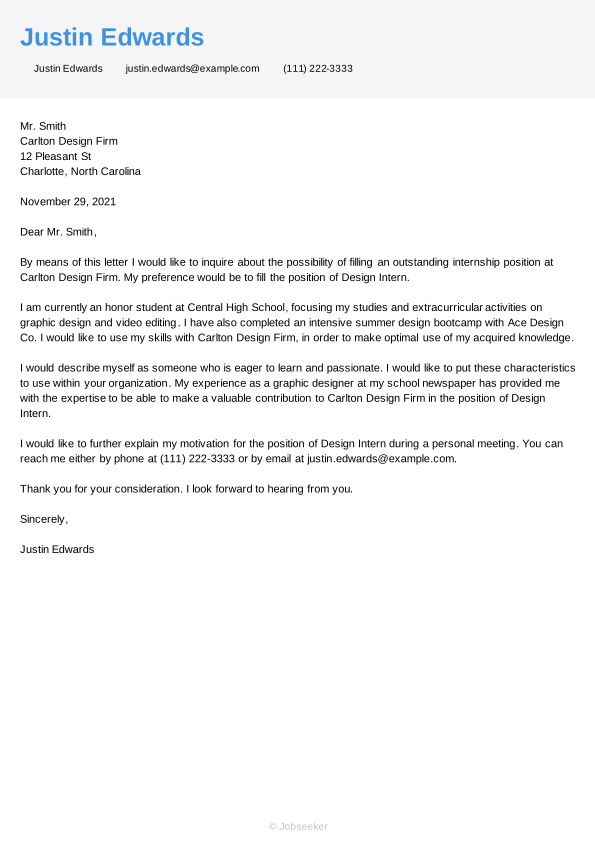
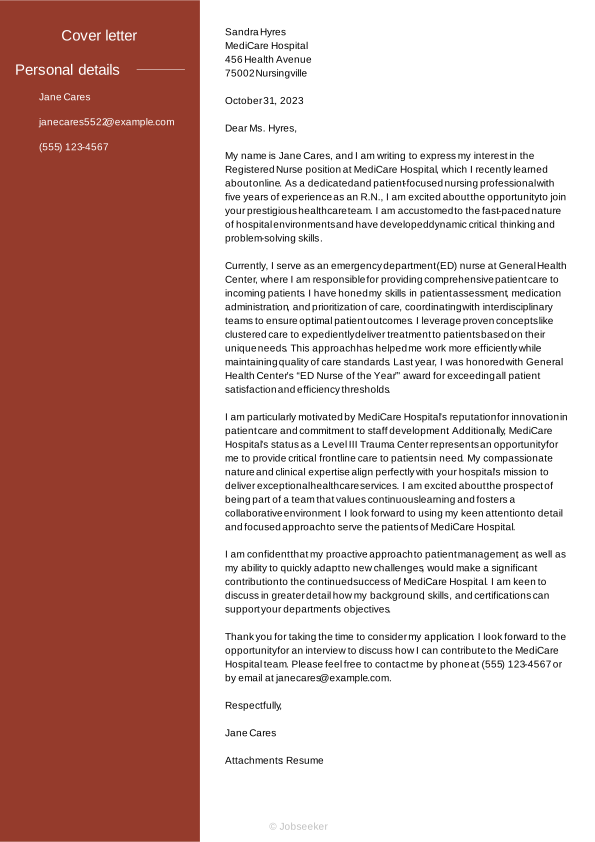
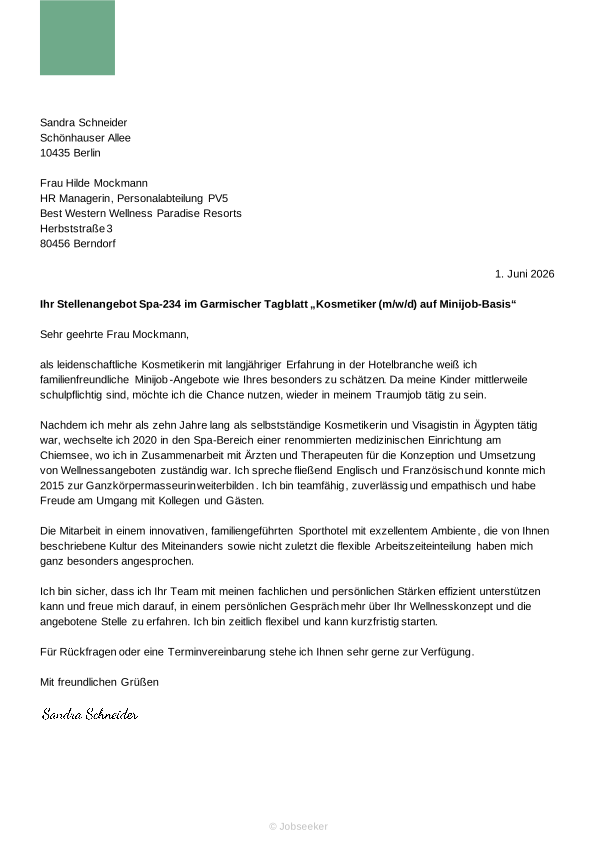
If you want to add more details regarding your experience, make sure to include a professional cover letter. Our cover letter examples and professional cover letter templates can help you get started.
2. Make it personal
While plenty of resume summary examples are available online, they miss one thing that only you can offer. Personalizing your summary, rather than using a generic template, is a must.
Pull from your actual work history. Things like the projects you led, the problems you solved, and the results you produced. This section exists to show a recruiter exactly what you bring to the role, so make every line count toward that.
3. Be professional
Your resume summary is the most freeform part of an application. However, that’s not to say that it should be unprofessional. Be careful when pitching the tone, make sure you spell-check every line, and use the right type of terminology.
The design matters, too. A bold heading or a touch of color like navy or forest green can add polish without crossing into unprofessional territory. Save the personality for your interview.
4. Avoid buzzwords
The quickest way to turn a recruiter off is to use buzzwords. Words like "dynamic," "results-driven," and "team player" show up on so many resumes that they've stopped meaning anything. Recruiters skim past them without registering a single detail.
Replace vague descriptors with specific proof. Instead of calling yourself a "dynamic leader," write "Managed a team of 12 and cut project turnaround by 25%." The specifics tell a hiring manager what you actually did.
Common mistakes to avoid when writing your summary
Even seemingly small errors can hurt your chances of getting an interview. Here are some of the most frequent mistakes to avoid when creating your resume summary.
Avoid:
- Using vague language: Avoid terms like “responsible for” or “helped with.” These phrases don’t convey your specific contributions and can make your summary feel generic. Replace vague language with specific action verbs and terms that quantify your achievements.
- Focusing too much on responsibilities: Your summary should focus on achievements rather than listing job duties. Highlight what you’ve accomplished rather than what tasks you were assigned.
- Overloading keywords: Keywords are important, but they can be overused. Choose a few relevant terms and integrate them into your summary in a logical and natural way.
- Using copy-and-paste summaries: The summary needs to be unique to your achievements and the position you are applying for. Customize your resume and summary for every position.
Resume summary vs. resume objective
Resume summaries and resume objectives may look similar at first glance. However, they serve two different purposes.
A resume summary highlights your experience and top achievements, while a resume objective states your career goals and what you hope to gain from the role. Most candidates with some work history should use a summary.
A resume objective explains your career goals and how this role fits into that picture. It works better for career changers, recent graduates, or anyone with limited experience in the field.
Getting the format right matters just as much as choosing the right type. Here’s a quick cheatsheet if you’re ever feeling unsure:
Section | Definition | Example |
|---|---|---|
Resume Summary | Highlights of your skills, experience, and achievements. Ideal for candidates who already have relevant work history. | "Marketing coordinator with 5 years of experience managing social campaigns that grew engagement by 40%." |
Resume Objective | A statement of your career goals and what you aim to contribute. Best suited for entry-level candidates or career changers. | "Recent graduate seeking an entry-level marketing role to apply skills in content creation and campaign analysis." |
Key takeaways for writing a great resume summary
Adding a resume summary can be an excellent way to stand out from a crowd of applicants, and it distills the highlights of your resume down to a few sentences. Write your summary statement after you’ve completed the rest of your resume so you can easily select the best parts to mention. Be sure to tailor your resume to each job posting and proofread it carefully to avoid errors.
Need more help crafting your resume? Create your clean, professionally formatted resume with Jobseeker in just a few steps. Simply enter your details, select a template and color scheme, and instantly download your eye-catching resume to use right away. For even more expert advice for your resume and cover letter, check out our resources.
Frequently asked questions about resume summaries
Can I use the same summary for every job?
No. A generic summary reads as an afterthought to recruiters. You should tailor your resume summary for each application. Use keywords and priorities from the job posting to get started.
Should I write my resume summary in first person?
Skip both first and third person pronouns. Drop "I" and "she/he" and start sentences directly with your job title or a strong action verb. For example, "Marketing coordinator with 5 years experience…”
Where should the resume summary go on the page?
Place it directly below your contact information, at the top of the page. This puts your strongest qualifications in front of the hiring manager before they read anything else.

Impress potential employers with your resume
Follow step-by-step professional guidance to create a polished resume in minutes.