Mental Health Nurse CV Example
Successfully pursuing a career as a mental health nurse requires a CV that gives you the edge over other candidates and shows your skills and achievements in context. You'll want to focus on key responsibilities that are essential for the role and match your experience, such as developing individualised care plans and administering prescribed medication safely. In this comprehensive guide, you'll learn the steps to producing a mental health nurse CV that puts you in pole position to progress to the interview stage.
A mental health nurse CV that's well-written, engaging and showcases the most relevant skills and experience gives you the best chance of progressing to the next stage of the recruitment process. Now let’s explore the main sections of a CV and see how to structure each one for maximum impact.
Key sections of a mental health nurse CV
Your approach to creating your winning mental health nurse CV will differ depending on your experience, your seniority and the details listed in the job description.
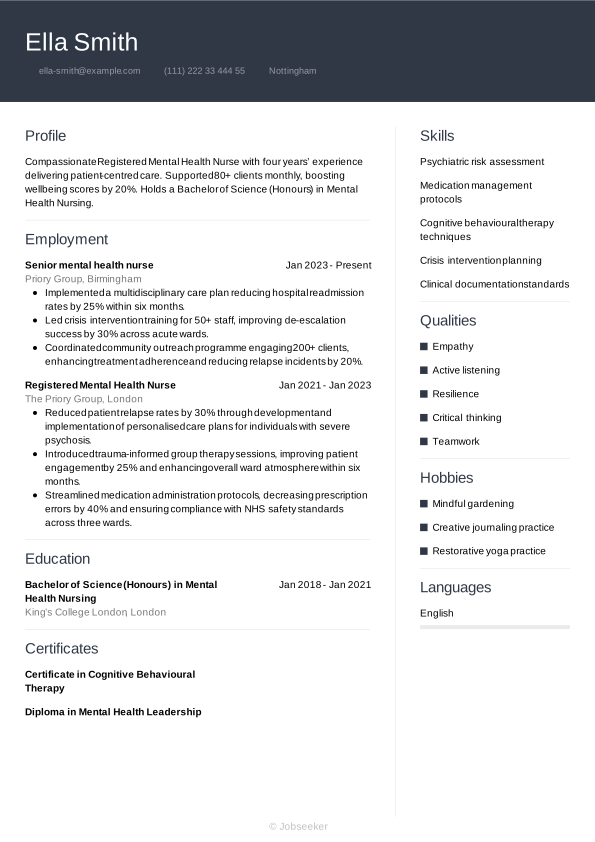
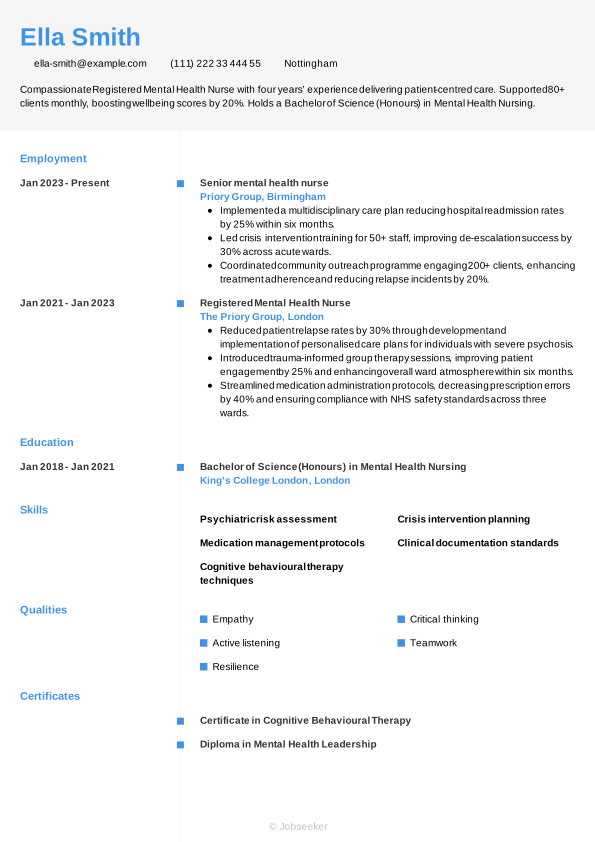
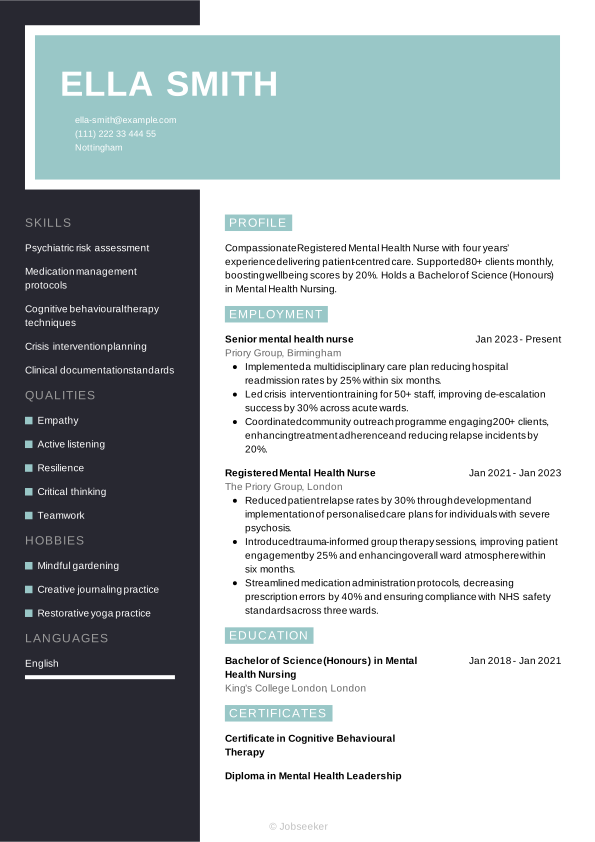
However, regardless of your years of experience, a mental health nurse CV needs to connect the dots of your career into a cohesive story. In the following sections, we’ll dive into the specific chapters of your CV step-by-step, showing you how to refine everything from your initial introduction to your long-term achievements.
CV Header
Start your mental health nurse CV by adding a professional-looking header that contains all your relevant contact information. Include your name, email address, phone number and location (your full address isn't typically necessary for UK job applications). Additionally, consider adding a URL to your LinkedIn profile if you have one. This can help the reader to quickly access further information about your career and credentials that you haven't been able to add to your CV.
When you're applying for jobs in the UK, it's generally not advisable to include a photo or more personal details than are strictly necessary, such as your age, gender, ethnicity or nationality. Including these can jeopardise the recruitment process by introducing bias, and can fall foul of the Equality Act 2010.
Ella Smith
ella-smith@example.com
(111) 222 33 444 55
Nottingham
linkedin․com/in/ella–smith–123
CV Summary
Underneath your contact information, write a brief CV summary or CV objective to introduce yourself and highlight a few key skills and qualities. This can help the employer to quickly form a first impression on your suitability for the mental health nurse role. The CV objective provides an alternative to the standard CV summary. While the CV summary focuses on your skills and achievements through your work experience, a CV objective highlights your ambitions and plans for the future, including how the role fits with these. This makes it ideal for junior candidates.
Both a CV summary and objective should be concise, with an ideal length of two or three sentences. List your key skills, personal strengths and career achievements or ambitions, taking care to ensure the content reflects the requirements listed in the job description.
An effective summary will include brief reference to one or two of your strongest skills, ensuring they reflect the skills listed in the job description. It's important to make your skills and qualities feel unique to you, and show how you've used them to positive effect in your career to date. Below you'll find an example of a strong mental health nurse CV summary.
Strong example:
Dedicated mental health nurse with five years’ experience as a Registered Mental Health Nurse. Holds a BSc (Hons) in Mental Health Nursing. Reduced patient relapse rates by 20% through evidence-based care.
Unengaging example:
Compassionate mental health nurse with experience in patient support and therapeutic environments across diverse clinical settings, contributing to holistic care and fostering positive clinical relationships within busy healthcare teams.
Above is an example of a less effective CV summary, with some subtle, yet notable differences. Your summary could miss the mark if it's too generic and doesn't describe unique personal qualities and strengths. It might also be vague, use long, unstructured sentences, lack quantifiable evidence of your impact, or not be tailored to the job description.
Work Experience
A CV's work experience section is usually its most important element. Employers tend to value the work experience section, as it shows evidence of how you've put your relevant skills to good use in your career to date. Remember, it's essential to tailor this section to match the job description, including keywords and phrases to help employers see how you'll fit the role, and how you might put the required skills to good use in the future.
List only your most relevant jobs, and go back up to 10 or 15 years, depending on your experience levels. List your job title, the name of the employer, its location and the dates you worked there. Also include bullet points for each entry, highlighting how you used your skills to add value for the employer.
To differentiate your work experience section from other candidates, include action verbs and quantifiable evidence that showcases the impact you made. Show your career progression through the skills you developed and used in each role. See below for an example of how to put the work experience section best practice into action:
Strong example:
Registered Mental Health Nurse, January 2023 - Present
Meadowview Health Services, Bristol
- Delivered tailored therapeutic interventions to a caseload of 30 patients weekly, improving patient engagement and satisfaction scores.
- Coordinated multidisciplinary care plans that reduced average inpatient stay by two days, enhancing ward efficiency and patient outcomes.
- Developed risk assessment protocol that decreased incident reports by 35% across the male acute psychiatric ward.
Unengaging example:
Registered Mental Health Nurse, January 2023 - Present
Meadowview Health Services, Bristol
- Provided comprehensive nursing support to patients experiencing mental health challenges.
- Collaborated with colleagues to deliver consistent patient care in mental health settings.
- Maintained clear patient records and communication channels to support ongoing therapeutic processes.
Above you'll find a less effective example of a mental health nurse CV work experience section. A less-effective work experience section could focus too much on irrelevant or out-of-date roles, or include generic information about your responsibilities that fails to show the impact you made. It might lack tailoring to the job description or fail to provide evidence to support the claims made in the bullet points.
Education and Qualifications
Your education section should showcase your most recent and highest qualifications, paying particular attention to anything that's specifically required for the role.
Mental health nurse roles typically require candidates to have a relevant university degree, and you'll want to showcase this in your CV to confirm your eligibility. Add your Bachelor of Science (Honours) in Mental Health Nursing or another related degree that makes you an eligible candidate for the position, in your CV. If you have any other degrees or qualifications that highlight crisis intervention planning, clinical documentation standards or your most relevant skills, you could also add these.
When adding your qualifications to your education section, choose the highest relevant qualifications, and list them in reverse-chronological order, starting with your most recent. When adding each qualification, include the name and level of the award, the institution, its location (if necessary), and the dates you attended or graduated. It can also be valuable to add bullet points outlining your key achievements and activities, such as projects you worked on, modules you completed, awards you won or societies you participated in while studying.
Specialist licences or certifications can also be a valuable addition to your CV's education section. If these are essential for the job and are referenced in the job description, it's a good idea to include them here rather than further down your CV. Include any expiration or renewal dates for certifications, if applicable.
Bachelor of Science (Honours) in Mental Health Nursing, 2018 - 2021
King’s College London, London
Skills
In your CV skills section, include a combination of the key hard and soft skills you possess, that make you a suitable candidate for the position. Make sure your skills list reflects the requirements specified in the job description, and include a few skills that are unique to you, and help set you apart from the pack. For a mental health nurse CV, it's essential to include relevant skills for the role that match your skill set, such as critical thinking and medication management protocols, to impress the reader and show you're qualified for the mental health nurse position.
Hard Skills
Hard skills are the specialist technical skills that are essential for carrying out the duties of the role. They might be developed through study, on-the-job training or experience in the industry, and some hard skills may require a licence or certification. For mental health nurse jobs, critical hard skills you've gained in your career can include crisis intervention planning, and medication management protocols. Check the skills specified in the job description, and add four or five key hard skills to your CV that show employers you're capable of completing the key duties of the role.
The best hard skills section will contain a mix of your strongest technical skills and those listed in the job description as 'essential' or 'desirable'. The closer your skills list is to matching the essential job description skills, the better your chances of success.
The following section highlights skills that are commonly listed under hard skills in a mental health nurse CV:
- Psychiatric risk assessment
- Medication management protocols
- Cognitive behavioural therapy techniques
Soft Skills
In your soft skills list, add any personal qualities and transferable skills that show you'll be a good fit for the role, you'll settle in well with the organisation and you'll complement other team members. Soft skills are typically more transferable and applicable to different roles than hard and technical skills. As a result of rapid technological changes in the world of work, soft skills are becoming ever-more valued by employers. Soft skills can also be particularly valuable for junior or entry-level roles where candidates haven't necessarily had the time to develop hard skills and career achievements.
Adopt the same approach as you did with your hard skills list, reviewing the job description to understand the requirements, before assessing which soft skills you can provide evidence for throughout your mental health nurse CV. Create a list of four or five transferable skills, combining the most essential skills from the job description with the skills that help you to stand out as a unique and compelling candidate for the position.
Here are typical soft skills candidates include in a mental health nurse CV.
- Empathy
- Active listening
- Resilience
Language Skills
Including a section on language skills can be beneficial, if you speak at least one language to a reasonable level of competency, in addition to your mother tongue. This is true even if language skills aren't a requirement for the role, as foreign language abilities often correlate to other valuable soft skills. In this section, include any foreign languages you speak to a standard that could be useful in the world of work, with an indication of your proficiency level.
There are several ways to cite your proficiency in foreign languages. Firstly, you could use a simple descriptive word to indicate your abilities, such as:
- English: Fluent
- Spanish: Intermediate
You might wish to use an internationally recognised standard for your language skills, such as the Common European Framework of Reference (CEFR). This divides your language skills into the following categories:
- A1: Beginner
- A2: Elementary
- B1: Intermediate
- B2: Upper intermediate
- C1: Advanced
- C2: Proficiency
Certifications and Licences
If you have extra qualifications beyond the basics of what's expected or required for the role, you might want to include a separate certifications section in your CV. If you've been proactive in pursuing professional development opportunities throughout your career, it's worth showcasing them. Not only do they make you more qualified, they also show a proactive and motivated mindset. In addition, the certifications section can be a valuable addition to your mental health nurse CV if you're applying for a role that cites certain certifications or licences as a necessity in the job description. These might include roles where the use of specialist software or equipment forms part of your everyday duties.
See below for a list of example certifications and licences you might add to your CV for mental health nurse roles:
- Certificate in Cognitive Behavioural Therapy, 2023
- Diploma in Mental Health Leadership, 2023
- Certification in Crisis Intervention Skills, 2023
Expert Tip:
With recruiters scanning CVs in less than nine seconds, Barnet Council highlights the importance of a short and compelling personal summary. (1)
Optional Sections
Including optional sections in addition to the core sections of your mental health nurse CV can help you to show employers you're a strong candidate for the job. Consider optional sections for your CV if you're looking for ways to show you're right for the job, beyond your work experience. Optional sections are particularly valuable if you haven't had the chance to build up relevant work experience, for example, if you're applying for entry-level roles or you're changing careers to a new industry or role.
You can find more detailed advice on tailoring your CV in our career resources, where we cover proven ways to highlight your skills effectively.
Hobbies and Interests
If you participate in hobbies and activities that are related to the role, or use some of the same skill set, you could include them in a hobbies and interests section. In addition, this section is the ideal way to show aspects of your personality that might not otherwise shine through in your CV, helping to offer a point of difference compared to other candidates. However, hobbies and interests can only add value to your CV if they provide evidence of skills and experience that you can use in the role you're applying for. As such, only add hobbies as a way of filling gaps in the skills you've developed or used through work experience.
Awards and Achievements
Creating a list of your key career achievements can be an effective way of drawing attention to the things you're most proud of from your career. If you've won any awards or achieved any key milestones in your career to date, you might want to mention them here.
Volunteer Roles
Another valuable optional section for your CV is volunteering. This section can offer a great alternative showcase for your skills and experience, if you don't have much relevant work experience. Consider adding this section if you have any relevant unpaid experience, either as a junior candidate or a career changer. Structure your volunteering section the same as your work experience section.
Add your job title or the name of the volunteer role, the organisation, its location and the dates you volunteered. Also add some bullet points outlining your skills and experience in the role, as well as any key achievements.
Analytical Insight:
Hiring managers spend an average of 30 seconds reviewing a CV to assess its likely fit for the role, so it's essential to clearly highlight your skills, experience, and evidence of your achievements. (2)
Best action verbs for an engaging mental health nurse CV
Including strong action verbs with your work experience bullet points can help you show the impact you made in previous roles. Starting each bullet point with an action verb is a great way to match your experience and achievements to the job description, giving the reader an easy way of identifying your key skills and seeing how you've applied them. When adding action verbs to your work experience bullet points, just remember to always provide quantifiable evidence that shows the value you added for each employer. Use past tense for any action verbs that describe previous roles (for example, 'developed') and present tense for current roles (for example 'collaborating').
- Assess
- Counsel
- Monitor
- Coordinate
- Develop
- Implement
- Evaluate
- Facilitate
- Advocate
- Educate
Mental health nurse CV sample
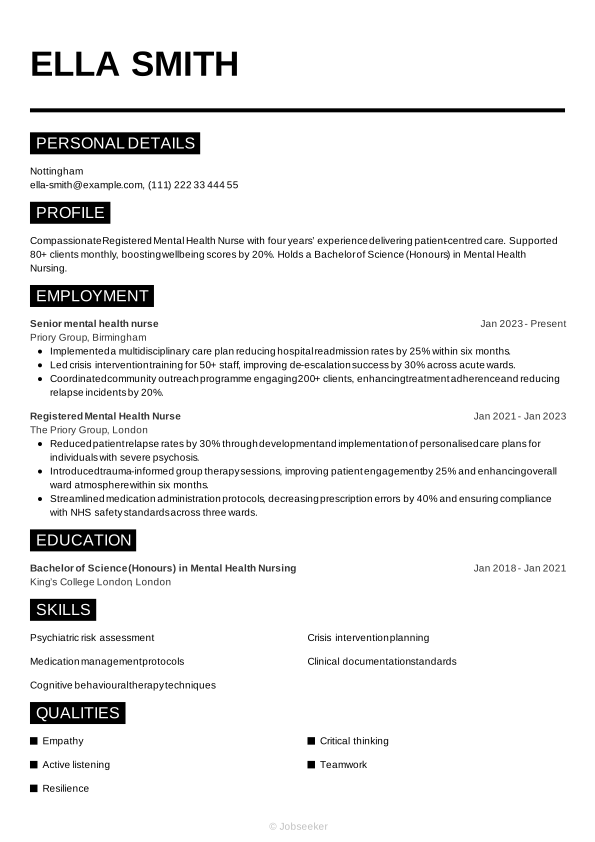
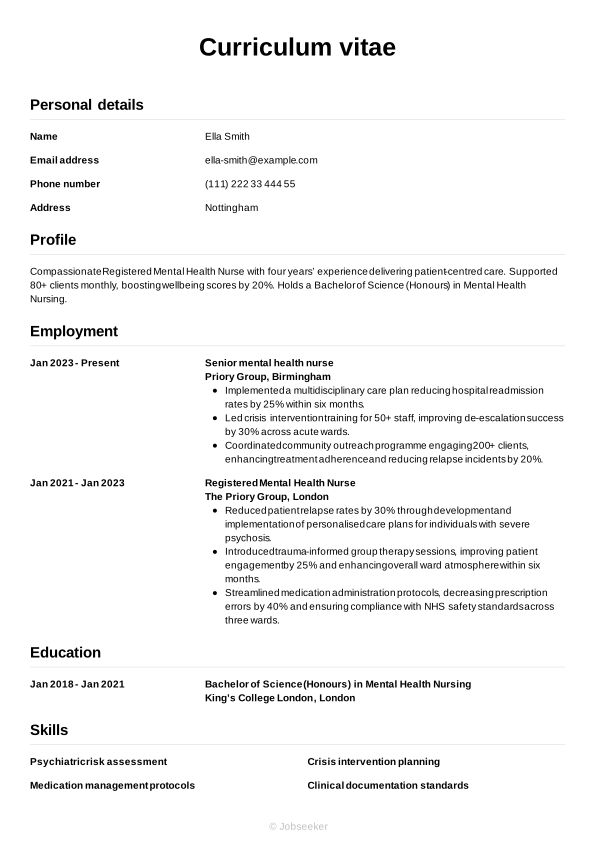
Now that we've covered the main sections to include in your mental health nurse CV, we can see how it would all come together in its final form in the example below:
Nottingham
•
ella-smith@example.com
•
(111) 222 33 444 55
•
linkedin․com/in/ella–smith–123
Compassionate Registered Mental Health Nurse with four years’ experience delivering patient-centred care. Supported 80+ clients monthly, boosting wellbeing scores by 20%. Holds a Bachelor of Science (Honours) in Mental Health Nursing.
Senior mental health nurse
2023
-2026
Priory Group (Birmingham)
- Implemented a multidisciplinary care plan reducing hospital readmission rates by 25% within six months.
- Led crisis intervention training for 50+ staff, improving de-escalation success by 30% across acute wards.
- Coordinated community outreach programme engaging 200+ clients, enhancing treatment adherence and reducing relapse incidents by 20%.
Bachelor of Science (Honours) in Mental Health Nursing
2018
-2021
King’s College London (London)
Psychiatric risk assessment
Medication management protocols
Cognitive behavioural therapy techniques
Empathy
Active listening
Resilience
Certificate in Cognitive Behavioural Therapy
Diploma in Mental Health Leadership
English - Native
French - Advanced
If you're not sure what your one-page, finalised CV design might look like, check out our examples.
The dos and don'ts of a successful mental health nurse CV
Tips to follow
- Select a clear, professional CV format that helps your application to be as readable and accessible as possible, including standard fonts, consistent line spacing and clear headings.
- List your qualifications in a standalone education section, adding grades and awards where these can help you stand apart from other candidates, such as for junior positions.
- Proofread your CV carefully before sending, as any spelling or grammatical errors could seriously undermine your chances of success.
- Add a dedicated skills section to showcase your strongest hard and soft skills, ensuring they reflect the skills listed in the job description.
- Use reverse-chronological order, starting with your most recent work experience or qualifications and working back from there.
Common mistakes to avoid
- Don't lie or exaggerate to make your application look stronger – misleading claims about jobs or qualifications can be considered fraud.
- Don't add a hobbies and interests section unless they're directly related to the position or help you show skills that you can't prove through work experience.
- Don't use complex formatting or confusing layouts that can make your CV less accessible for the reader or less scannable by ATS apps.
- Don't focus on irrelevant work experience that takes up valuable space and won't improve your chances of getting the job.
- Don't forget to review your contact details to ensure everything is up-to-date, including regularly checking your LinkedIn profile and updating any relevant information.
A well-written cover letter is an essential element of any job application. Take a look at our HR-approved cover letter templates to find a design and layout that matches your CV.
Guide to making your CV ATS compatible
Employers and recruiters now routinely use applicant tracking systems (ATS) to ease the burden of the selection process. One of the key functions of these systems is CV screening, which reviews CVs and ranks them based on their likely fit for the role. This saves recruiters and hiring managers the time and effort of reading every CV in detail. With many vacancies often receiving hundreds of applications, ATS software can really relieve the burden on hiring teams and free them up to focus only on the most suitable candidates.
Because ATS software is becoming more common in the recruitment process, it's important to make some concessions in your CV to give yourself the best chance of progressing beyond the initial screening. With that in mind, here are some tips on preparing your CV for ATS screening:
- Include keywords and phrases that match the job description, giving you the best chance of appearing as a strong fit for the role.
- Use standard CV headings that make your CV easier to navigate, such as 'work experience', 'education' and 'skills'.
- Choose a standard CV layout that avoids the use of any special design elements that might make your CV less compatible with ATS scanning software.
- Select a font that's widely used and maximises readability, including popular serif and sans serif fonts between size 10 and 12 for body text, and 14 and 16 for headings.
- Use bullet points in place of full sentences and paragraphs, as these are easier for ATS apps to scan and parse, and help your keywords stand out.
There are lots of things to think about when crafting an effective, engaging mental health nurse CV, but ATS compatibility is something that's easy to overcome. Use one of our expert-designed, ATS-compatible CV templates and remove the stress from creating a CV that puts you in the frame for the role.
If you want to impress recruiters with your CV, use Jobseeker's ready-made CV templates, which are HR-approved for maximum chances of success.
Mental health nurse CV FAQs
How do I produce an effective mental health nurse cover letter for my application?
Your cover letter can have just as strong an impact on your chances of success as your CV. When writing a cover letter, use a professional, formal letter structure and select a cover letter template to match the look and feel of your CV.
The typical cover letter includes three key sections of content. Firstly, introduce yourself, confirm the role you're applying for and explain why you're applying for the position. Next, outline some relevant key skills and achievements from your career without repeating the details in your CV. Finally, express your gratitude to the employer for considering your application and leave a call to action that encourages them to contact you for an interview, or to establish dialogue.
Alternatively, if you're sending your application via email and prefer a more informal tone, you might wish to include a short cover note. This can adopt more casual email conventions rather than following a professional letter format, and simply needs to introduce you, confirm the role you're applying for and direct the reader to the attached CV or application form. Include your contact details at the end of your CV.
Jobseeker's cover letter examples for mental health nurse and healthcare industry roles provide useful tips and guidance from HR experts on how to write a compelling cover letter.
How do I write a mental health nurse CV without experience?
Even without work experience that fits the job description, there are ways to write a mental health nurse CV that leaves a strong impression on employers.
Opt for a CV structure that focuses more on your relevant skills than your work experience, such as a functional CV format. The order of this CV layout places the skills section first after your CV summary, before education, with work experience taking less priority.
For entry-level roles, employers tend to look more for candidates with the right soft skills to show they can learn and develop on the job. As such, place extra emphasis on your soft skills for an entry-level mental health nurse CV.
How do you write an attention-grabbing mental health nurse CV headline?
A CV headline can be a way to grab the attention of the reader early in your CV, indicating that you're a good fit for the role and you offer something different to other candidates.
Aim to write a short, engaging sentence that includes the job title and shows you to be a good match for the job description.
To give your CV the best shot at success, write a CV headline that focuses on the most essential keywords and phrases from the job description. This will strike a chord with the hiring manager and help your CV to pass the ATS screening stage.
The examples below show best practice for writing a CV headline at different experience levels:
- Compassionate Junior Mental Health Nurse
- Dedicated Mental Health Nursing Professional
- Compassionate Senior Mental Health Nurse
What's the best CV format for a mental health nurse CV in 2026?
The best mental health nurse CV format for success in your 2026 job hunt might vary according to your experience levels, the type and level of the role, the company and standard industry practices.
Typically, the reverse-chronological CV is most effective if you have some work experience under your belt. This is because the layout showcases your work experience, providing evidence of how you've used relevant skills to achieve success in previous roles.
Alternatively, for entry-level candidates or career changers who don't have much relevant work experience, a functional CV format tends to work better. This layout places skills and qualifications above work experience.
Key takeaways for a successful mental health nurse CV
To stand out from the crowd with your CV, tailor your approach to each individual application, incorporating keywords and phrases that match the job description. Select a suitable CV format that reflects your experience level, and focus on highlighting your key skills, and demonstrating how you've put them to good use to achieve positive outcomes in your career to date.
Finally, building your CV using Jobseeker's HR-approved CV templates can help to catch the eye of recruiters and hiring managers, making your application stand out and giving you the best chance of gaining your dream job.
Citations:
- Barnet Council (UK local government), Recruitment tips: How to write a supporting statement
- Jobseeker, HR Trends

Impress employers with your CV
Step-by-step guidance to create a professional CV in minutes.