Should You Submit your Resume as a PDF or Word?
PDF is typically the best format for a resume because it locks your layout in place and looks the same on any device. A Word document makes more sense when an employer asks for one or a recruiter needs to edit your file. This guide compares PDF and Word resumes and explains which format to choose for different types of applications.

You’ve crafted the perfect resume and you’re ready to send it off. There’s just one thing left to think about: Should you submit it as a PDF or Word document? While this may seem like a small decision, it can have a big impact on recruiters. You need to get it right.
In the following article, we’ll cover:
- The pros and cons of both PDF and Word document resumes
- Why PDF resumes are often the best choice for job-seekers
- How to convert your Word document resume to a PDF
- The main file-format mistakes to avoid when making your resume
PDF vs. Word resumes: Pros and Cons
First up, let’s take a look at the pros and cons of using a PDF file and a Word file. Their strengths, not to mention weaknesses, depend on how you apply and who will read your resume. The table below shows how PDF and Word resumes compare on the features employers and applicant tracking systems (ATS) care about most.
Feature | Word | |
|---|---|---|
Formatting stability | Excellent. Your fonts, spacing and layout look exactly the same wherever someone opens the file. | Poor. Things can move around depending on the device or the version of Word the recruiter uses. |
ATS compatibility | Good. Most modern systems read PDFs without any trouble, as long as you export the file from a word processor rather than scanning a printed copy. | Good. Pretty much every ATS can read a .docx file, so it's the safer bet with older systems. |
Professional appearance | Excellent. Looks polished and tidy, just the way you designed it. | Good. Looks great on your screen, but a missing font or different settings can leave it looking a little off at the other end. |
Best use case. | Emailing your resume straight to a hiring manager, uploading it to job boards or sending a design-heavy resume. | Any time an employer asks for a Word file, or a recruiter wants to tweak your resume before passing it on. |
Editing | Tricky to change without special software, so nobody can mess with your content by accident. | Quick and easy for you (or a recruiter) to update whenever you need. |
Submitting Your Resume as a PDF
For most candidates, we recommend submitting your resume as a PDF. This approach preserves the formatting, meaning your document will never mess up when recruiters open it.
This is especially true when it comes to applying for jobs online. If an employer asks you to submit your resume by attaching it to an email or uploading it to their online application site, a PDF is a good choice to preserve formatting.
Expert Tip
PDFs are also lockable, so be sure not to inadvertently lock your resume PDF. If that happens, employers will be asked for a password when they try to open the file and they’ll likely skip to the next applicant.
Unless the job post specifically states otherwise, PDF should be your go-to format. Saving your resume in this way has plenty of benefits. Our resume builder tool makes it easier than ever to create an application-ready document, and download it as a PDF file.
Why PDF is usually the best resume format
1. The formatting always stays intact
A PDF locks your margins, fonts, spacing, columns and page breaks in place. That means that the hiring manager sees exactly what you saved.
2. It looks polished and professional
PDFs send out the right message to hiring managers. Sending your resume as a PDF shows you understand hiring norms.
3. It displays consistently across devices
Whether a recruiter opens it on Windows, a Mac or their phone, a PDF looks the same. That makes it a smart choice when it comes to applying online.
4. You avoid any accidental editing
Recruiters can read and share a PDF without accidentally moving text or throwing off your layout.
5. Modern ATS can generally process text-based PDFs
Most modern systems can read PDFs you export from a word processor, but scanned or image-based files can cause problems. If a job listing asks for a .docx file, go with that instead.
Formatting your resume is easier than you think. Our dedicated builder tool makes it simple to create a consistent layout without manually adjusting margins, fonts or page breaks.
When a PDF might not be the best choice
Of course, there are times when a PDF may not work. Stick with Word if the employer asks for a Word file, a recruiter wants an editable version, or the system says it doesn't support PDFs.
You'll also run into trouble if you save your PDF as an image (e.g. a PNG or JPEG file) instead of selectable text, since an ATS can't read it. Some employers use systems with their own format rules, so always check the job posting or application portal first and follow its instructions.
Submitting Your Resume as a Word Document
If the job post or employer specifically asks for a Word document, you should always follow their advice. These documents can be opened by many programs, and employers can highlight and otherwise mark up your resume as they read it.
Expert Tip
It can be harder to create a resume in Microsoft Word than it is to use other resume creation tools. Fortunately, many tools allow you to download or save your resume as a Doc format even if you don’t use Word to create it.
Word documents can also be useful when you’re looking for feedback from friends, colleagues or family members. These people can leave comments in the file for you to read and edit.
Why recruiters sometimes prefer Word resumes
While it’s rare, there are times when a recruiter will prefer a Word document over a PDF. This may be because they need to edit, or even remove, the contact information from the page to anonymize it. They may also need to add comments or internal notes for their coworkers.
Be sure to pay close attention to what the advert asks for. In some cases, recruiters will specifically request .docx files over regular Word documents. Showing that you have real attention to detail can pay off when you’re applying for a new role.
ATS compatibility with Word resumes
Most companies now use applicant tracking system (ATS) software like Lever, Greenhouse, or Taleo to manage job applications and screen resumes as they come in. Only resumes that pass this initial screening are sent on to the hiring manager. Modern ATS systems can generally process both well-structured .docx files and text-based PDFs.
Expert Tip
Whether you choose to submit your resume as a PDF or a Doc, be sure to clearly name the file in a format like ‘firstname-lastname-resume.’ This allows recruiters and employers to easily search for your resume within their databases and it looks the most professional.
Why Word is not usually the best default format
Word can be a fine choice if the recruiter asks for it. However, there are some real drawbacks to using this file format, including:
1. The formatting can shift
Your layout could look a little different depending on the recruiter's device or version of Word. When they open the file, there’s no guarantee everything will be in the right place.
2. Missing fonts can throw things off
If the recruiter doesn't have your font installed, that’s bad news. In this case, Word swaps in a different one, which can change your spacing and page breaks.
3. The document stays editable
Anyone who opens the file can change it, whether they mean to or not. So, if the recruiter is sending the document onto their colleagues, they could accidentally change it.
4. It can look less finished
A Word file can feel more like a working draft than a polished, ready-to-send application. This can make you look less professional when you’re applying for jobs.
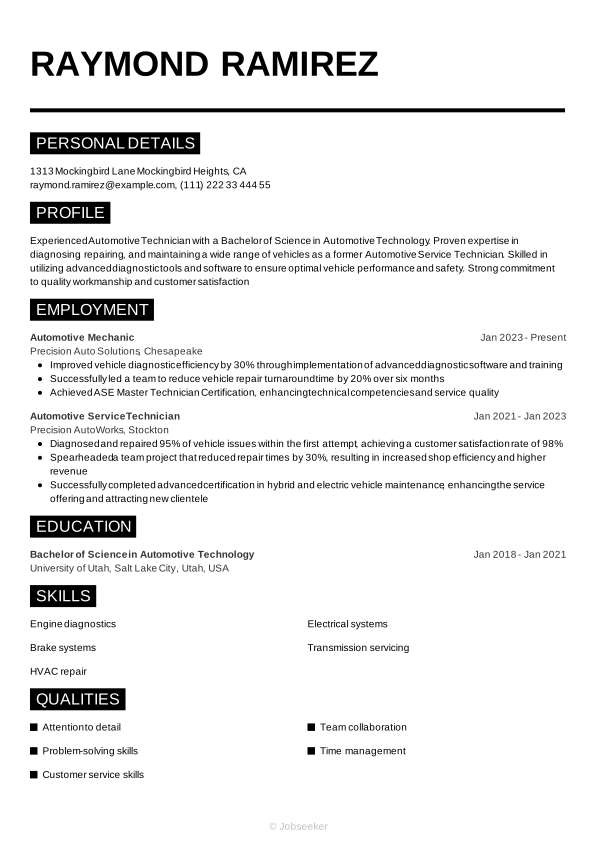
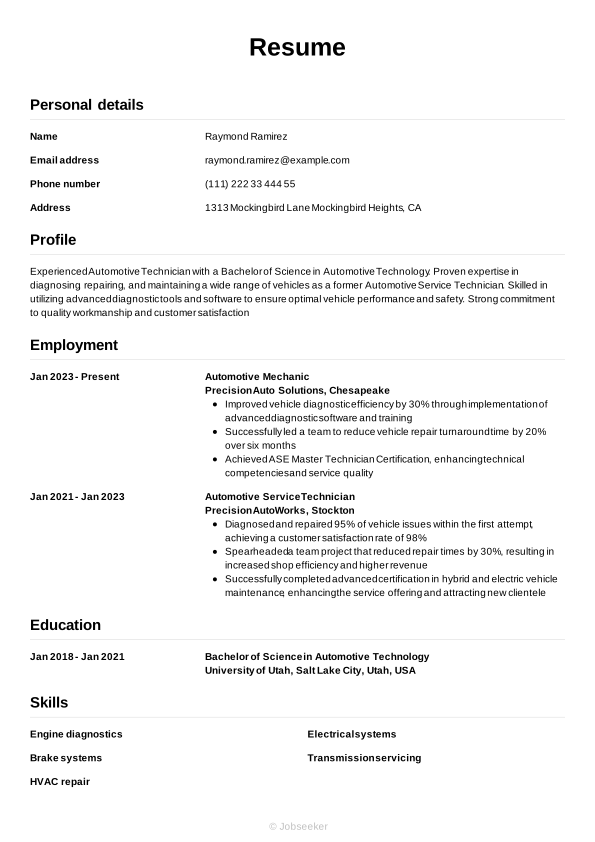
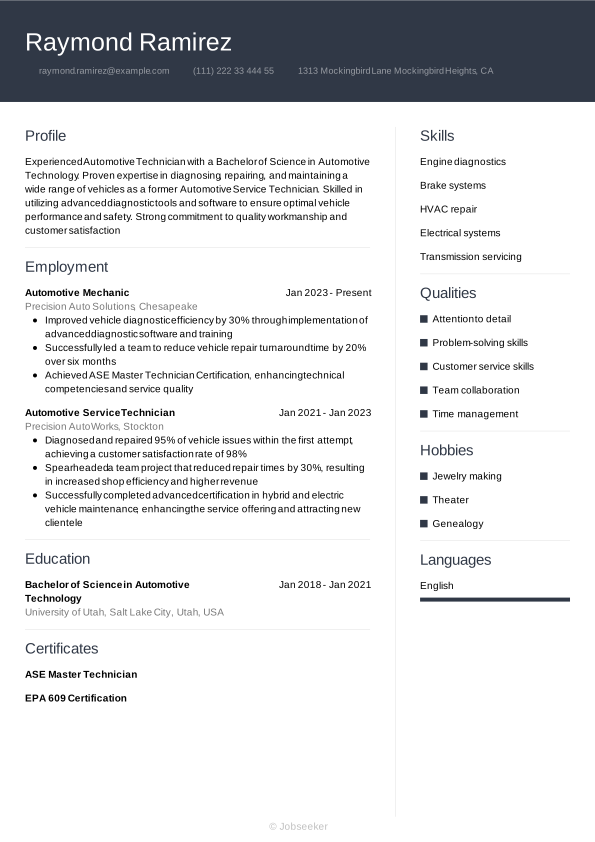
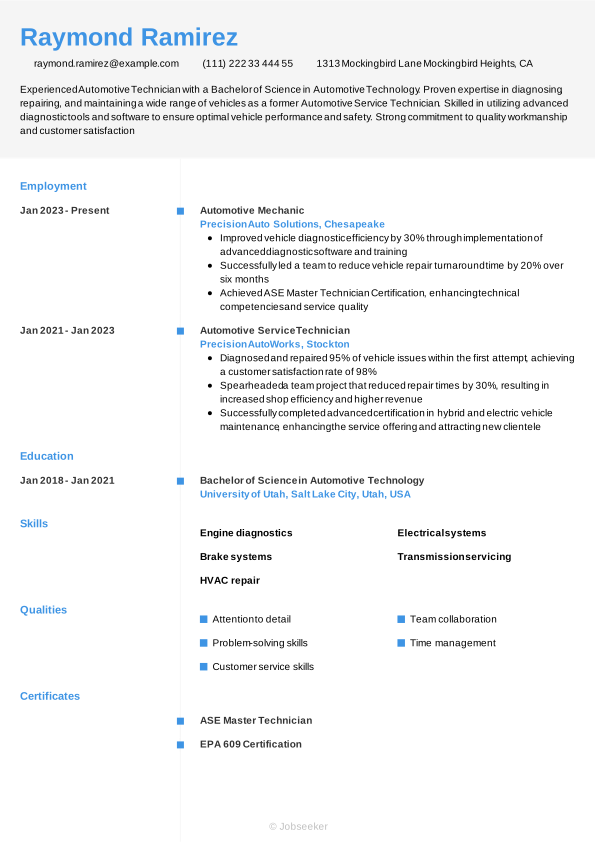
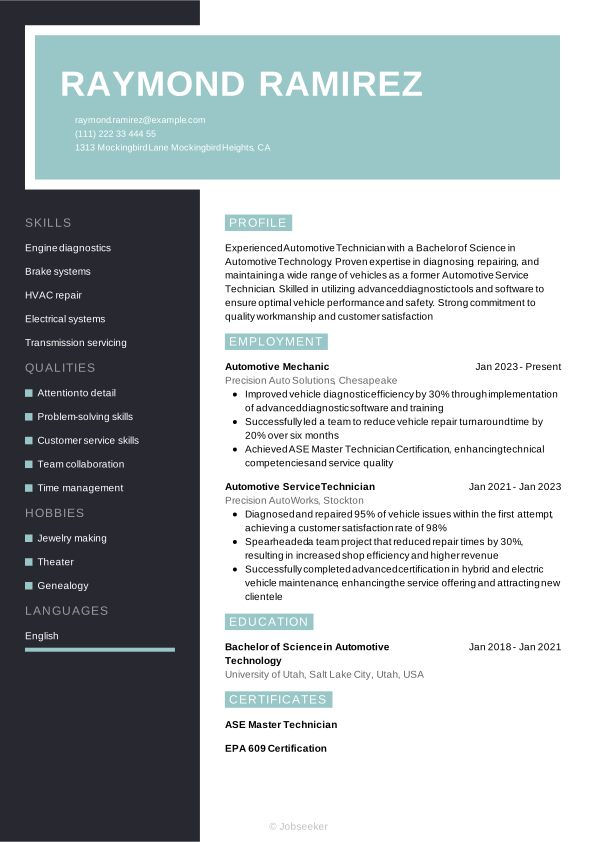
Want to avoid manually adjusting layouts in Word? Jobseeker's resume templates let you create a professionally formatted resume and download it as a PDF in just a few steps. Check out our resume example below to see the different template types:
How to Choose the Best Resume File Format
Now that you’ve got the basics down, let’s talk about how to decide which format is right for you. Choosing whether to submit your resume as a PDF or Word document doesn’t have to be hard. Follow these simple rules to get it right:
Always use PDF when no format is specified
If the job posting doesn't mention a file type at all, that’s your sign to go with PDF. It's the safest default because your formatting stays the same no matter who opens it.
Always use PDF for email and direct applications
When you send your resume straight to a recruiter or hiring manager, a PDF gives them a clean, finished document that looks right on any screen. Choosing this approach helps you to look extra professional and shows you understand hiring standards.
Go for Word when the employer or recruiter requests it
If the job posting or a recruiter asks for a Word file, send one. Following their instructions shows you pay attention to detail, and some recruiters need an editable version so they can add notes or company branding before passing your resume on.
Check the application portal before uploading
Finally, look at which file types the portal accepts before you upload anything. Its requirements beat any general advice, including everything in this guide.
Situation | Best format |
There's no format specified. | |
You're applying by email. | |
You're sending your resume directly to a hiring manager. | |
You're uploading to a portal that accepts both. | |
The job posting asks for a Word file. | Word |
The recruiter wants an editable version. | Word |
The portal doesn't support PDF. | Word |
How to Convert Your Resume From Doc to PDF and Vice Versa
Need to change the file type of your resume? If you have created your resume in Microsoft Word and want to download a PDF version, click File > Export > Create PDF/XPS.
If you have a Google Doc and need a PDF, you can either select File > Download > PDF Document or File > Print > Select Save as PDF under Destination.
Converting a PDF to a Doc is slightly more difficult, but can be done if you have Adobe Acrobat on your computer. Double check the integrity of the file after conversion, and make any necessary changes before submitting it.
Common File-Format Mistakes to Avoid
By this point, you should be ready to create your resume using the right format. However, there are some final mistakes you want to avoid, including:
Do
- Use the requested file format.
- Check that text is selectable in your PDF.
- Open the final file before uploading.
- Use a clear professional file name.
Don't
- Submit a scanned/image-only PDF.
- Use an outdated or unsupported file type.
- Send a file with broken fonts or spacing.
- Naming the file something like "resume-final-final2.docx".
PDF or Word for Your Resume: Which Should You Choose?
Most of the time, a PDF file is the best choice for your resume. If in doubt, this is the format you should choose as it looks professional, keeps its formatting, and can’t be edited afterward.
The only time you should opt for a Word file is if the recruiter or system requests it. Whichever you choose, always make sure your resume has clear, ATS-readable formatting.
If you need help creating your resume and cover letter, check out Jobseeker’s resume and cover letter templates. Simply enter your details and work history and then you can switch effortlessly and instantly between formats, fonts, and color schemes before downloading your resume.
FAQ About Resume PDF and Word Formats
Is PDF or Word better for ATS?
Both text-based PDFs and .docx files are generally supported by modern ATS. When choosing which format to use, always go with the employer’s request.
Do recruiters prefer PDF or Word resumes?
While there’s no universal answer, many recruiters would prefer a PDF file. This format can’t be edited and preserves the final layout.
Can ATS read PDF resumes?
Yes, most modern ATS can read a text-based PDF, which is the type you get when you export your resume from Word, Google Docs or a resume builder.
However, a scanned or image-based PDF is trickier. This is basically a picture of your resume, so the software can't read the words. To check, try highlighting the text in your PDF. If you can select it, you're good to go.
Should I upload my resume as PDF or Word if the job posting does not specify?
If the job description doesn’t specify which format to use, we recommend going for a PDF. This format should be the default for most jobseekers.

Impress potential employers with your resume
Follow step-by-step professional guidance to create a polished resume in minutes.