Should You Put Your Address on Your CV?
Most sample CVs that you'll find online will show the candidate's full address, including street, house number, and postcode. Many people also add their address to their CV without giving it a second thought. But do you still need to include your address on your CV?
Whether to put your address on your CV isn't a yes-or-no question — it depends on the role, the sector and how you're applying. There are situations where a full address helps, though, and a few where it can actively work against you.
Here's what this article covers:
- Advice on whether or not you should include your address on your CV.
- Reasons for including your address, and reasons for leaving it out.
- How to write your address on a CV and how much detail it should include.
Should you include your address on a CV?
Adding your full address to your CV is not mandatory, and in most cases you do not need to add it. In general, providing a full address adds nothing to your CV, and a more general confirmation of your location (such as your town, city or county) is usually sufficient. However, in some cases it can be beneficial to include your full address in your CV. You can find explanations of times when it's a good idea to add your address to your CV below.
Example of address in a CV header
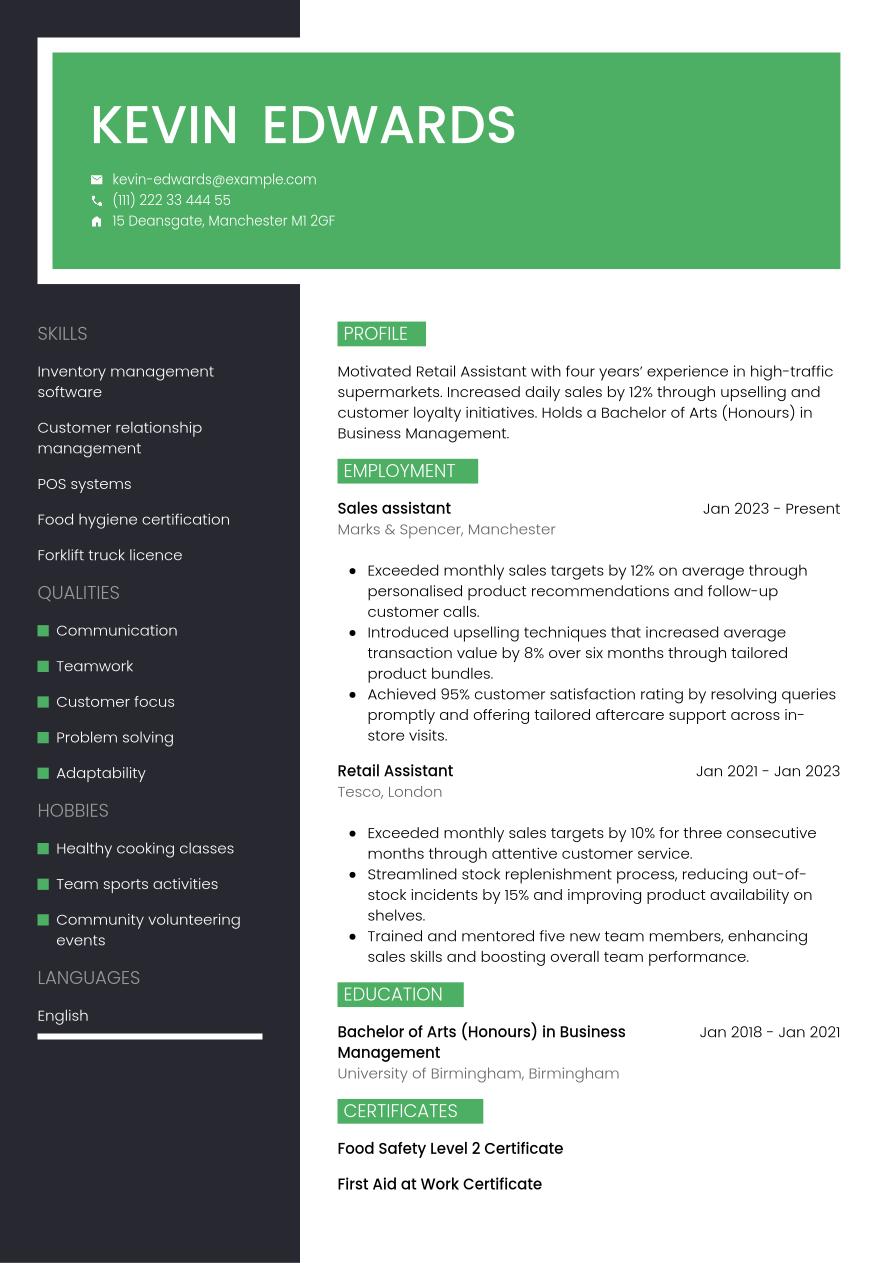
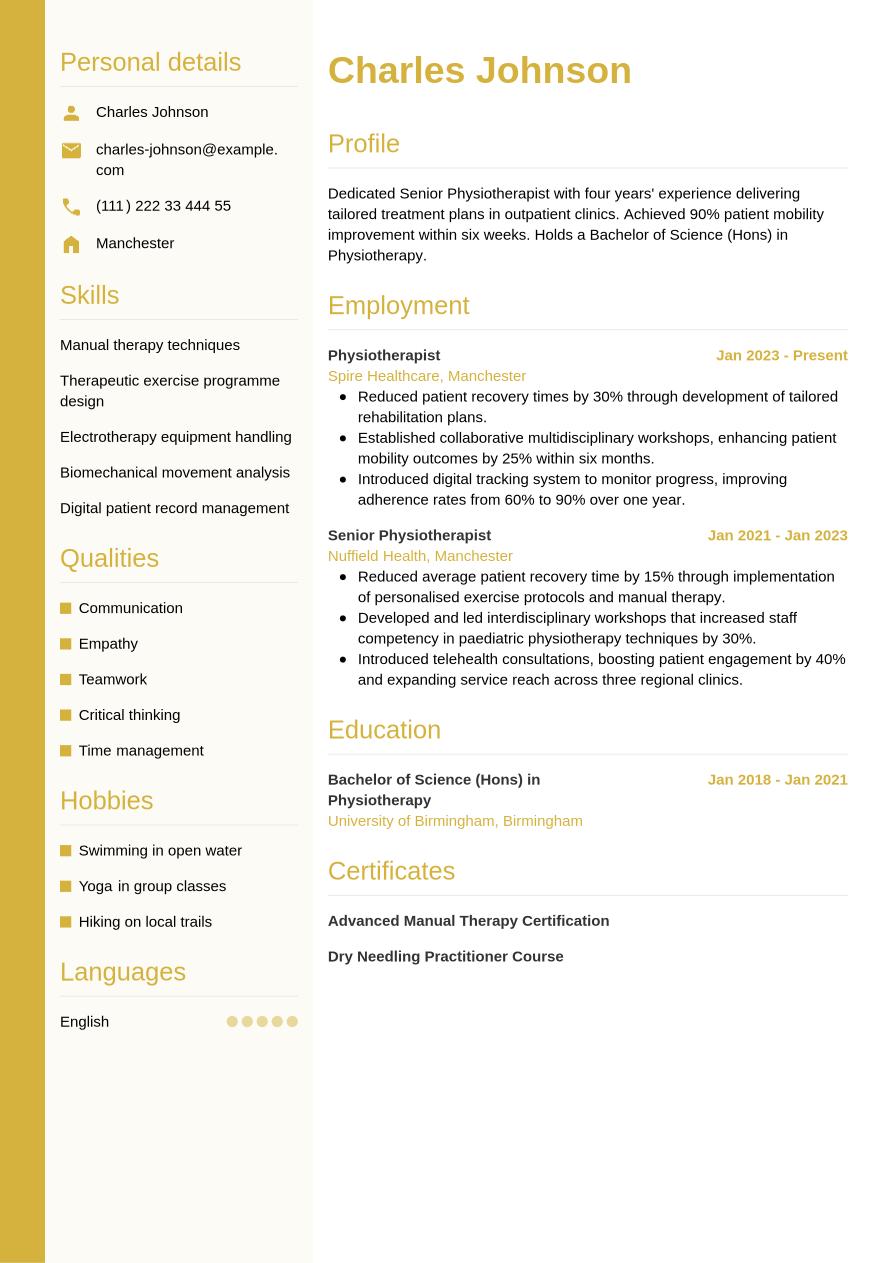
To see how your address might look in your CV header, take a look at the CV example headers below:
A full address sits on one line alongside your other contact details, directly under your name. This is the traditional format, and it's still what employers in sectors like finance, law and healthcare tend to expect. Notice how it stays compact — street, town and postcode on a single line, with no 'Address:' label taking up room.
If you'd rather not publish your street address, a town or city on its own does the same job: it tells a recruiter where you're based and whether the commute works. This version frees up space in a crowded header and is the safer choice when you're applying through a job board or a site you don't know well.
Jobseeker can help you with the presentation of your address on your CV, and much more. Our online CV builder provides a choice of CV templates to ensure a professional presentation of your personal information and work experience.
How to write your address on your CV
There’s not much space on your CV to add a lot of information. Therefore, if you choose to include your address, it’s best to keep it at one or two lines, as follows:
53 St. David’s Road, Swansea, SA1 5YT
Don’t use up unnecessary space on your CV by writing your address on three lines
There’s no need to place the word ‘Address’ in front of your address—most employers will recognise an address when they see it.
If you’re concerned about privacy and don’t want to reveal your full address in the early stages of the interview process, you could always just state the city (or town and county) you live in and the country (if you’re applying internationally). That way, recruiters and employers will know whether you’re local or whether you’ll have a longer commute.
Another approach is to leave your full address off your CV, but to include it in your cover letter. This saves space in your CV, and fits perfectly with the formal letter conventions of a cover letter. If you're not sure how to present your address in your cover letter, see Jobseeker's cover letter examples.
If you intend to relocate
If you intend to relocate to another city or country (or even within the same city), it can be difficult to know what address to put on your CV. What about if you’re living with your parents or a friend? You could indicate that your address is temporary and you will be relocating, as follows:
53 St. David’s Road, Swansea, SA1 5YT
Relocating to London in March 2027
Or that you’re about to relocate:
53 St. David’s Road, Swansea, SA1 5YT
In the process of relocating to London
If you're in the process of relocating or will do at a specific date, don't forget to mention this in your cover letter as well.
When it's worth including your address on your CV
There are a number of reasons why you should include your address on your CV. Let's take a look at when it makes sense to add your address to your CV, and the positive reasons for doing so:
Employers expect to see it
Including your address with your contact details in the header of your CV is still standard practice. Therefore, employers in some industries will expect to see your address there. If you’re applying for a role in traditional sectors such as finance, law, government or healthcare, it may not be a good idea to break with convention.
Commuting
If you live locally, it can be beneficial to include your address as some employers give preference to local candidates, especially if they’re looking to fill the position quickly. Employers want to be sure that you’ll make it to work on time; by including a local address, you let them know that commuting won’t be a problem.
It establishes trust
Including your address tells an employer you're settled rather than constantly on the move — and after the cost of hiring and training someone, that reassurance carries weight. It's particularly useful if you've relocated a few times or held several roles in different places: a current address removes any doubt about where you're actually based now, rather than leaving a recruiter to guess from your most recent job.
Background checks
Some roles — in finance, healthcare or government, for example — require vetting that covers criminal records or address history. You'll provide your address at that stage regardless, but for these sectors including it upfront signals you're ready for the process.
EXPERT TIP
Most job boards let you set up alerts to be notified of new jobs. When uploading your CV, if you don’t include your address or a location, you’ll miss out on opportunities in your (desired) area unless you check the job board every day.
When to leave your address off your CV
Equally, there are numerous reasons why it might be beneficial not to include your address. Let's take a look at when it makes sense to leave your address off your CV:
Security concerns
For privacy reasons, would you prefer not to have an employer or recruiter know your exact address? What if you don't want your address to be public because you don't know where your CV will end up, and what will happen to it?
Under UK GDPR and the Data Protection Act 2018, employers can only keep your personal data for as long as they have a legitimate reason to — typically six months after a recruitment process closes, unless you've agreed they can hold it longer. You also have the right to ask an employer to delete your data, and they must respond within one month.
Third-party sites
If you’re applying on a site besides the company’s website or a reputable job board (Indeed, Glassdoor, LinkedIn, etc.), it may not be a good idea to include your full address, in case the information falls into the wrong hands. If you're unsure about how much personal information to include in your CV, check the website's privacy statement.
Long commute or remote jobs
If you don’t live in the same city as the job you’re applying for, you may be less likely to succeed because you’re not a local candidate or the commute might be too far. In fact, some employers set their ATS (Applicant Tracking Systems) to filter out candidates this way, especially if they expect large volumes of applications.
If you're applying for a remote job, the employer has no reason to know your full address. Your location will have no bearing on your ability to do the job, apart from perhaps confirming you're in a time zone that's conducive to the role. If applying for a remote job with an international company, you could also mention your country.
Economic profiling
When you send your CV, your personal details are usually stored in a database. If an employer decides to run a check on your address, they can see details such as your area’s socioeconomic status. If you live in an area where living costs are relatively low, the employer may offer you a lower salary based on expected living expenses and not one based on your worth.
Lack of space
As a rule of thumb, your CV should take up no more than two A4 pages. As the contact details section can get quite crowded with your name, e-mail address, phone number, LinkedIn address and the URL to your website or portfolio (if applicable), you may want to save on space. It’s also worth bearing in mind that you’ll need to provide your full address later down the line to the HR department, once you’ve been offered a job. As such, it might not be worth adding your full address to your CV at this stage.
Key takeaways for adding your address to your CV
When considering whether to add your full address to your CV, remember these key points from this article:
- In most cases, it's not necessary to include your full address in your CV.
- Listing just your town or city is as effective as a full address — and it keeps your header uncluttered.
- There are some pros to adding your address to your CV, including avoiding confusion over your ability to commute.
- There are also cons to adding your address to your CV, including data security and taking up space.
To help you understand more about exactly what makes the perfect CV, including what to include and how to present it, take a look at Jobseeker's library of resources. Jobseeker can also help you create an eye-catching CV via its online CV builder. Select from professionally designed CV and cover letter templates, which you can customise and adapt to match your personal style and the role you're applying for. Sign up today to get started.

Impress employers with your CV
Step-by-step guidance to create a professional CV in minutes.





![Tailor Your CV to the Job Description [Step-by-Step]](/api/media/images/a6a58ed8-87bf-4a9c-8882-e8bbfb445e77/380-190-11.52%2C0.00%2C68.42%2C100.00/tailor-your-cv-to-the-job-description-step-by-step.jpg)