Town Planner CV Example
If you're hoping to launch a career in the urban planning industry, including town planner roles, it's essential to write a CV that shows your skills and achievements in the best light. You will need to focus on the most relevant and essential specialist skills for the role that match your career experience, including assessing planning applications and preparing strategic plans. In this guide, you'll find comprehensive tips and advice on creating a town planner CV that makes a strong impression and puts you in the top bracket of applicants.
A town planner CV that includes all the necessary details and is tailored carefully to the job description puts you in a great position. It can help you pass the ATS screening stage, make a strong impression with the employer and reach the latter stages of the recruitment process. Let’s take a closer look at the key parts of a CV and how to develop them for maximum impact.
Main town planner CV sections
Your town planner CV strategy will depend on various factors, including your previous experience, your seniority and the details listed in the job description.
However, regardless of your seniority, a town planner CV needs to tell a cohesive story of your professional growth. In the following sections, we’ll dive into each part of the CV step-by-step, starting with your header and moving through to your professional achievements.
CV Header
Start your town planner CV with a professional-looking header that includes all the relevant contact information. This usually includes your name, your email address, your phone number and your location, but not your full address. If you have a LinkedIn profile, consider adding a URL to this in your header, to help the reader easily find more information on your career and credentials.
When you're applying for jobs in the UK, it's generally not advisable to include a photo or more personal details than are strictly necessary, such as your age, gender, ethnicity or nationality. Including these can jeopardise the recruitment process by introducing bias, and can fall foul of the Equality Act 2010.
James Kelly
james-kelly@example.com
(111) 222 33 444 55
Birmingham
linkedin․com/in/james–kelly–123
CV Summary
Below your CV header, the next section tends to be a CV summary or CV objective. This paragraph briefly explains a few of your key skills and qualities, so employers can easily understand whether you're likely to be a suitable candidate for the town planner job. While the CV summary focuses on your key skills and achievements, a CV objective highlights your career ambitions, making it more suitable for junior candidates.
Both a CV summary and objective should be concise, with an ideal length of two or three sentences. List your key skills, personal strengths and career achievements or ambitions, taking care to ensure the content reflects the requirements listed in the job description.
A good CV summary will highlight one or two key skills that match those listed in the job description, and show how you've put them to good use in your career to date. You'll want to set yourself apart from other candidates by focusing on unique qualities or particular areas of strength that have shaped your career to date. Below you'll find a good example of how to write an effective town planner CV summary. The example shows quantifiable achievements and well-structured sentences.
Strong example:
Experienced town planner with five years’ experience delivering sustainable urban projects. Led a £12 million mixed-use scheme, boosting local green space by 25%. Holds a BSc in Town and Country Planning.
Worst practice example:
A driven town planning professional with a strong background in urban development, skilled in project coordination, stakeholder engagement and policy implementation, committed to delivering effective solutions and supporting community aspirations.
The CV summary above contains various red flags and things to avoid. While the differences are subtle, they can make all the difference. For a summary to make less of an impact, it might include generic or vague information, lack evidence of your impact, or fail to highlight specific personal qualities that make you stand out from other candidates. It may also lack tailoring to the job description or include long, poorly structured sentences.
Work History
A CV's work experience section is usually its most important element. Employers tend to value the work experience section, as it shows evidence of how you've put your relevant skills to good use in your career to date. It's crucial to tailor your work experience section to match the requirements listed in the job description, using keywords and phrases so employers can easily see how well you fit the role and organisation.
Add your most relevant previous jobs, including the job title, the name of the employer, its location and the dates you worked there. Below each entry, include several bullet points showcasing your skills and explaining how you used these to achieve positive results.
To differentiate your work experience section from other candidates, include action verbs and quantifiable evidence that showcases the impact you made. Show your career progression through the skills you developed and used in each role. See below for an example of how to put the work experience section best practice into action:
Strong example:
Town Planner, January 2023 - Present
Oakbridge Planning Consultants, Cambridge
- Led redevelopment of 100-acre brownfield site into mixed-use community, securing planning consent six months ahead of schedule.
- Coordinated cross-departmental team to deliver sustainable transport plan that reduced local traffic congestion by 25 per cent within a year.
- Negotiated Section 106 agreements worth £4 million, funding public green spaces and community facilities across five urban regeneration projects.
Worst practice example:
Town Planner, January 2023 - Present
Oakbridge Planning Consultants, Cambridge
- Facilitated cross-department collaboration and ensured adherence to local planning frameworks for multiple projects.
- Coordinated stakeholder engagement and supported policy development to address diverse urban challenges effectively.
- Prepared reports and advised on development proposals to guide sustainable growth within various communities.
Take a look at a less strong town planner CV work experience section above. A less-effective work experience section could focus too much on irrelevant or out-of-date roles, or include generic information about your responsibilities that fails to show the impact you made. It might lack tailoring to the job description or fail to provide evidence to support the claims made in the bullet points.
Education
In your education section you'll want to list your highest and most recent qualifications, particularly if they're a requirement for the role.
Town planner jobs tend to require a relevant university degree just to be eligible for the role, so you'll want to showcase this in your CV. If you have a Bachelor of Science in Town and Country Planning or another related degree that makes you an eligible candidate for the position, add it to your CV. You could also add other degrees or qualifications that highlight your key skills, like statutory planning regulations knowledge or proficiency in GIS mapping.
When creating your education section, think about which qualifications are most relevant to the role, and list them in reverse-chronological order, starting with the most recent and working back from there. Add the name and level of the award, the institution, its location and your dates of study or graduation. If you have space or if you particularly want to emphasise your qualifications, you could add one or two bullet points under each entry, highlighting specialist areas of study, projects you worked on, awards you won or societies you were a member of.
Specialist licences or certifications can also be a valuable addition to your CV's education section. If these are essential for the job and are referenced in the job description, it's a good idea to include them here rather than further down your CV. Include any expiration or renewal dates for certifications, if applicable.
Bachelor of Science in Urban Planning, 2018 - 2021
University College London, London
Key Skills
Your CV's skills section CV's skills section is a great place to showcase some of the key skills necessary for the role. Check the job description to understand which skills are most essential, and provide a combination of hard and soft skills, reserving space to include some unique qualities that can help you to stand out from the competition. For a town planner CV, you'll want to focus on the most relevant skills for the role that match your skill set, including communication and CAD software operation skills, to catch the reader's attention and show you're qualified for the town planner position.
Hard Skills
Hard skills are the specialist technical skills that are essential for carrying out the duties of the role. They might be developed through study, on-the-job training or experience in the industry, and some hard skills may require a licence or certification. For town planner jobs, essential hard skills from your career-to-date might include statutory planning regulations knowledge, and proficiency in GIS mapping. Check the skills specified in the job description, and add four or five key hard skills to your CV that show employers you're capable of completing the key duties of the role.
The best hard skills section will contain a mix of your strongest technical skills and those listed in the job description as 'essential' or 'desirable'. The closer your skills list is to matching the essential job description skills, the better your chances of success.
See below for examples of skills that are frequently included in the hard skills section of a town planner CV:
- Proficiency in GIS mapping
- Spatial data analysis experience
- CAD software operation skills
Soft Skills
Soft skills are distinct from hard skills and tend to reflect your inherent personal qualities and strengths. These are often more transferable to different roles, and help the reader understand your working style, and your likely fit to the team and the organisational culture. As a result of rapid technological changes to modern ways of working, soft skills are becoming more and more valuable to employers. Soft skills can also be particularly useful for junior or entry-level roles where candidates haven't had the time or career experience to develop hard skills and notable achievements.
Just like the hard skills section, begin by reviewing the job description to learn the most desirable soft skills to include in your town planner CV. Only add soft skills that you can provide evidence for throughout your CV. Aim to add up to five soft and transferable skills, including a mix of the most essential skills from the job description, together with some skills that make you stand out as a unique and compelling candidate.
Here are typical soft skills candidates include in a town planner CV.
- Stakeholder management
- Negotiation
- Communication
Language Skills
If you speak any languages in addition to your mother tongue, you might want to include them in your town planner CV as a languages section. These can be valuable for your application, whether languages are specified as a requirement in the job description or not. In this section, include any foreign languages you speak to a standard that could be useful in the world of work, with an indication of your proficiency level.
The ways to indicate your foreign language skills depend on the level of detail you want to provide. They include assigning a basic descriptive word, such as:
- English: Fluent
- Spanish: Intermediate
You might wish to use an internationally recognised standard for your language skills, such as the Common European Framework of Reference (CEFR). This divides your language skills into the following categories:
- A1: Beginner
- A2: Elementary
- B1: Intermediate
- B2: Upper intermediate
- C1: Advanced
- C2: Proficiency
Certifications and Training
Depending on the role you're applying for, and the type of qualifications you have, you might want to include a separate section for certifications, in addition to the education section. It's often beneficial to include it as it can illustrate a positive attitude towards self-improvement and professional development, as well as a proactive mindset. All these qualities will appeal to most employers and decision-makers. Furthermore, the CV certifications and training section is a great showcase for official licences and certifications when applying for roles where these are a key requirement listed in the job description. These could include positions where the use of specialist software and equipment is a routine part of your everyday responsibilities.
Here is a list of some key certifications and licences that can be particularly useful for town planner applications:
- GIS for Planning Professionals, 2023
- Environmental Impact Assessment Certificate, 2023
- Sustainable Urban Development Diploma, 2023
Expert Tip:
Barnet Council shows that recruiters spend only 8.8 seconds reviewing a CV, so a concise personal statement is essential to grab attention immediately. (1)
Optional Sections
Optional sections can be useful to add to your CV, to provide additional evidence that you have the skills for the town planner job. Consider optional sections for your CV if you're looking for ways to show you're right for the job, beyond your work experience. Optional sections are particularly valuable if you haven't had the chance to build up relevant work experience, for example, if you're applying for entry-level roles or you're changing careers to a new industry or role.
You can find more detailed advice on tailoring your CV in our career resources, where we cover proven ways to highlight your skills effectively.
Hobbies and Interests
One valid way to show you have relevant skills for the job is by listing your hobbies and interests. In addition, this section is the ideal way to show aspects of your personality that might not otherwise shine through in your CV, helping to offer a point of difference compared to other candidates. However, hobbies and interests can only add value to your CV if they provide evidence of skills and experience that you can use in the role you're applying for. As such, only add hobbies as a way of filling gaps in the skills you've developed or used through work experience.
Awards and Achievements
Listing your key career achievements in a distinct section can be an effective way of drawing attention to them. If you've been awarded any prizes or accolades, or reached any key career milestones, these can all help to show you have the required status and experience for the role.
Volunteer Roles
Another way of showing employers your skills and experience is through volunteer roles. If you're struggling to show you have the necessary credentials through your work experience, volunteering can provide valuable examples of how you've put your skills into action. Structure your volunteering section the same as your work experience section.
Add your job title or the name of the volunteer role, the organisation, its location and the dates you volunteered. Also add some bullet points outlining your skills and experience in the role, as well as any key achievements.
Data Insight:
When reading a CV, more than 4 in 5 hiring managers go straight to the work experience section. (2)
Best action words for a town planner CV
Starting each of your work experience bullet points with strong action verbs is a great way to showcase your key skills and qualities, and demonstrate the impact they've had in your career to date. Start each bullet point with a verb linked to the skills required in the job description, to add focus to your work experience section and make it easy for the reader to identify your strengths. Remember to always back up the action verbs you use with quantifiable evidence that shows the impact you made. You can use past tense for any action verbs describing previous jobs, with present tense for action verbs to describe your current role and responsibilities.
- Analyse
- Plan
- Design
- Coordinate
- Consult
- Develop
- Assess
- Collaborate
- Implement
- Negotiate
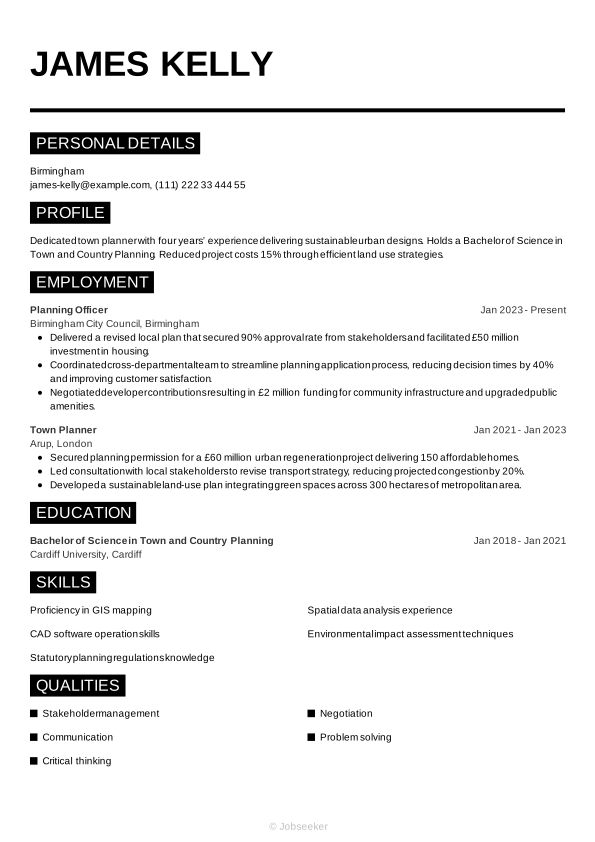
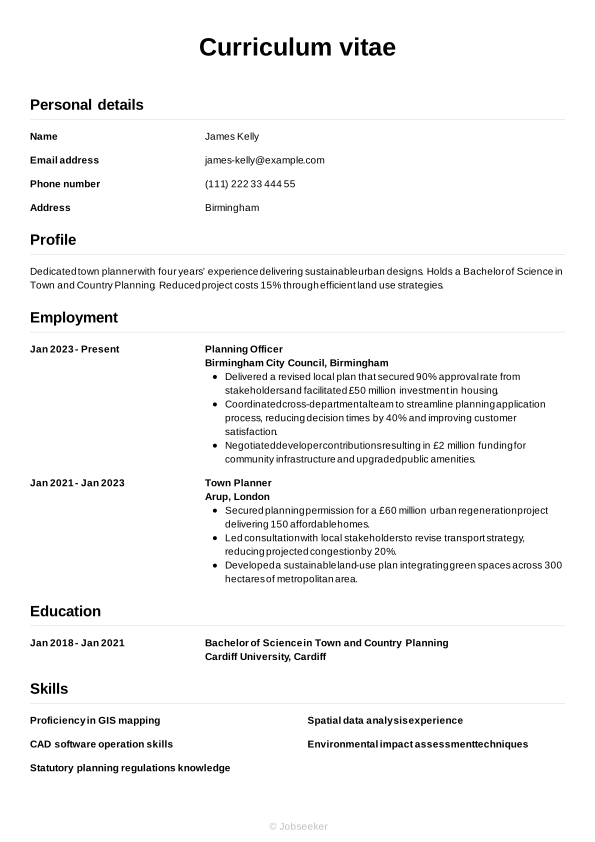
Town planner CV example
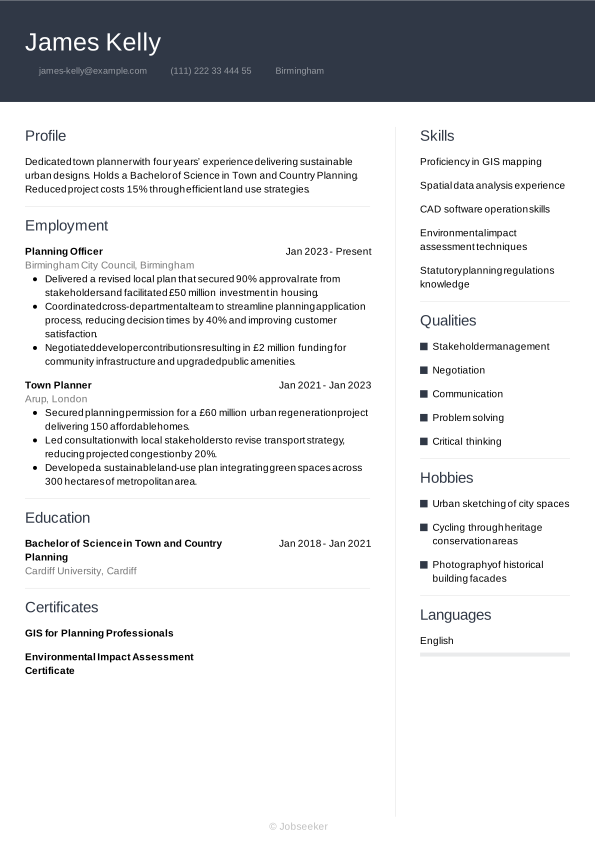
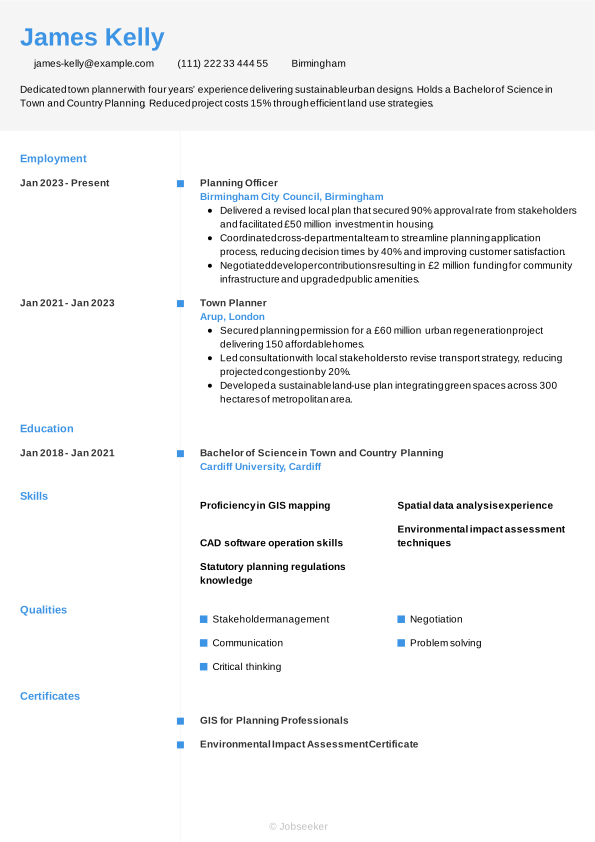
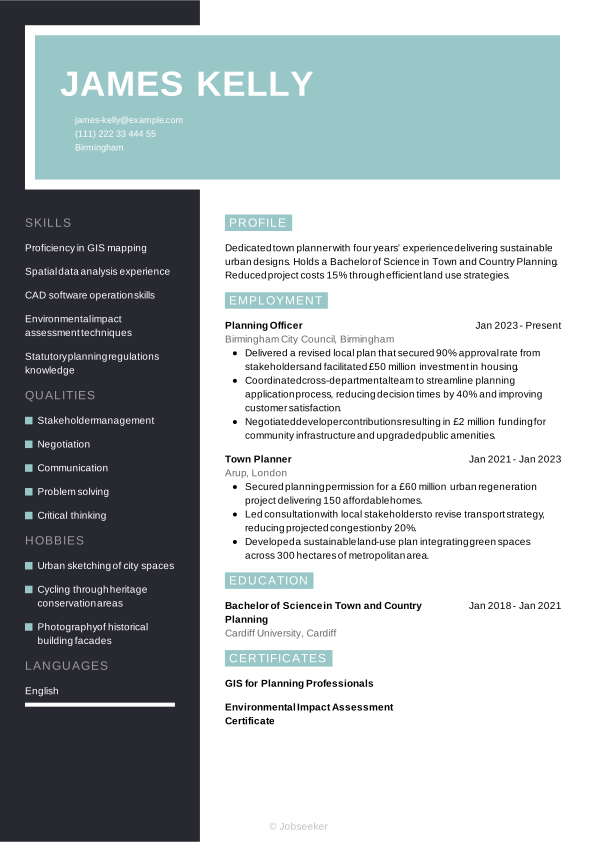
Now you know how to create a town planner CV for maximum impact, take a look below at this full, completed example:
Birmingham
•
james-kelly@example.com
•
(111) 222 33 444 55
•
linkedin․com/in/james–kelly–123
Dedicated town planner with four years’ experience delivering sustainable urban designs. Holds a Bachelor of Science in Town and Country Planning. Reduced project costs 15% through efficient land use strategies.
Planning Officer
2023
-2026
Birmingham City Council (Birmingham)
- Delivered a revised local plan that secured 90% approval rate from stakeholders and facilitated £50 million investment in housing.
- Coordinated cross-departmental team to streamline planning application process, reducing decision times by 40% and improving customer satisfaction.
- Negotiated developer contributions resulting in £2 million funding for community infrastructure and upgraded public amenities.
Bachelor of Science in Town and Country Planning
2018
-2021
Cardiff University (Cardiff)
Proficiency in GIS mapping
Spatial data analysis experience
CAD software operation skills
Stakeholder management
Negotiation
Communication
GIS for Planning Professionals
Environmental Impact Assessment Certificate
English - Native
French - Advanced
If you're not sure what your one-page, finalised CV design might look like, check out our examples.
Key tips and mistakes to avoid for your town planner CV
Tips to follow
- Showcase your key skills with a dedicated skills section that includes both hard and soft skills listed in the job description.
- Use action verbs to highlight how you've put your skills to good use, and the achievements you delivered for previous employers.
- Tailor your CV, matching it to the key skills and experience described in the job description, while telling a unique story about your best qualities and achievements.
- Select a clear, professional CV format that makes your document as readable as possible, utilising standard fonts, consistent line spacing and clear headings throughout.
- Use a reverse-chronological approach to listing your work experience and education, starting with your most recent activities and working back from there.
Common mistakes to avoid
- Don't overburden the reader with too much information but stick to the most relevant, concise and focused content possible.
- Don't use passive voice, such as 'strategies were devised', but instead add clear action verbs that place you and your impact at the heart of the CV narrative.
- Don't add an inappropriate email address to your CV comrosing of nicknames or informal language. If needed, create a dedicated professional email address combining elements of your name, initials and/or profession.
- Don't include a section for hobbies and interests unless they're clearly relevant to the role and help you show skills you can't prove through other core CV sections.
- Don't lie or exaggerate about events in your career, such as previous jobs, qualification or key achievements – it can backfire and disqualify you from the running.
A compelling cover letter is an essential part of a successful job application. Ensure your cover letter matches the style and design of your CV with our professional cover letter templates.
Guide to CV ATS optimisation
Applicant tracking systems (ATS) are a valuable tool for many recruiters and employers, helping them manage the recruitment process by scanning and assessing CVs based on their likely fit to the job description. This saves recruiters and hiring managers the time and effort of reading every CV in detail. With many vacancies often receiving hundreds of applications, ATS software can really relieve the burden on hiring teams and free them up to focus only on the most suitable candidates.
The growing prevalence of ATS means candidates need to write and format their CV in a way that's compatible with the software, giving it the best chance of being accurately scanned and parsed, and ranking highly against other candidates. Here are some tips on how to optimise your CV for ATS screening:
- Include keywords and phrases that match the job description, making it easy for ATS apps to identify a strong fit for the role.
- Use standard CV headings that make your CV easier to navigate, such as 'work experience', 'education' and 'skills'.
- Opt for a simple CV layout with consistent formatting, avoiding any special design elements that could make your CV harder for ATS apps to scan.
- Select a font that can enhance the readability of your CV, such as popular serif and sans serif fonts, with size 10 to 12 for body text and 14 to 16 for headings.
- Use bullet points rather than writing long, full sentences, as this will make your CV easier to scan and parse, and help your keywords and phrases to stand out.
It might seem like there's a lot to remember when it comes to making an ATS-compatible CV, but taking care with this stage can really improve your chances of success. To make the process as easy as possible, use one of our expert-designed, ATS-optimised CV templates and boost your chances of success.
If you want to impress recruiters with your CV, use Jobseeker's ready-made CV templates, which are HR-approved for maximum chances of success.
Town planner CV FAQs
How do I create an accompanying town planner cover letter for my CV?
A well-crafted cover letter can be just as vital to your chances of success as your CV. To write a cover letter that makes a positive impression on the reader, adopt a formal, professional layout and use a cover letter template that matches the design of your CV.
The typical cover letter includes three key sections of content. Firstly, introduce yourself, confirm the role you're applying for and explain why you're applying for the position. Next, outline some relevant key skills and achievements from your career without repeating the details in your CV. Finally, express your gratitude to the employer for considering your application and leave a call to action that encourages them to contact you for an interview, or to establish dialogue.
Alternatively, if you're applying for the role via email, you may want to send a less formal cover note. This simply includes a brief introduction, confirming the role you're applying for and directing the reader to the relevant attached documents, rather than following the traditional professional letter conventions. Remember to include your contact details in your email, so the employer can follow up with you if necessary.
Jobseeker's cover letter examples for town planner roles and other key urban planning industry positions provide useful HR-expert tips and guidance on how to write a compelling cover letter.
How do I write a town planner CV without experience?
Even without a history of relevant work experience, you can still write a town planner CV that makes its mark with employers.
Choose a functional CV format, that gives greater emphasis to your skills than to your work experience. In this layout, the skills section comes immediately below your CV summary, followed by education, with work experience taking less priority.
For junior or entry-level roles, employers may be more keen to know whether you have the right soft and transferable skills to adapt to the requirements of the role. In this case, place greater emphasis on soft skills for a junior town planner CV.
How do you write an attention-grabbing town planner CV headline?
A well-written CV headline can be an effective way of introducing your CV, helping it be more compatible with ATS apps and engaging the reader early in the document.
Aim for a short, snappy sentence that includes the job title and introduces one of your strongest, most relevant skills or qualities.
For the most attention-grabbing CV headline, match your sentence to the most critical keywords and phrases from the job description. This will catch the eye of the reader as well as giving you the best chance of passing the ATS screening stage.
The examples below show best practice for writing a CV headline at different experience levels:
- Junior Town Planner Regeneration Specialist
- Urban Planner Driving Sustainable Growth
- Senior Town Planner and Strategist
What is the most impactful town planner CV format for 2026?
The best CV format for a town planner CV in 2026 depends on both your experience levels, and the role you're applying for, including its level, the company and industry norms.
Typically, the most effective CV format for most candidates is a standard reverse-chronological structure that prioritises your work experience section as a showcase of your skills and career achievements.
On the other hand, for candidates with less experience, including graduates and career changers, a functional or skills-based CV format can be more effective, as it showcases your key skills and qualifications over your work experience.
Key takeaways for a winning town planner CV
To make a strong first impression on hiring managers, tailor your CV for every application, adding keywords and phrases that match the job description. Select a suitable CV format that reflects your experience level, and focus on highlighting your key skills, and demonstrating how you've put them to good use to achieve positive outcomes in your career to date.
Finally, using a clean, professional CV template like those offered by Jobseeker, can help your CV stand out among its competitors and give you the best chance of success with your applications.
Citations:
- Barnet Council (UK local government), Recruitment tips: How to write a supporting statement
- Jobseeker, HR Statistics

Impress employers with your CV
Step-by-step guidance to create a professional CV in minutes.