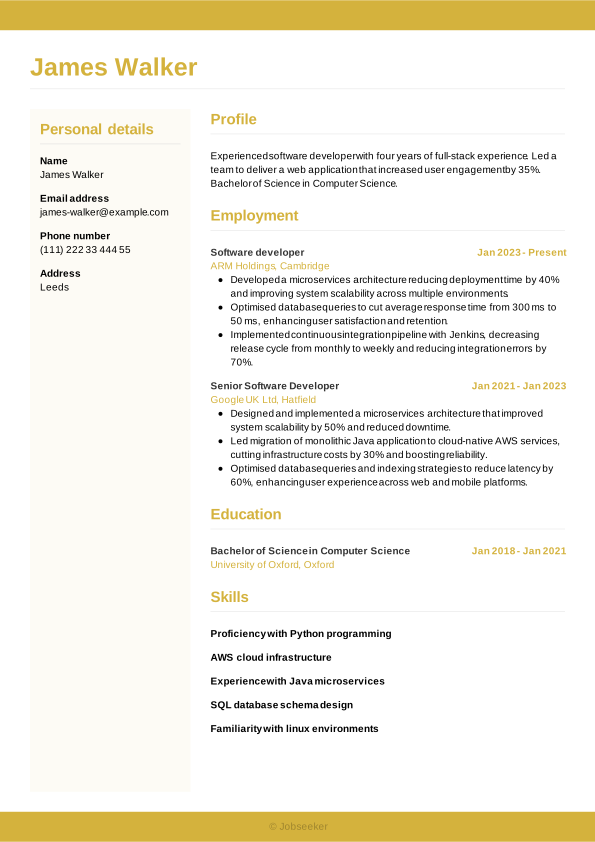
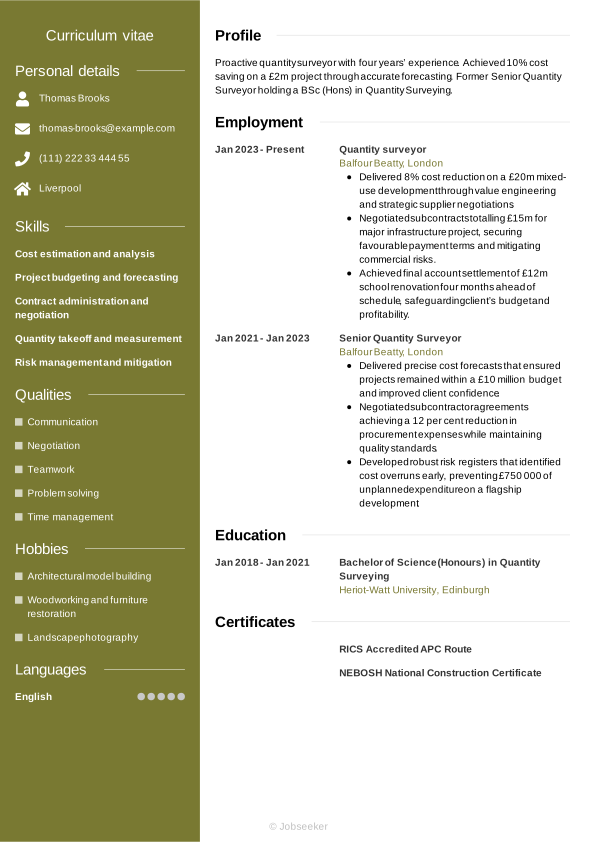
Medical Receptionist CV Example
Applying for medical receptionist positions requires a strong CV that showcases your best skills and career achievements. It's the mention of key responsibilities from your career, such as answering phone calls and maintaining patient records that will show employers you're a good fit for the role. In this comprehensive guide, you'll learn the steps to producing a medical receptionist CV that puts you in pole position to progress to the interview stage.
If you write a medical receptionist CV that's more professional and engaging, it will help you progress through the ATS screening stage. Ultimately, it will also give you the best chance to impress the hiring manager, which will boost your prospects of reaching the interview stage. Let’s take a closer look at the key parts of a CV and how to develop them for maximum impact.
Main sections of a medical receptionist CV
Your approach to creating your winning medical receptionist CV will differ depending on your experience, your seniority and the details listed in the job description.
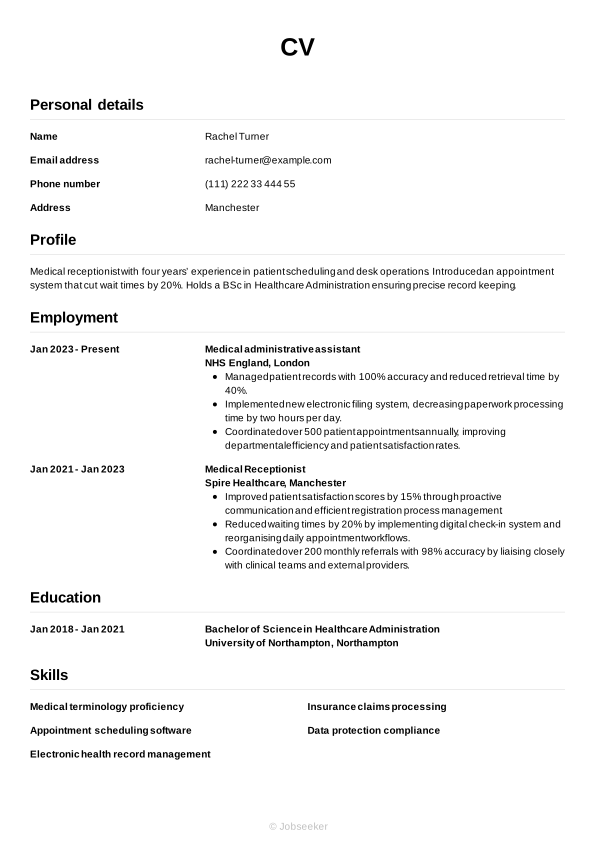
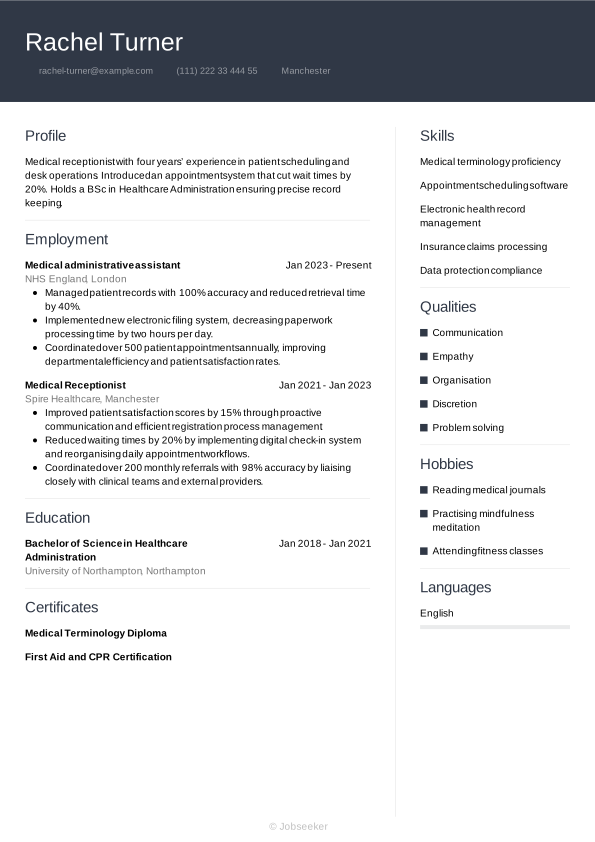
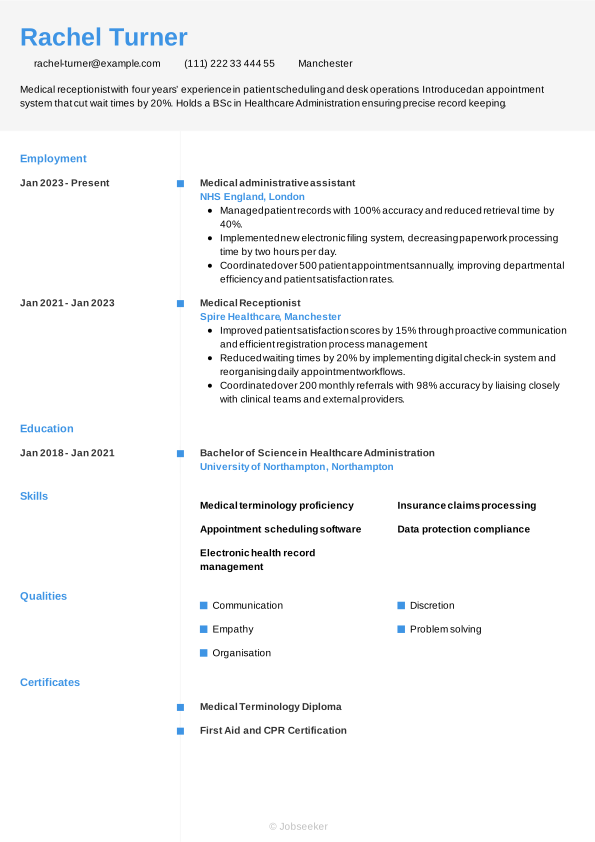
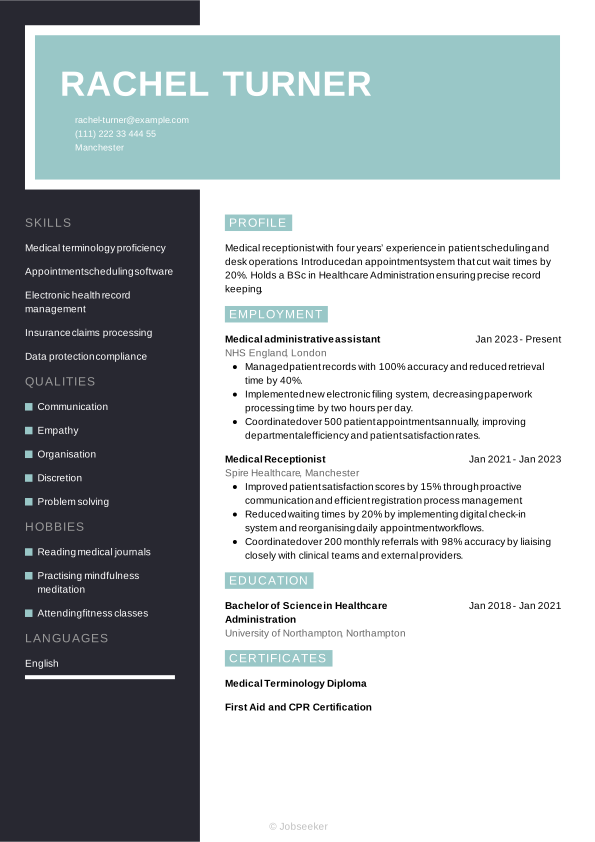
However, regardless of your years of experience, a medical receptionist CV needs to connect the dots of your career into a cohesive story. In the following sections, we’ll dive into the specific chapters of your CV step-by-step, showing you how to refine everything from your initial introduction to your long-term achievements.
CV Header
Start your medical receptionist CV with a professional-looking header that includes all the relevant contact information. This usually includes your name, your email address, your phone number and your location, but not your full address. If you have a LinkedIn profile, consider adding a URL to this in your header, to help the reader easily find more information on your career and credentials.
For UK applications, it's not usually a good idea to add a personal photo or any other personal details, such as your age, gender, nationality or ethnicity. These can risk introducing bias to the selection process and, as such, are often discouraged in job adverts under the terms of the Equality Act 2010.
Rachel Turner
rachel-turner@example.com
(111) 222 33 444 55
Manchester
linkedin․com/in/rachel–turner–123
CV Summary or Objective
Below your contact information, a short, concise CV summary or CV objective can set the tone for your application and provide brief, basic information on your key skills and qualities that gives a strong indication to the reader about your suitability for the medical receptionist role. A CV summary focuses on your key skills and achievements, while a CV objective provides an alternative approach, showcasing your career ambitions and how the role fits with these. This makes a CV objective ideal for entry-level candidates.
In your summary or objective, write two or three sentences introducing your key skills, unique qualities and career achievements, making sure they match the key requirements listed in the job description.
A good CV summary would typically focus on a couple of key skills that match the job description, demonstrating how you've used them to good effect in previous roles. It's important to focus on your unique qualities and provide a preview of how they've made an impact in your career to date, which you'll unpack later in the document. Below you'll find an example of a strong medical receptionist CV summary.
Best example:
Enthusiastic medical receptionist with five years’ experience in busy NHS clinics. Holds a Bachelor of Science in Healthcare Administration. Improved appointment scheduling efficiency by 20%, consistently managing 100+ patient enquiries daily.
Unengaging example:
Friendly and dedicated medical receptionist with several years’ experience in healthcare settings and a relevant degree in administration, known for reliable front-of-house support and positive communication with patients and staff.
The CV summary above contains various red flags and things to avoid. While the differences are subtle, they can make all the difference. An ineffective summary might be vague or generic, failing to highlight specific personal qualities that help you stand out and failing to address the requirements specified in the job description. They might also lack firm evidence of your skills, and be structured with long, hard-to-read sentences.
Employment History
The work experience section of a CV is usually the most important part. Employers look for evidence of how you've developed and used your skills to good effect in your career to date, as an indication of your likely future performance. Remember, it's essential to tailor this section to match the job description, including keywords and phrases to help employers see how you'll fit the role, and how you might put the required skills to good use in the future.
List only relevant previous jobs, and add your job title, the name of the employer, its location and your dates of employment. Under this, write several bullet points showing employers how your skills and key qualities contributed to positive outcomes.
The difference between an average CV work experience section and an outstanding one is the use of action verbs and quantifiable evidence. You'll want to show how your actions led to measurable positive outcomes for employers, and indicate a progression in your skills throughout your career. Take a look at an example of a strong medical receptionist CV work experience section below.
Best example:
Medical Receptionist, January 2023 - Present
Brookside Health Clinic, Birmingham
- Managed patient appointments for over 60 daily visits, achieving a 25% reduction in waiting times through streamlined scheduling.
- Implemented digital records system, improving patient data accuracy by 30% and speeding up document retrieval during peak hours.
- Coordinated communication between clinical staff and patients, resolving 95% of inquiries on first contact and enhancing service satisfaction.
Unengaging example:
Medical Receptionist, January 2023 - Present
Brookside Health Clinic, Birmingham
- Handled general reception duties and supported daily clinic routines.
- Managed incoming calls and addressed patient enquiries.
- Organised administrative paperwork and assisted with office processes.
The example above shows what not to do with your medical receptionist CV work experience section. An unengaging work experience section could be too generic, focusing too much on day-to-day duties rather than skills and achievements. It could also fail to address the job description or lack evidence to show the impact you've made in your career to date.
Education
Your education section should showcase your most recent and highest qualifications, paying particular attention to anything that's specifically required for the role.
Working as a medical receptionist doesn't tend to require a specific degree. However, while employers may not request a degree in the job description, it can be useful to include other relevant qualifications, certifications or training in your CV's education section. These might include First Aid and CPR Certification, or courses that show your skills, such as electronic health record management or insurance claims processing.
When listing your qualifications in your education section, select only the most suitable qualifications and list them in reverse-chronological order, starting with the most recent and working backwards. For each entry into your education section, add the qualification name and level, the institution or awarding body, its location and your dates of study or graduation. For extra emphasis on your education section, include bullet points showcasing projects you worked on, modules you studied, awards you won or societies you participated in, if they help you to prove you're a suitable candidate.
You might also wish to add specialist qualifications, certifications or licences that are required for the role. If you add any of these, include the expiry date, if the qualification requires renewal in the future.
Bachelor of Science in Healthcare Administration, 2018 - 2021
University of Manchester, Manchester
Skills
A CV's skills section is the place to show the reader, in an easily accessible format, that you have the necessary skills for the job. Read the job description to understand the most essential skills, and create a list of both hard and soft skills, ensuring you include some of your strongest, most unique characteristics and qualities to set you apart from the competition. In a medical receptionist CV, only list the most relevant and essential skills you possess, such as empathy and insurance claims processing, to make a positive first impression and show you're qualified for the medical receptionist position.
Hard Skills
Hard skills are the specialist technical skills that are essential for carrying out the duties of the role. They might be developed through study, on-the-job training or experience in the industry, and some hard skills may require a licence or certification. For medical receptionist positions, hard skills that match your abilities, such as appointment scheduling software, and electronic health record management tend to be valued by recruiters and hiring managers. Review the job description, and include four or five key hard skills in your CV that show employers you're capable of completing the key duties of the role.
The best hard skills section will contain a mix of your strongest technical skills and those listed in the job description as 'essential' or 'desirable'. The closer your skills list is to matching the essential job description skills, the better your chances of success.
See below for examples of skills that are frequently included in the hard skills section of a medical receptionist CV:
- Medical terminology proficiency
- Appointment scheduling software
- Electronic health record management
Soft Skills
Soft skills are the personal strengths and qualities that show employers how well you'll fit into the role and complement other members of the team. Soft skills tend to be more transferable and applicable to different roles than hard and technical skills. The world of work is evolving at a rapid pace, changing the types of hard skills required for many roles, and therefore rendering soft and transferable skills more valuable than ever. Soft skills are also extremely valuable for junior and entry-level roles, where candidates aren't necessarily expected to have a wealth of relevant work experience.
Similar to your hard skills section, it's best to first review the job description to know which soft skills to focus on in your medical receptionist CV. You'll want to include a combination of soft skills that you can provide evidence for throughout your CV. Aim to add up to five soft and transferable skills, including a mix of the most essential skills from the job description, together with some skills that make you stand out as a unique and compelling candidate.
Consider the following soft skills that frequently appear in a medical receptionist CV.
- Communication
- Empathy
- Organisation
Languages
If you speak any languages in addition to your mother tongue, you might want to include them in your medical receptionist CV as a languages section. These can be valuable for your application, whether languages are specified as a requirement in the job description or not. Under this section, list any foreign languages you speak to a professional standard, with an indicator of your competency level for each.
The methods for indicating your foreign language skills on your CV include assigning a basic descriptive word, such as:
- English: Fluent
- Spanish: Intermediate
You might wish to use an internationally recognised standard for your language skills, such as the Common European Framework of Reference (CEFR). This divides your language skills into the following categories:
- A1: Beginner
- A2: Elementary
- B1: Intermediate
- B2: Upper intermediate
- C1: Advanced
- C2: Proficiency
Certifications and Licences
If you've invested your time and resources into gaining extra qualifications beyond the minimum requirements for the role, you could highlight these in a certifications section. It can enhance your chances of success to show specific training and certifications. Not only do these prove you're qualified for the role, but they also indicate proactivity and a dedication to professional development. Furthermore, a certifications section is particularly valuable if you're applying for a role that sets out required certifications or licences in the job description. These might include technical roles that require the use of specialist software or equipment.
Here is a list of some key certifications and licences that can be particularly useful for medical receptionist applications:
- Medical Terminology Diploma, 2023
- First Aid and CPR Certification, 2023
- Health and Safety Certification, 2023
Expert Tip:
Barnet Council’s data shows that CVs beginning with a clear, strong personal statement stand out during the brief recruiter scan. (1)
Additional Information
Including optional sections in addition to the core elements of your medical receptionist CV can help you provide further evidence of your suitability for the role. Consider optional sections for your CV if you're looking for ways to show you're right for the job, beyond your work experience. Optional sections are particularly valuable if you haven't had the chance to build up relevant work experience, for example, if you're applying for entry-level roles or you're changing careers to a new industry or role.
You can find more detailed advice on tailoring your CV in our career resources, where we cover proven ways to highlight your skills effectively.
Hobbies and Interests
If you participate in hobbies and activities that are related to the role, or use some of the same skill set, you could include them in a hobbies and interests section. In addition, you can use hobbies and interests to show elements of your personality that might not shine through otherwise, giving you a chance to offer something different to most candidates. However, a hobbies and interests section will only make an impact with the reader if the skills you showcase are relevant to the role. As such, only include this section if it helps you fulfil requirements of the role that you've been unable to show elsewhere.
Achievements
Compiling your key career achievements into a single list is an effective way of making your CV more readable at a glance. In this section, add any awards or recognition you've received for achievements, and any career milestones you've reached that show you're a strong candidate for the job.
Voluntary Work
Another valuable optional section for your CV is volunteering. This section can offer a great alternative showcase for your skills and experience, if you don't have much relevant work experience. Consider adding this section if you have any relevant unpaid experience, either as a junior candidate or a career changer. For this section, use a similar structure to your work experience section.
List your job title or a description of the role, the organisation name, its location and the dates you occupied the role. Use bullet points to show employers how you put your skills to use, and any positive achievements from your time in the role.
Data Insight:
When reading a CV, more than 4 in 5 hiring managers go straight to the work experience section. (2)
Best action words for a medical receptionist CV
Starting each of your work experience bullet points with strong action verbs is a great way to showcase your key skills and qualities, and demonstrate the impact they've had in your career to date. Start each bullet point with a verb linked to the skills required in the job description, to add focus to your work experience section and make it easy for the reader to identify your strengths. When adding action verbs to your work experience bullet points, just remember to always provide quantifiable evidence that shows the value you added for each employer. Use past tense for any action verbs that describe previous roles (for example, 'developed') and present tense for current roles (for example 'collaborating').
- Greet
- Schedule
- Coordinate
- Manage
- File
- Answer
- Liaise
- Update
- Verify
- Organise
Example of a medical receptionist CV
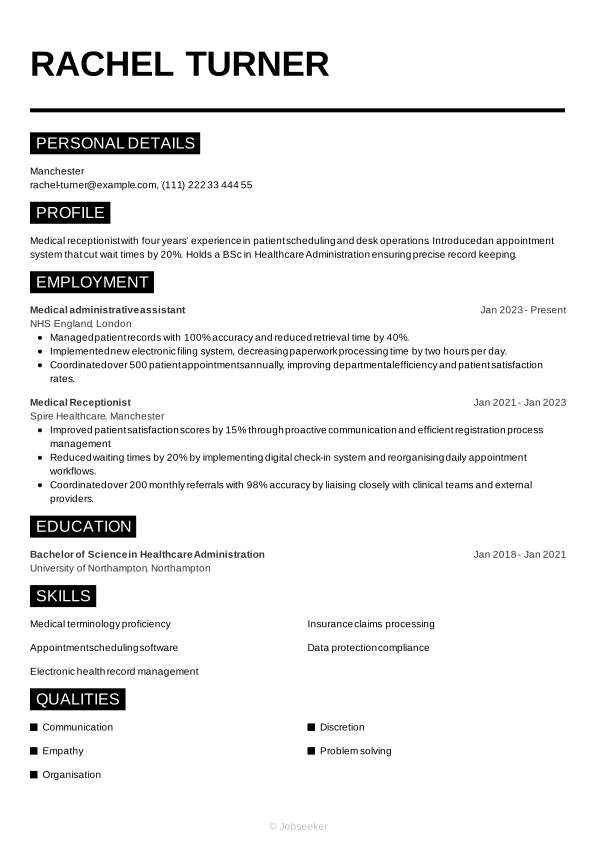
Now that you're aware of the key steps to creating a winning medical receptionist CV, you can review a complete example to see how a final CV looks:
Manchester
•
rachel-turner@example.com
•
(111) 222 33 444 55
•
linkedin․com/in/rachel–turner–123
Medical receptionist with four years’ experience in patient scheduling and desk operations. Introduced an appointment system that cut wait times by 20%. Holds a BSc in Healthcare Administration ensuring precise record keeping.
Medical administrative assistant
2023
-2026
NHS England (London)
- Managed patient records with 100% accuracy and reduced retrieval time by 40%.
- Implemented new electronic filing system, decreasing paperwork processing time by two hours per day.
- Coordinated over 500 patient appointments annually, improving departmental efficiency and patient satisfaction rates.
Bachelor of Science in Healthcare Administration
2018
-2021
University of Northampton (Northampton)
Medical terminology proficiency
Appointment scheduling software
Electronic health record management
Communication
Empathy
Organisation
Medical Terminology Diploma
First Aid and CPR Certification
English - Native
French - Advanced
To see how your CV might look after finalising its design and layout, take a look at our CV examples.
Best practice and common mistakes for your medical receptionist CV
Tips to follow
- Proofread your CV carefully before sending, as any spelling or grammatical errors could seriously undermine your chances of success.
- Outline your qualifications in your education section, detailing grades and awards where these can help you stand out (especially for junior applications).
- Use strong action verbs that reflect the impact you've made for employers in your career to date.
- Use a reverse-chronological approach to listing your work experience and education, starting with your most recent activities and working back from there.
- Use a clear, professional CV format that includes a standard font, regular, consistent line spacing and clear headings, to ensure it's easy to read.
Common mistakes to avoid
- Don't use passive voice, such as 'the target was achieved', but instead use strong action verbs to show the value you added to previous roles.
- Don't add an inappropriate email address to your CV comrosing of nicknames or informal language. If needed, create a dedicated professional email address combining elements of your name, initials and/or profession.
- Don't make exaggerated claims or lie about jobs, qualifications or career achievements – it can backfire and disqualify you from the selection process.
- Don't use overly elaborate CV formatting and designs that make your document harder to read and more confusing for ATS software.
- Don't overburden the reader with too much information but stick to the most relevant, concise and focused content possible.
A well-designed and concise cover letter can make a big difference to your job applications. Match your cover letter to your CV's design and styling with our HR-approved cover letter templates.
Guide to making your CV ATS compatible
Applicant tracking systems (ATS) are a valuable tool for many recruiters and employers, helping them manage the recruitment process by scanning and assessing CVs based on their likely fit to the job description. This saves recruiters and hiring managers the time and effort of reading every CV in detail. With many vacancies often receiving hundreds of applications, ATS software can really relieve the burden on hiring teams and free them up to focus only on the most suitable candidates.
The growing prevalence of ATS apps requires a shift in approach by jobseekers, to prepare a CV with the best chance of passing the ATS screening stage. That's why we've put together a list of key ATS CV tips, to maximise your chances of success:
- Include keywords and phrases that match the job description, making it easy for ATS apps to identify a strong fit for the role.
- Use standard CV headings that clearly identify each section, such as 'work experience', 'education' and 'skills'.
- Choose a standard CV layout that avoids the use of any special design elements that might make your CV less compatible with ATS scanning software.
- Select a widely-used font in either serif or sans serif style, with a font size between 10 and 12 for body text and 14 and 16 for heading text.
- Use bullet points rather than writing long, full sentences, as this will make your CV easier to scan and parse, and help your keywords and phrases to stand out.
There are lots of things to think about when crafting an effective, engaging medical receptionist CV, but ATS compatibility is something that's easy to overcome. Use one of our expert-designed, ATS-compatible CV templates and remove the stress from creating a CV that puts you in the frame for the role.
If you're looking to make a strong first impression on hiring managers with your CV, use Jobseeker's eye-catching CV templates, which are approved by HR experts.
Medical receptionist CV FAQs
How do I create a medical receptionist cover letter to go with my CV?
An engaging and gently persuasive cover letter can enhance your chances of success with your job applications. Opt for a formal, professional letter format and choose a cover letter template with a design consistent with your CV.
Most cover letters include three main paragraphs of written content. In the first paragraph, confirm the role you're applying for and reference your reasons for applying, including how it fits with your career journey and why you want to work for the organisation. Secondly, write a brief paragraph outlining your key skills and achievements, taking care not to simply repeat the details in your CV. Finally, express your gratitude and enthusiasm, and leave a call to action that encourages the reader to reach out to you to arrange an interview or establish a dialogue.
Alternatively, if you're sending your application via email and prefer a more informal tone, you might wish to include a short cover note. This can adopt more casual email conventions rather than following a professional letter format, and simply needs to introduce you, confirm the role you're applying for and direct the reader to the attached CV or application form. Include your contact details at the end of your CV.
Jobseeker's cover letter examples for healthcare industry job titles can help you gain valuable insights from HR specialists on how to craft the most engaging, professional cover letter.
How do I write a persuasive medical receptionist CV without experience?
Even without a history of relevant work experience, you can still write a medical receptionist CV that makes its mark with employers.
Choose a functional CV format, that gives greater emphasis to your skills than to your work experience. In this layout, the skills section comes immediately below your CV summary, followed by education, with work experience taking less priority.
For entry-level roles, employers tend to look more for candidates with the right soft skills to show they can learn and develop on the job. As such, place extra emphasis on your soft skills for an entry-level medical receptionist CV.
How do you write an impactful medical receptionist CV headline?
A CV headline can help you add relevant keywords into your CV, aiding ATS compatibility while catching the attention of the reader from the outset.
Look to craft a short. eye-catching sentence that demonstrates your greatest skills and natural strengths, and includes the job title.
The most impactful CV headlines focus on the most critical keywords and phrases from the job description, helping the reader to make a snap judgement on whether to read your CV in more depth, while increasing the likelihood of passing the ATS stage.
Below you can find some examples of best practice for CV headlines at different levels of experience:
- Compassionate Junior Medical Receptionist
- Dedicated Medical Receptionist and Administrator
- Experienced Senior Medical Receptionist Leader
What's the best medical receptionist CV format for 2026?
The most suitable format for your medical receptionist CV in 2026 will depend heavily on numerous factors, such as your career stage and experience levels, the type and level of the role, the organisation and established industry norms.
Generally, the most effective CV format for candidates with some work experience is the traditional reverse-chronological structure. This layout prioritises your work experience section to show how you meet the job description, with examples of your key skills and achievements.
Conversely, for less experienced candidates such as graduates and career changers, a functional CV format may work better, as this highlights your key skills and qualifications over your work experience.
Key takeaways for your medical receptionist CV
To make a strong first impression on hiring managers, tailor your CV for every application, adding keywords and phrases that match the job description. Select a suitable CV format that reflects your experience level, and focus on highlighting your key skills, and demonstrating how you've put them to good use to achieve positive outcomes in your career to date.
Finally, enhancing the look and feel of your CV using one of Jobseeker's HR-approved CV templates can help leave a lasting impression on the reader, and boost your chances of success with your job applications.
Sources:
- Barnet Council (UK local government), Recruitment tips: How to write a supporting statement
- Jobseeker, HR Statistics

Impress employers with your CV
Step-by-step guidance to create a professional CV in minutes.