Cardiac Physiologist CV Example
If you're hoping to launch a career in the healthcare industry, including cardiac physiologist roles, it's essential to write a CV that shows your skills and achievements in the best light. You'll want to focus on key responsibilities that are essential for the role and match your experience, such as analysing ECG data and monitoring cardiac device function. In this article, we'll provide all the tips and advice you'll need to create a cardiac physiologist CV that gives you the best chance to progress to the next stage of the recruitment process.
A meticulously crafted, tailored cardiac physiologist CV gives your application the best chance of passing the ATS screening stage, impressing the hiring manager and progressing to the interview stage. Let’s break down the core components of a CV and examine how to build them effectively.
Key sections of a cardiac physiologist CV
Your approach to creating your winning cardiac physiologist CV will differ depending on your experience, your seniority and the details listed in the job description.
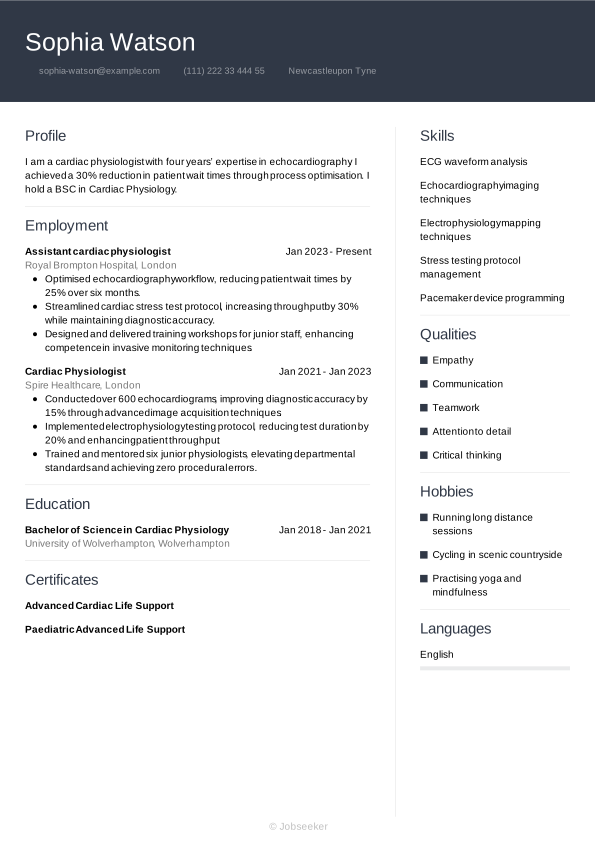
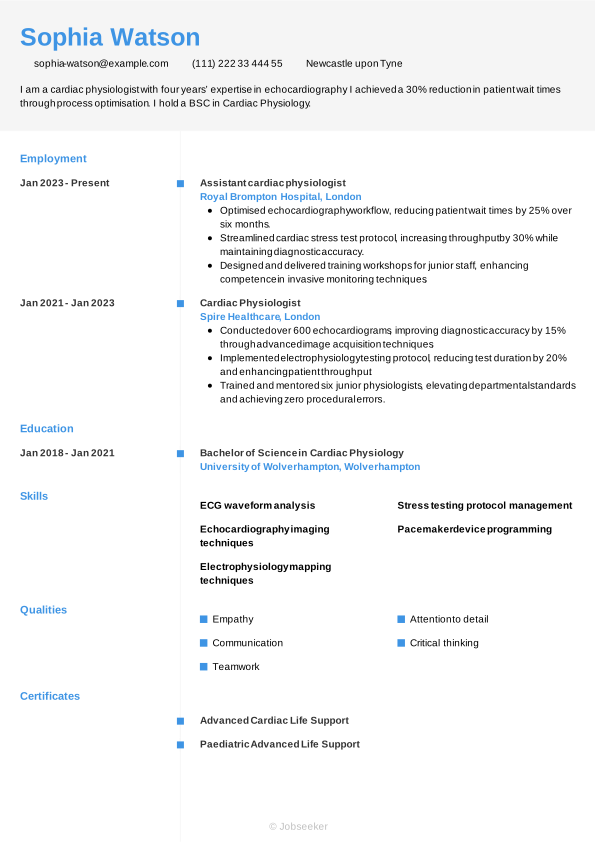
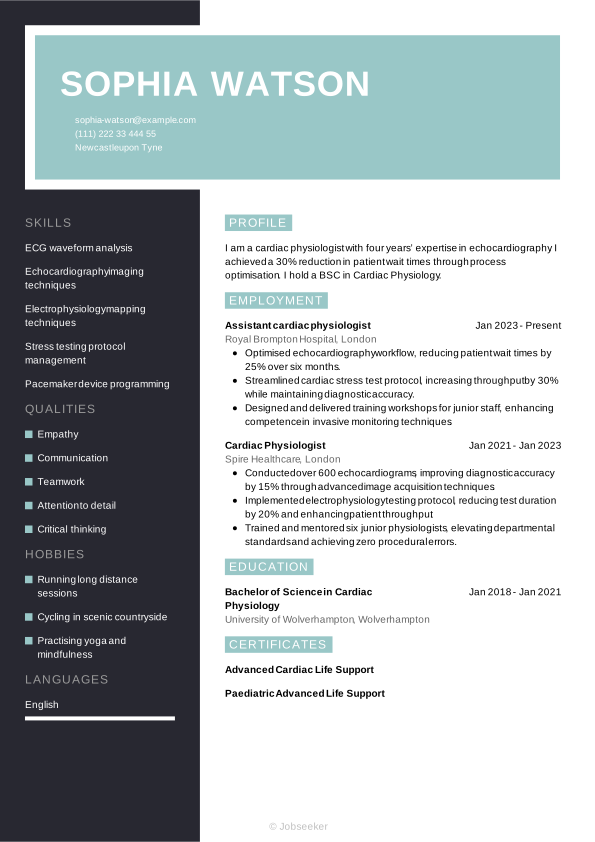
At the end of the day, though, a cardiac physiologist CV is just a way to tell the story of how you’ve grown in your career. Regardless of your experience level, you want that progression to feel seamless and easy to follow for recruiters. To help you get there, we’re going to walk through each part of the CV step-by-step, starting with the basics in your header and working our way through to your professional achievements.
CV Header
At the top of your cardiac physiologist CV, add a header that establishes the design language of the document. Include the necessary contact information: your full name, email address, phone number and location. It's not typically necessary to include your full address. Additionally, add your LinkedIn profile, if this is in use and up-to-date. A well-utilised LinkedIn profile can give further information to the reader about your skills, experience, industry knowledge and career achievements.
For jobs in the UK, a personal photo is usually not required on your CV. That, along with any other personal details such as age, gender, ethnicity and nationality, are generally discouraged under the terms of the Equality Act 2010, which aims to reduce and eliminate discriminatory practices, such as recruitment bias.
Sophia Watson
sophia-watson@example.com
(111) 222 33 444 55
Newcastle upon Tyne
linkedin․com/in/sophia–watson–123
CV Summary or Objective
Below your contact information, a short, concise CV summary or CV objective can set the tone for your application and provide brief, basic information on your key skills and qualities that gives a strong indication to the reader about your suitability for the cardiac physiologist role. A CV summary focuses on your key skills and achievements, while a CV objective provides an alternative approach, showcasing your career ambitions and how the role fits with these. This makes a CV objective ideal for entry-level candidates.
Both a CV summary and objective should be concise, with an ideal length of two or three sentences. List your key skills, personal strengths and career achievements or ambitions, taking care to ensure the content reflects the requirements listed in the job description.
An effective summary will include brief reference to one or two of your strongest skills, ensuring they reflect the skills listed in the job description. It's important to make your skills and qualities feel unique to you, and show how you've used them to positive effect in your career to date. Find an example below of a positive cardiac physiologist CV summary, characterised by evidence to support your claims and well-structured, easy-to-read sentences.
Engaging example:
Cardiac physiologist with 5 years’ NHS experience delivering precise diagnostics. Recognised for improving echocardiogram throughput through streamlined protocols. BSc in Cardiac Physiology with expertise in ECG, stress and Holter monitoring.
Worst practice example:
Dedicated cardiac physiologist with years of experience in a healthcare setting, skilled in various diagnostic procedures and committed to delivering reliable patient care while supporting team efficiency and departmental goals.
The cardiac physiologist CV summary above gives you an idea of what to avoid. The differences are subtle, yet significant. For a summary to make less of an impact, it might include generic or vague information, lack evidence of your impact, or fail to highlight specific personal qualities that make you stand out from other candidates. It may also lack tailoring to the job description or include long, poorly structured sentences.
Work History
The work experience section of a CV is usually the most important part. Employers look for evidence of how you've developed and used your skills to good effect in your career to date, as an indication of your likely future performance. It's crucial to tailor your work experience section to match the requirements listed in the job description, using keywords and phrases so employers can easily see how well you fit the role and organisation.
Create a list of all your most relevant roles, going back up to 10 or 15 years if necessary. Include your job title, the name of the employer, its location and the dates you worked there. Include bullet points that explain how you put your skills to good use in each previous role.
Standing out with your CV work experience section means using action verbs and measurable outcomes to show the impact you made. You'll want to outline a progression in your skills development, and list evidence of the value you added. See below for an example of a strong work experience section for a cardiac physiologist CV.
Engaging example:
Cardiac Physiologist, January 2023 - Present
Silverstream Cardiology Centre, Manchester
- Performed over 1,200 diagnostic echocardiograms annually, achieving a 95% diagnostic accuracy rate and reducing patient wait times.
- Led introduction of advanced cardiac stress testing protocols, increasing detection of ischaemic heart disease by 30% within one year.
- Implemented streamlined catheterisation laboratory processes, reducing procedure times by 20% and improving throughput across three regional healthcare centres.
Worst practice example:
Cardiac Physiologist, January 2023 - Present
Silverstream Cardiology Centre, Manchester
- Assisted with cardiac assessments and collaborated with clinical teams to support patient management.
- Maintained echocardiography equipment and ensured compliance with departmental protocols for quality assurance.
- Facilitated communication between clinicians and patients regarding diagnostic procedures and follow-up recommendations.
Take a look at a less strong cardiac physiologist CV work experience section above. The work experience section could fail to make an impression if it's too generic, focuses on older or irrelevant roles or lacks tailoring to the job description. It's also important to avoid focusing too much on responsibilities that don't tell the reader anything of the value you added to the role.
Education
Your education section is the chance to list your most recent and highest qualifications, and anything that's relevant or required for the role.
A degree is typically a strict requirement for cardiac physiologist jobs, and as such, you'll want to showcase yours in your CV. If you have a Bachelor of Science in Cardiac Physiology or another similar, relevant degree that confirms your eligibility for the position, include it in your CV. You might also wish to add other degrees or qualifications that highlight your strongest skills, such as stress testing protocol management or electrophysiology mapping techniques.
When adding your qualifications to your education section, choose the highest relevant qualifications, and list them in reverse-chronological order, starting with your most recent. For each entry into your education section, add the qualification name and level, the institution or awarding body, its location and your dates of study or graduation. For extra emphasis on your education section, include bullet points showcasing projects you worked on, modules you studied, awards you won or societies you participated in, if they help you to prove you're a suitable candidate.
Specialist licences or certifications can also be a valuable addition to your CV's education section. If these are essential for the job and are referenced in the job description, it's a good idea to include them here rather than further down your CV. Include any expiration or renewal dates for certifications, if applicable.
Bachelor of Science in Cardiac Physiology, 2018 - 2021
University of Sheffield, Sheffield
Key Skills
In your CV skills section, include a combination of the key hard and soft skills you possess, that make you a suitable candidate for the position. Make sure your skills list reflects the requirements specified in the job description, and include a few skills that are unique to you, and help set you apart from the pack. In a cardiac physiologist CV, only list the most relevant and essential skills you possess, such as communication and stress testing protocol management, to make a positive first impression and show you're qualified for the cardiac physiologist position.
Hard Skills
Hard skills are the specialist technical skills that are essential for carrying out the duties of the role. They might be developed through study, on-the-job training or experience in the industry, and some hard skills may require a licence or certification. For cardiac physiologist jobs, essential hard skills from your career-to-date might include pacemaker device programming, and ECG waveform analysis. Review the job description, and include four or five key hard skills in your CV that show employers you're capable of completing the key duties of the role.
The ideal hard skills section will feature the most essential hard skills from the job description, while closely reflecting your own best technical abilities. The closer your strongest skills are to matching the job description, the higher your chances of success.
Take a look below to see the type of skills that are commonly listed in a cardiac physiologist CV hard skills section:
- ECG waveform analysis
- Echocardiography imaging techniques
- Electrophysiology mapping techniques
Soft Skills
Soft skills are the personal strengths and qualities that show employers how well you'll fit into the role and complement other members of the team. Soft skills tend to be more transferable and applicable to different roles than hard and technical skills. Owing to the rapidly evolving nature of the work landscape, soft skills are growing in importance for a number of roles and industry sectors where technology is replacing hard skills. Additionally, soft skills are particularly valuable for junior and entry-level candidates, who might not have much work experience but have the right building blocks for a successful career.
Just like the hard skills section, begin by reviewing the job description to learn the most desirable soft skills to include in your cardiac physiologist CV. Only add soft skills that you can provide evidence for throughout your CV. Draft a list of up to five key soft and transferable skills, combining the most essential skills from the job description with your strongest personal qualities.
Here are typical soft skills candidates include in a cardiac physiologist CV.
- Empathy
- Communication
- Teamwork
Foreign Languages
Including a section on language skills can be beneficial, if you speak at least one language to a reasonable level of competency, in addition to your mother tongue. This is true even if language skills aren't a requirement for the role, as foreign language abilities often correlate to other valuable soft skills. In the languages section, list the languages you speak to at least a reasonable level, with an indicator of your competency level.
The ways to indicate your foreign language skills depend on the level of detail you want to provide. They include assigning a basic descriptive word, such as:
- English: Fluent
- Spanish: Intermediate
You might choose to adopt an international standard framework for languages, such as the Common European Framework of Reference (CEFR). This assigns a standardised level to your language skills, for example:
- A1: Beginner
- A2: Elementary
- B1: Intermediate
- B2: Upper intermediate
- C1: Advanced
- C2: Proficiency
Certifications
Depending on the role you're applying for, and the type of qualifications you have, you might want to include a separate section for certifications, in addition to the education section. It can be a valuable way of differentiating yourself from other candidates and showing employers your dedication, motivation and commitment to professional development. Furthermore, if there are any necessary certifications or licences for the job, this CV section takes on even more importance. If you're applying for a technical role or a position that involves the use of specialist software or equipment, these might make it more necessary to include a section showcasing your training.
Take a look at this list of example certifications and licences for cardiac physiologist candidates:
- Advanced Cardiac Life Support, 2023
- Paediatric Advanced Life Support, 2023
- British Society of Echocardiography Accreditation, 2023
Expert Tip:
With recruiters scanning CVs in less than nine seconds, Barnet Council highlights the importance of a short and compelling personal summary. (1)
Optional Sections
Including optional sections in addition to the core elements of your cardiac physiologist CV can help you provide further evidence of your suitability for the role. Consider adding optional sections if you're unable to show all the necessary skills for the job through work experience, but could show them through extracurricular activities and other areas of life. This could be especially relevant if you're a junior candidate, or if you're changing careers.
If you're curious about other ways to make your CV more effective, our career resources will help you strengthen your application.
Hobbies and Interests
If you participate in hobbies and activities that are related to the role, or use some of the same skill set, you could include them in a hobbies and interests section. Additionally, this section gives you the chance to show employers different facets of your personality and interests beyond work, which can help them to differentiate you from other applicants. However, a hobbies and interests section is only valuable if it helps you to show relevant skills you've been unable to evidence in other parts of your CV. If your hobbies and interests are unrelated to the job, it's best to leave them off your CV.
Awards and Achievements
Creating a section for your achievements and awards can help you draw attention to the things you're most proud of in your career to date. In your list, add any awards you've won, industry recognition or key career milestones that tell a story about your suitability for the role and place you ahead of other candidates.
Volunteer Roles
Listing any previous voluntary work is another useful way of showing you have the necessary skills and experience for the job. If you don't have much relevant work experience, either because you're a junior candidate or you're changing jobs from an unrelated field, volunteering can provide valuable examples of your skills in action. Your volunteering section should follow much the same structure as your work experience section.
Add a description of the volunteer role or a job title if you had one, the name of the organisation, its location and the start and end date of your volunteering. List bullet points that show how you put relevant skills to good use to create positive results for the organisation.
Data Insight:
When reading a CV, more than 4 in 5 hiring managers go straight to the work experience section. (2)
Most impactful action verbs for a cardiac physiologist CV
Using strong action verbs in your work experience bullet points is a great way to focus this section and show the impact you've made in your career to date. Starting each bullet point with an action verb that reflects the skills required for the role will help the reader to easily cross-reference your skills to the job description. Remember to always back up the action verbs you use with quantifiable evidence that shows the impact you made. You can use past tense for any action verbs describing previous jobs, with present tense for action verbs to describe your current role and responsibilities.
- Perform
- Monitor
- Analyse
- Interpret
- Calibrate
- Develop
- Maintain
- Liaise
- Administer
- Document
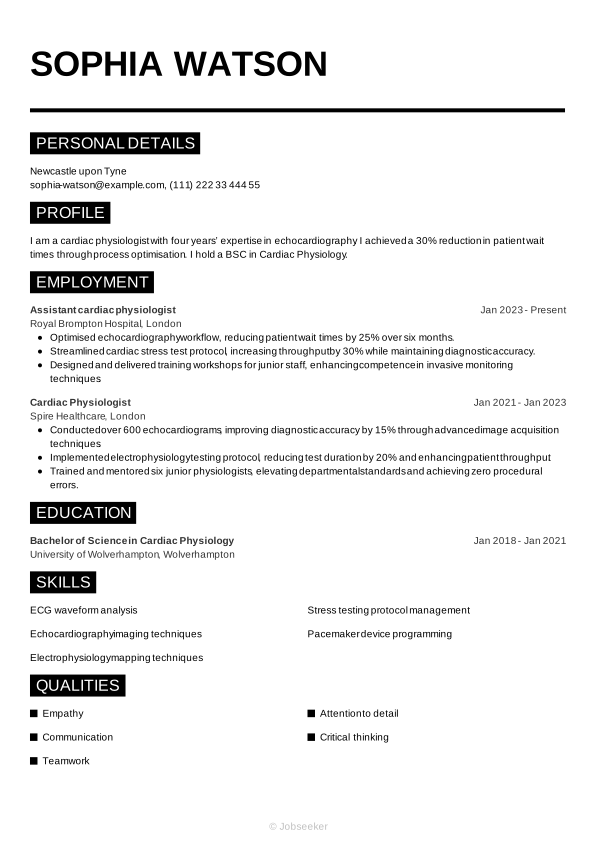
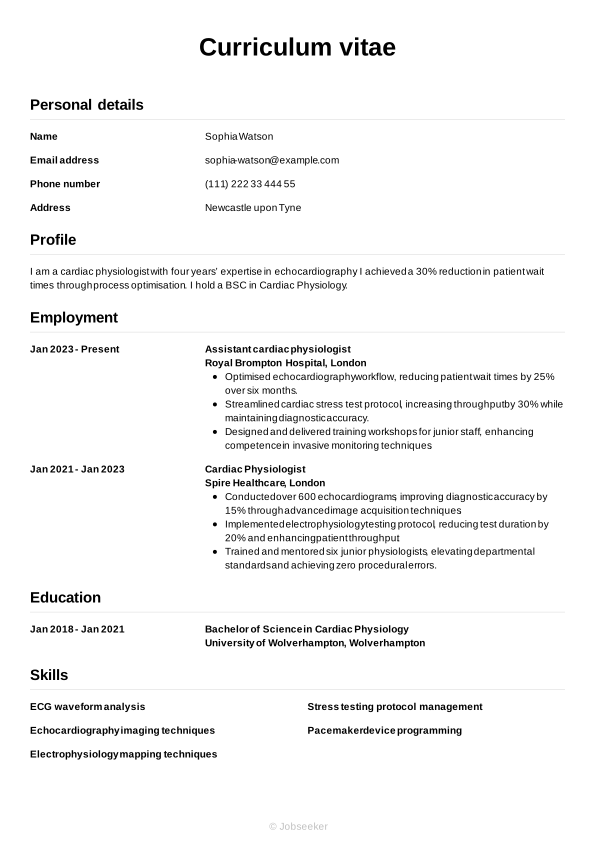
Cardiac physiologist CV example
Now that we've covered the main sections to include in your cardiac physiologist CV, we can see how it would all come together in its final form in the example below:
Newcastle upon Tyne
•
sophia-watson@example.com
•
(111) 222 33 444 55
•
linkedin․com/in/sophia–watson–123
I am a cardiac physiologist with four years’ expertise in echocardiography. I achieved a 30% reduction in patient wait times through process optimisation. I hold a BSC in Cardiac Physiology.
Assistant cardiac physiologist
2023
-2026
Royal Brompton Hospital (London)
- Optimised echocardiography workflow, reducing patient wait times by 25% over six months.
- Streamlined cardiac stress test protocol, increasing throughput by 30% while maintaining diagnostic accuracy.
- Designed and delivered training workshops for junior staff, enhancing competence in invasive monitoring techniques.
Bachelor of Science in Cardiac Physiology
2018
-2021
University of Wolverhampton (Wolverhampton)
ECG waveform analysis
Echocardiography imaging techniques
Electrophysiology mapping techniques
Empathy
Communication
Teamwork
Advanced Cardiac Life Support
Paediatric Advanced Life Support
English - Native
French - Advanced
If you want a sneak preview of what your one-page, fully designed and finalised CV might look like, see our completed examples.
Key tips and mistakes to avoid for your cardiac physiologist CV
Tips to follow
- Use a clear, professional CV format with a standard font, consistent line spacing and headings that stand out, for maximum readability.
- Proofread your CV thoroughly before sending, to avoid any spelling and grammar errors that could harm your chances of success.
- Keep your CV concise, with a target length of one side of A4 for junior roles, two for more experienced candidates and longer only for high-level, executive or academic positions.
- List your qualifications in a dedicated education section, including grades and awards if these can help set you apart from other candidates (particularly for junior candidates).
- Add a dedicated skills section to showcase your strongest hard and soft skills, ensuring they reflect the skills listed in the job description.
Common mistakes to avoid
- Don't use passive voice, such as 'strategies were devised', but instead add clear action verbs that place you and your impact at the heart of the CV narrative.
- Don't fixate on irrelevant work experience that might take up valuable space and won't contribute significantly to your chances of success.
- Don't overload your CV with industry jargon and acronyms that may alienate or confuse the reader, instead opt for simple, clear language whenever possible.
- Don't include false or misleading statements or lie about events in your career to date – it can be illegal and is likely to backfire.
- Don't use overly complex or fussy formatting that can make your CV harder to read, or confuse ATS scanning tools.
A well-written cover letter is an essential element of any job application. Take a look at our HR-approved cover letter templates to find a design and layout that matches your CV.
Guide to CV ATS optimisation
Many employers now use applicant tracking systems (ATS) to assist with managing the recruitment process. One of the key elements of most ATS apps is the ability to scan CVs and rank them according to their likely match to the job description. By assuming this role in the recruitment process, ATS apps can reduce the amount of time employers need to spend reviewing CVs. With hundreds of applications for a single vacancy becoming increasingly commonplace, this increased efficiency is extremely valuable for employers.
Because ATS software is becoming more common in the recruitment process, it's important to make some concessions in your CV to give yourself the best chance of progressing beyond the initial screening. With that in mind, here are some tips on preparing your CV for ATS screening:
- Include keywords and phrases from the job description that are easy for ATS apps to identify, and help make you appear a strong fit for the role.
- Use standard CV headings that make your CV easier to navigate, such as 'work experience', 'education' and 'skills'.
- Opt for a simple CV layout with consistent formatting, avoiding any special design elements that could make your CV harder for ATS apps to scan.
- Select a widely-used font in either serif or sans serif style, with a font size between 10 and 12 for body text and 14 and 16 for heading text.
- Use bullet points in place of full sentences and paragraphs, as these are easier for ATS apps to scan and parse, and help your keywords stand out.
You might feel there are a lot of things to remember when writing an ATS-compatible CV, but with just a few small tweaks, you can ensure yours passes this stage. Use one of our expert-designed, ATS-compatible CV templates to avoid the stress of adapting your CV for ATS screening.
Jobseeker's CV templates can help your CV to make a strong first impression with recruiters. Each template is expertly designed and approved by HR specialists to help you craft a winning application.
Cardiac physiologist CV FAQs
How do I create an accompanying cardiac physiologist cover letter for my CV?
Your cover letter can have just as strong an impact on your chances of success as your CV. When writing a cover letter, use a professional, formal letter structure and select a cover letter template to match the look and feel of your CV.
The typical cover letter includes three key sections of content. Firstly, introduce yourself, confirm the role you're applying for and explain why you're applying for the position. Next, outline some relevant key skills and achievements from your career without repeating the details in your CV. Finally, express your gratitude to the employer for considering your application and leave a call to action that encourages them to contact you for an interview, or to establish dialogue.
Alternatively, if you're applying for the role via email, you may want to send a less formal cover note. This simply includes a brief introduction, confirming the role you're applying for and directing the reader to the relevant attached documents, rather than following the traditional professional letter conventions. Remember to include your contact details in your email, so the employer can follow up with you if necessary.
Jobseeker's cover letter examples for cardiac physiologist roles and other key healthcare industry positions provide useful HR-expert tips and guidance on how to write a compelling cover letter.
How do I write a compelling cardiac physiologist CV without experience?
Even without a history of relevant work experience, you can still write a cardiac physiologist CV that makes its mark with employers.
Consider a structure that emphasises your skills rather than your work experience, such as a functional, or skills-based, CV format. In this CV layout, the skills and education sections are placed above the work experience section.
For junior or entry-level roles, employers may be more keen to know whether you have the right soft and transferable skills to adapt to the requirements of the role. In this case, place greater emphasis on soft skills for a junior cardiac physiologist CV.
How do you write an attention-grabbing cardiac physiologist CV headline?
A well-crafted CV headline can draw the reader in, providing a hint of your suitability for the role, while increasing the likelihood of passing the ATS screening stage.
Aim to write a short, engaging sentence that includes the job title and shows you to be a good match for the job description.
To give your CV the best shot at success, write a CV headline that focuses on the most essential keywords and phrases from the job description. This will strike a chord with the hiring manager and help your CV to pass the ATS screening stage.
The examples below show best practice for writing a CV headline at different experience levels:
- Junior Cardiac Physiologist Seeking Growth
- Experienced Cardiac Physiologist Delivering Excellence
- Senior Cardiac Physiologist Team Leader
What cardiac physiologist CV format gives me the best chance of success in 2026?
The best cardiac physiologist CV format for success in your 2026 job hunt might vary according to your experience levels, the type and level of the role, the company and standard industry practices.
Typically, the most effective CV format for most candidates is a standard reverse-chronological structure that prioritises your work experience section as a showcase of your skills and career achievements.
Alternatively, for less-experienced candidates who might not want to emphasise previous employment (such as recent graduates or career changers), a functional format is more suitable. This layout prioritises your skills and qualifications.
Key takeaways for a winning cardiac physiologist CV
To grab the attention of the reader with your CV, tailor it to the exact specifications of the job description, incorporating keywords and phrases that match the employer's requirements. Pick a CV format that matches your experience level, and focus on showing the reader how you've developed relevant skills and put them to good use to add value for previous employers.
Finally, using an eye-catching, expert-designed CV template from Jobseeker can really give your CV an edge over those from rival candidates, helping you to achieve success in your job applications.
Sources:
- Barnet Council (UK local government), Recruitment tips: How to write a supporting statement
- Jobseeker, HR Statistics

Impress employers with your CV
Step-by-step guidance to create a professional CV in minutes.